

Remember when your dad would heave the grandchildren sky-high? These days, it’s him asking for a hand getting up from the recliner. And your mom, who used to round up little ones in the yard, now rests a walker beside her seat. The grandkids still drop by, but the vibe has changed, evident in your parents’ wistful expressions, that subtle look that communicates, “It would be nice to do more.”
But here’s the thing that often goes unnoticed: activities for grandparents with limited mobility can lead to stronger connections than a round of chase-the-children. When rough-and-tumbling recedes, something else gets space to flourish: talking. Consideration. Silence in unison. Children whose grandparents have intimate relationships exhibit better mental health and better behavior, according to a study conducted by the University of Oxford. No standing up is required in the findings.
The 20 exercises listed are categorized by location and level of physical functioning. All can be conducted in a sitting or wheelchair position. You as the parent need to lay the groundwork. And once the setup is done, take a back seat and allow the connection to occur.
Indoor Seated Activities for Grandparents and Grandchildren
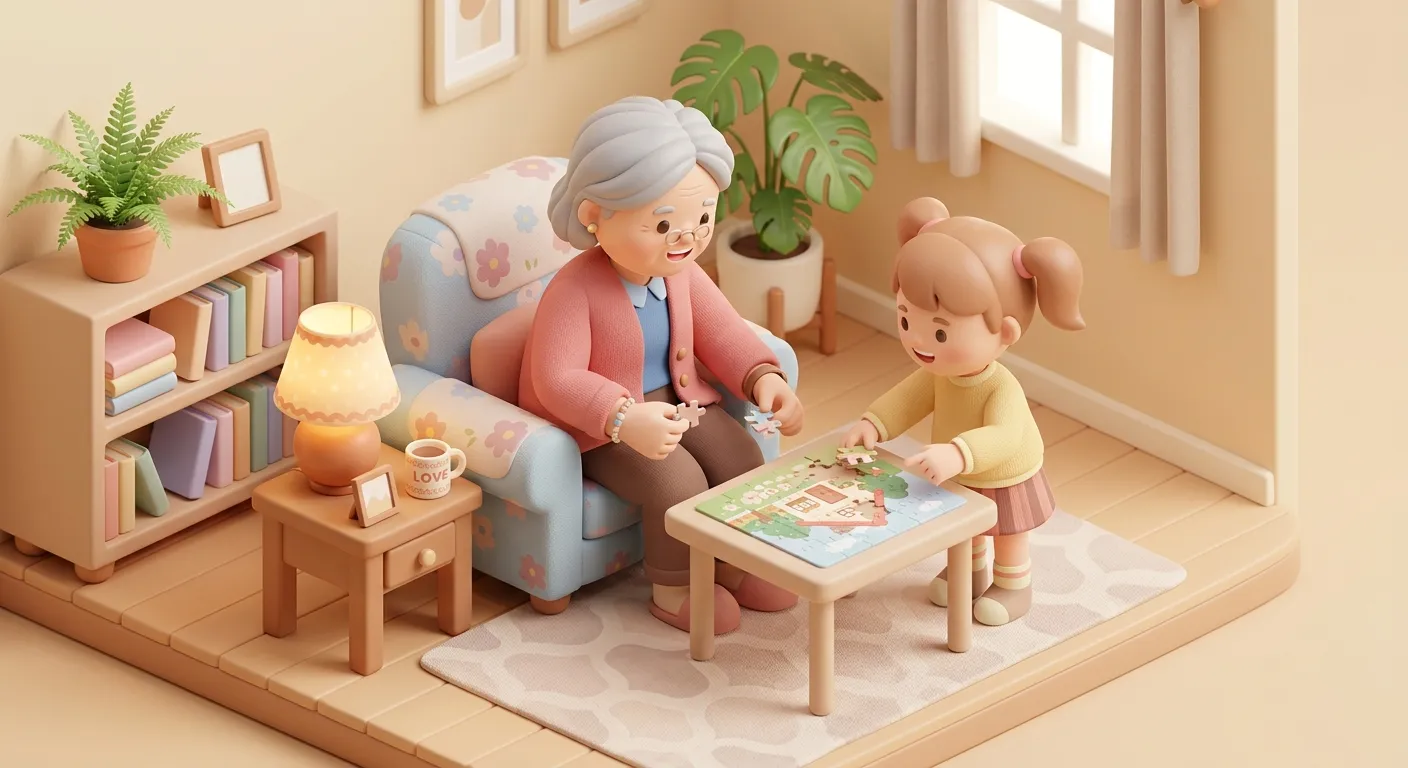
All you need is a table or a sofa for these. They are well-suited for a grandparent who is using a walker or a wheelchair, or one with chronic pain that is made worse by standing up.
-
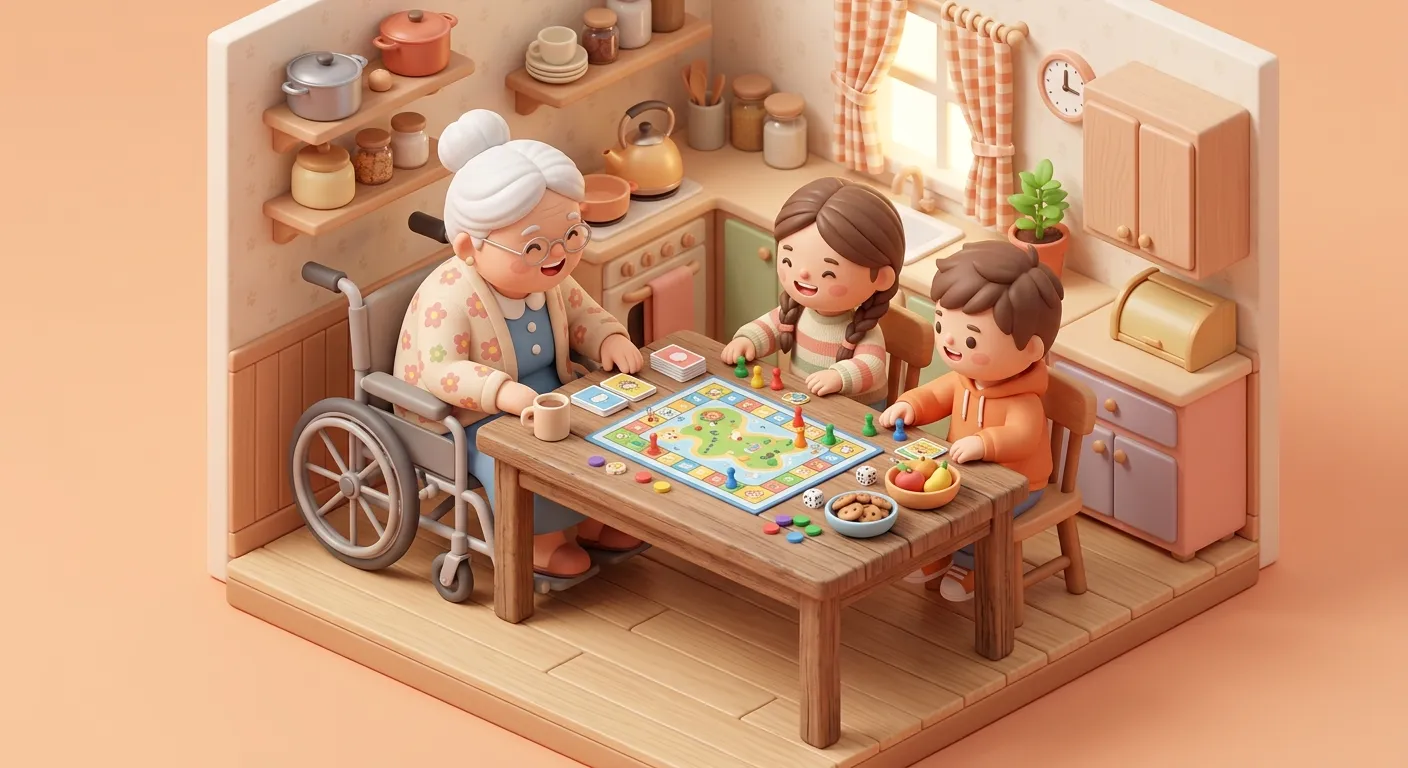
Play Board Games and Card Games Chess, checkers, Uno and Go Fish, traditional games are classic for a reason: They center attention. The seniors have an opportunity to demonstrate tactics. The juniors get to win, occasionally. The AARP endorses board and card games because they keep the mind active and provide social engagement.
-
Put Jigsaw Puzzles Together A 500-piece puzzle laid out on a table allows both grandparent and grandchild to participate in it over numerous visits. No clock, no points, just calm cooperation.
-
Read to Each Other Little ones enjoy having a book read to them. Older ones can switch off reading book chapters aloud. And if your parent is having difficulty reading due to poor eyesight, they can both listen to an audiobook instead, the same as a shared narration, shared response and shared time.
-
Peruse Photo Albums Together This is potent. Old pictures trigger tales the grandkids would never discover otherwise. Who is on that picture? Where was it shot? What was school like? The talks create a sense of belonging to a family that nothing can replicate.
-
Cook or Bake Together While Seated Place a stool or wheelchair at the counter. The senior can tell the grandchild to do the measuring, stirring, and pouring; the grandchild is your grandparent’s hands, your grandparent is your grandchild’s brain. If you still have a chance, save some of your senior’s recipes.
-
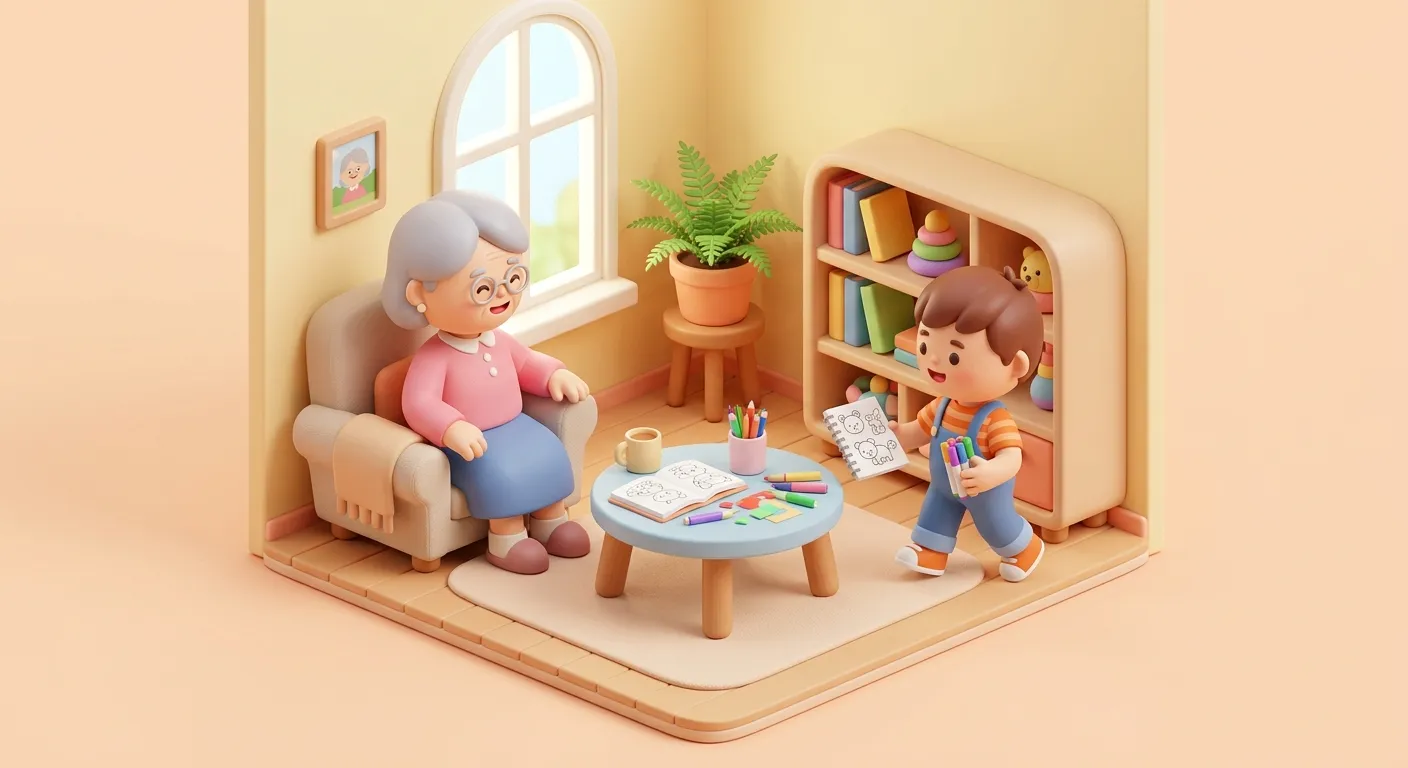
Arts and Crafts Watercolor painting, drawing, making greeting cards, scrapbooking, and so on can all be done at a table. Craft projects do not need to be Pinterest-worthy. A handmade card made by a grandchild with help from grandma is worth much more than one that you could buy.
-
Tell Family Stories No materials are needed here. Just ask a question: “What was your first job?” “What was your neighborhood like when you were growing up?” “What was the worst trouble you ever got yourself into?” If you’d like more structure, we’ve put together 50 questions to ask your grandparents that work great for this activity.
Outdoor Activities for Grandparents with Limited Mobility
Fresh air and sunlight are good for just about anyone. All of these activities can take place on a porch or patio where a wheelchair can roll.
-
Birdwatching Set up a bird feeder where your parent can see it from a wheelchair or lawn chair. Give the grandchild a book that shows different species of birds and their common names. The two generations can take turns trying to figure out which bird is visiting the yard. This quiet game promotes attentiveness and patience for both of you.
-
Container Gardening With raised planters or tabletop pots, no bending or kneeling is required. Let the grandchild dig and water while the grandparent points out where plants should be. A grandparent and grandchild watching something grow over time can have its own kind of “project” that spans multiple meetings.
-
Backyard Treasure Hunt Set up the treasure hunt ahead of time (or let the grandchild hide the treasures for Grandma to direct the grandchild toward finding). The grandparent stays stationary in one spot to give clues, while the grandchildren search the yard.
-
Bubble Blowing The ultimate activity for all ages, simple and very fun. Grandparents can blow bubbles from a seated position, while toddlers chase and pop the floating orbs. Older kids can play around with different bubble formulas and bigger blowers.
-
Nature Art Have grandchildren collect items found outside (leaves, flowers, twigs, small stones, etc.). Return the collected items to the table and arrange them in the way that best showcases them. Grandparents can be the artist of nature and the grandchild can be their helper.
Activities by Grandchild Age
Activities that engage a toddler may bore a ten-year-old. Most lists of limited mobility activities do not address the specific needs of the different developmental stages.
Kids Between 1 and 4
Toddlers require tactile experiences and movement. If your grandfather can’t keep up with them, channel that excess energy instead:
- Sensory bins — Pour dry rice, uncooked pasta, or water beads into a box. The toddler can explore this sensory toy while seated next to grandpa.
- Playdough or play slime — Kids this age will be happy to get their hands (or mouth) on any sort of goop. Plus, you can both partake in the mess at the table.
- Sing along and clap games — Music is a generation-transcending link. Pat-a-cake and “Itsy Bitsy Spider” can be enjoyed while everyone stays put.
Kids Between 5 and 10
This is the age of competence. Give kids their chance:
- Projects that involve construction — LEGO sets, model kits, Lincoln Logs. Grandparents are experts when it comes to patience, and children are dexterous enough to build complex creations.
- Basic science experiments — Try baking soda volcanoes, magnetic attraction, or the growing of sugar crystals, to name a few. The grandparent is the science instructor.
- Board games and card games — This is the right time to start teaching kids games like chess, Battleship, or any card game you want to introduce. As we’ve noted in other blogs, some activities don’t have to involve movement to be enjoyable.
Tweens and Teens (Ages 11–17)
Teenagers are often the most challenging generation to find something for, but they’re also the most mature. In fact, the activities that best work with this group happen to be some of the most sedentary anyway:
- Learn from the grandparent — A craft like knitting or woodcarving (be sure to supervise the sharp object), cook a recipe of choice, or teach them how to play an instrument.
- An interview session — Let the child be the reporter by giving them a phone (or a digital recorder) to tape grandpa telling stories about his childhood and early adulthood. Teens love that “reporter” role, and grandparents adore the opportunity to be heard.
- Share an age-appropriate film or series — Ask your parent to choose a film they loved at the age your child is now. Watch it together so your grandpa can share how he or she saw the world at that age.
Activities for Grandparents in Assisted Living
If a grandparent now resides in an assisted living community, there are a few more challenges to consider, including shared spaces, community guidelines, and restrictions on personal belongings. But that doesn’t mean there isn’t still plenty of ways to make things interesting for your grandma.
-
Pack the activity bag When you show up, be sure to bring everything you need for one activity: A small puzzle, crayons and paper to draw with, or the materials you’ll need to make the card together. Having a concrete goal eliminates the pressure on conversation, which is especially important with young children who can be self-conscious in unfamiliar situations.
-
Take the group for a walk Most facilities have paved pathways or gardens around which the group can walk. Walking with your mom in her wheelchair, accompanied by your child pointing out all the pretty colors and flowers, is an excellent shared experience. Slow is fine. That is the whole idea.
-
Music Sessions Grab a Bluetooth speaker and play songs that your parents listened to when they were young. Sing together. Let your grandchildren watch their grandpa light up when his favorite song starts to play. Music is one of the last things affected by cognitive decline, meaning music can be a bridge even when other parts of the relationship feel a little rocky.
-
Nail Painting or Hand Massage This is really special with granddaughters, but boys also love to give a hand massage. The physical touch is calming, the interaction is intimate, and it takes absolutely zero mobility.
Long-Distance Activities When Grandparents Can’t Get Around
Not everyone lives nearby for a regular visit. These activities help grandparents with limited mobility connect to their grandchildren over the distance. Read more in our long-distance grandparenting ideas post.
-
Video Call Show-and-Tell Have your grandkid do a show-and-tell for grandma over video. They can show you their school art, their pet trick, or even their entire room. Keep these video calls short for little kids: 10 minutes of focused attention is better than 30 minutes of wandering chatter. We have a lot of more video call ideas in our post.
-
Mail Surprises Back and Forth Send a child’s drawing in the mail. Send a pressed flower in the mail. Send a picture of what you both did that weekend. It’s something tangible that cannot be matched by text or e-mail. And if you want to make this a tradition without all the work, send out a monthly family newsletter to the kids, grandparents and parents via a service like Hug Letters to send a printed set of photos and updates that grandma can hold, reread, and hang up.
-
Read the Same Book Pick out a chapter book, read along the same time, grandpa at home, grandkid at their place. Talk about it during your weekly phone or video call. Every time you talk you now have a topic.
-
Shared Playlist Make a collaborative playlist and let your grandkid add a song. Add a song. Chat about the songs on your next video chat call. This is especially good for older kids, it gives them a peek into your world, and a peek into theirs.
How to Set Up Activities for Success
You, the adult child, are probably going to be the one to set these limited mobility activities up in the first place. Some advice for you:
- Make sure you are prepared. Get the table cleared, get the supplies out, charge the iPads before the grandchild gets there. Don’t have your grandparent scrambling around for anything.
- Match your parent’s energy. If you know they get tired after a little bit, plan the activities around the best part of the day, morning usually!
- Don’t make them last too long. 30 minutes of engagement is better than 2 hours of forced togetherness. Let them leave wanting more.
- Explain limitations simply. “Grandpa’s legs don’t move like they used to, so today we’ll eat at the table.” Young children adjust much more quickly than you’d think.
- Take pictures. Not to post online, but for your parent. The snapshot of Grandmother and the grandchildren working on a puzzle together that you frame and stick on her nightstand is infinitely more valuable than you imagine. Those photographs remind Grandma of how much she means to the grandchildren, of how the connection is real.
Frequently Asked Questions
What do a grandparent in a wheelchair and their toddler do together?
Toddlers are naturally drawn to lap-level activities. A grandparent in a wheelchair can read books, build towers with blocks, play with playdough, blow bubbles, and do simple hand-clapping games. The key is keeping materials within reach and letting the toddler come to the grandparent’s level rather than the other way around.
How can my child feel comfortable visiting a grandparent with mobility limitations?
It’s always wise to talk to your child about what Grandma or Grandpa can and can’t do before you arrive for the visit, using language that fits the age of your child. Have something familiar they can do with them (a game, a craft, something you can do together, a book). Children feel more comfortable when they can know what’s going to happen, and have something specific to do, in that situation. Learn more about how to help your child bond with their grandparents here.
Are there benefits to intergenerational activities for seniors with limited mobility?
Yes. Research from the National Institutes of Health shows that regular social engagement with younger family members reduces depression, slows cognitive decline, and improves overall quality of life in older adults with mobility limitations. The benefits flow both directions, children who spend time with grandparents develop greater empathy, emotional resilience, and a stronger sense of identity.
Connection Doesn’t Require Mobility
Perhaps you’ve come to find that your own mother or father can no longer be on the floor with your child, or can no longer run around the yard, or lift your child up to their shoulders. Maybe that’s a source of grief, and it’s a good thing, because the relationship hasn’t ended. It’s just changing.
It’s not about physical activity anymore. A grandparent who reads a story to a child, who has the patience to teach them a card game, who tells them about growing up: that is the most important thing, right now, that you can share with your child, even when a relationship changes.
Set them up to connect, and then step back.

About Martin Gouy
Martin is the founder of Hug Letters. Hug Letters is a family newsletter for grandparents. Every month, grandparents receive a heartwarming newspaper with photos and stories from the whole family.