

Your two-year-old screams bloody murder when grandma reaches for a hug. Your seven-year-old would rather play Minecraft than sit through Sunday dinner. Your teenager hasn’t called grandpa in three months. And somewhere in between, you’re standing there, the exhausted adult child trying to hold everyone together, wondering why the grandparent-grandchild bond you imagined isn’t happening naturally.
Here’s the truth: it usually doesn’t happen naturally. Not anymore. Families are more spread out. Visits are less frequent. Kids are overstimulated and grandparents are sometimes unsure how to connect with a generation that grew up on iPads. But that bond is worth building. Research from AARP shows that children with close grandparent relationships demonstrate greater emotional resilience, stronger sense of identity, and fewer behavioral problems. For grandparents, the relationship is equally protective — it’s associated with lower rates of depression and a renewed sense of purpose.
The good news? You, the parent, are the bridge. And there are simple, practical things you can do to help your child bond with grandparents at every age, whether they live down the street or across the country.
Why the Parent Is the Key to the Grandparent-Grandchild Bond
Most articles about grandparent bonding are written for grandparents. But the research tells a different story: parents are the single biggest factor in whether the grandparent-grandchild relationship thrives.
According to Zero to Three, young children take their cues from their parents. If you’re relaxed around grandma, your toddler will be too — eventually. If you talk about grandpa with warmth between visits, your child builds familiarity before the next hug attempt.
This doesn’t mean the entire burden falls on you. But it does mean that small, intentional actions — a photo on the fridge, a bedtime story about “when grandpa was little,” a quick video call before bath time — create the scaffolding that the relationship is built on.
Think of yourself less as a spectator and more as a casting director. Your job is to set the scene, make the introductions, and then step back.
Helping Babies and Toddlers Warm Up to Grandparents
If your baby cries every time grandma holds them, you’re in good company. Stranger anxiety typically starts around 8-9 months and can last until age 2 or even 3. It’s developmentally normal — your child isn’t rejecting their grandparent, they’re doing exactly what their brain is wired to do.
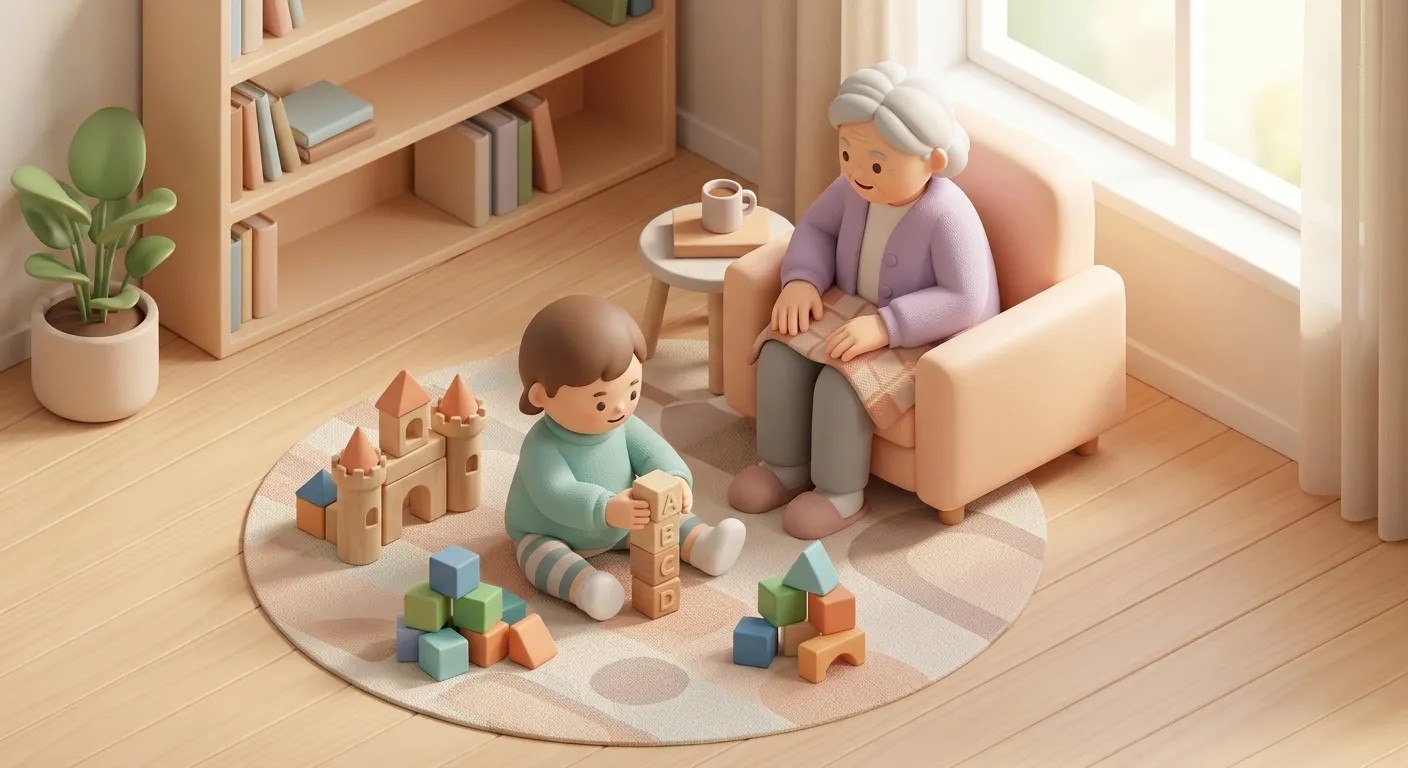
Before the visit:
- Show photos and videos of grandparents regularly. Babies and toddlers begin to recognize faces and voices through screens, which makes in-person meetings feel less scary.
- Talk about grandparents in your daily conversation. “Grandma would love this song!” or “Look, a cardinal — grandpa loves those.”
During the visit:
- Give your child time. Don’t hand them over immediately. Let grandparents sit nearby, speak softly, and wait for the child to approach.
- Play together as a group first, then slowly phase yourself out as your child becomes comfortable.
- If grandparents are visiting for several days, have them arrive a day early so your child can adjust before you step away.
Coach your parents gently:
- Suggest they avoid direct eye contact and reaching out initially — instead, get on the child’s level and engage with a toy.
- Remind them that patience is a superpower. The child who screams today may climb into their lap tomorrow.
Fostering the Relationship with School-Age Kids (Ages 5-12)
Your kids are now in school, so the issue isn’t stranger anxiety anymore. The problem now is that their attention is increasingly fragmented — sports, friends, homework, screens. The grandparent who once mesmerized them with card tricks must now compete with YouTube.
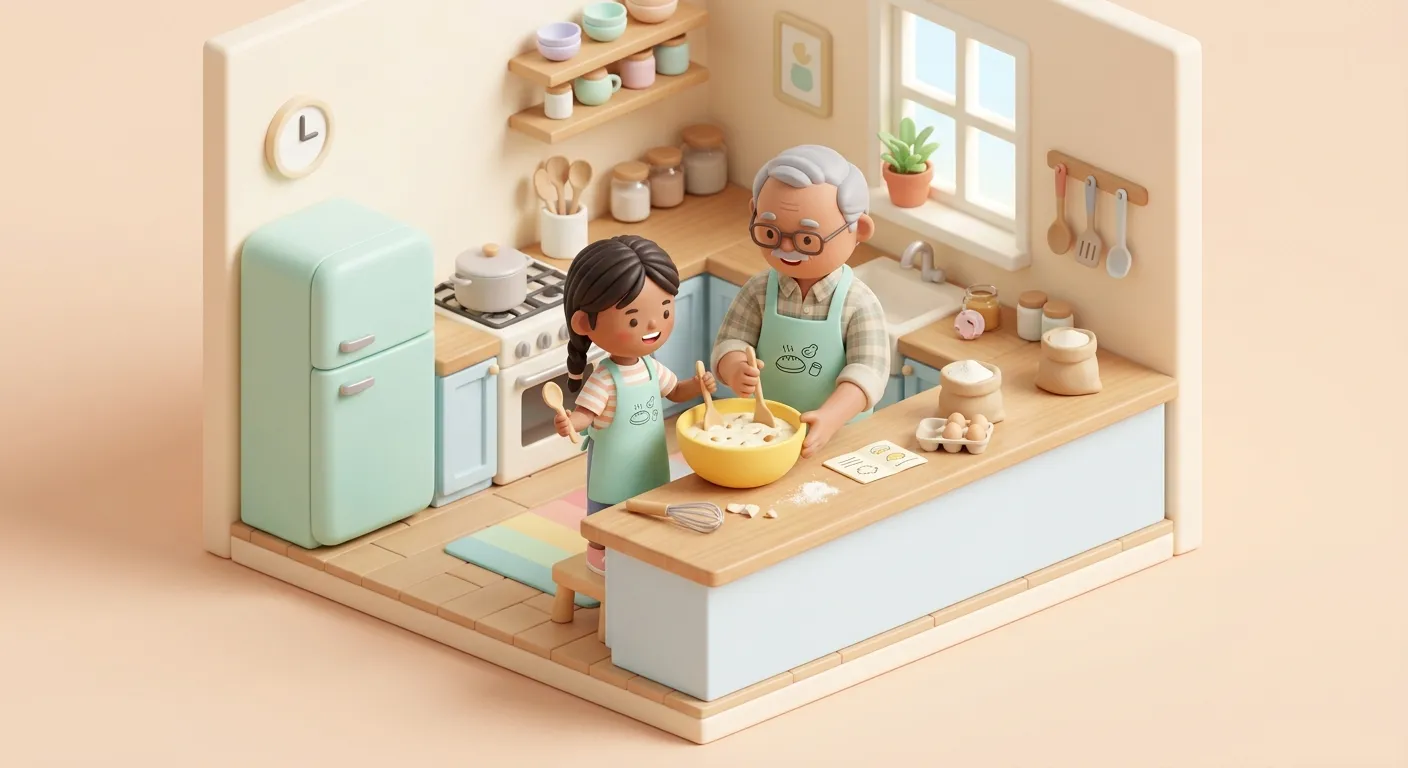
The key to connecting grandparents with school-age kids? Shared activities with a purpose.
Find a “thing” that’s just theirs
Some of the best grandparent-grandchild relationships are built around a shared activity. Maybe it’s:
- Cooking — grandma’s secret pie recipe, passed down
- A hobby — fishing, gardening, woodworking, painting
- A project — building a birdhouse, starting a coin collection
- A tradition — Saturday morning pancakes, a weekly card game
Encourage your parents to find something their grandkids enjoy, and then make space for them to do it together. One-on-one time, free from sibling distractions, is crucial at this age.
Share family stories
School-age kids are hungry to learn about their heritage. Encourage your parents to share stories about when they were kids — what school was like, what games they played, what the world was like back then. A landmark study from Emory University found that kids who know their family history — what researchers call the “intergenerational self” — have higher self-esteem and a greater sense of control over their lives.
If your parents aren’t natural storytellers, nudge them. “Mom, tell the kids about the time you got lost at the state fair” works wonders. You can also use our guide to 50 questions to ask grandparents before it’s too late as a conversation starter.
Create low-pressure connection points
Not every interaction needs to be a big event. Some of the best bonding happens through:
- A weekly phone call at the same time (consistency matters more than length)
- Sending a drawing or letter in the mail — grandparents can write back
- Playing an online game together (Words with Friends, chess apps)
- Sharing a book — reading the same title and talking about it afterward
Keeping Teenagers Connected with Grandparents
This is where most families struggle. Teens are developmentally wired to pull away from family and toward peers. It’s normal. But it also means the grandparent-grandchild bond requires more intentional effort than ever.
Respect their autonomy
Forcing a teenager to call grandma every Sunday will backfire. Instead, find ways to make connection feel natural and respect their growing independence:
- Text instead of call. Many grandparents are comfortable texting now, and teens vastly prefer it. A quick photo or meme takes 10 seconds and keeps the line open.
- Involve grandparents in what they already care about. If your teen plays sports, have grandpa watch the livestream. If they’re into cooking, suggest they call grandma for her meatball recipe.
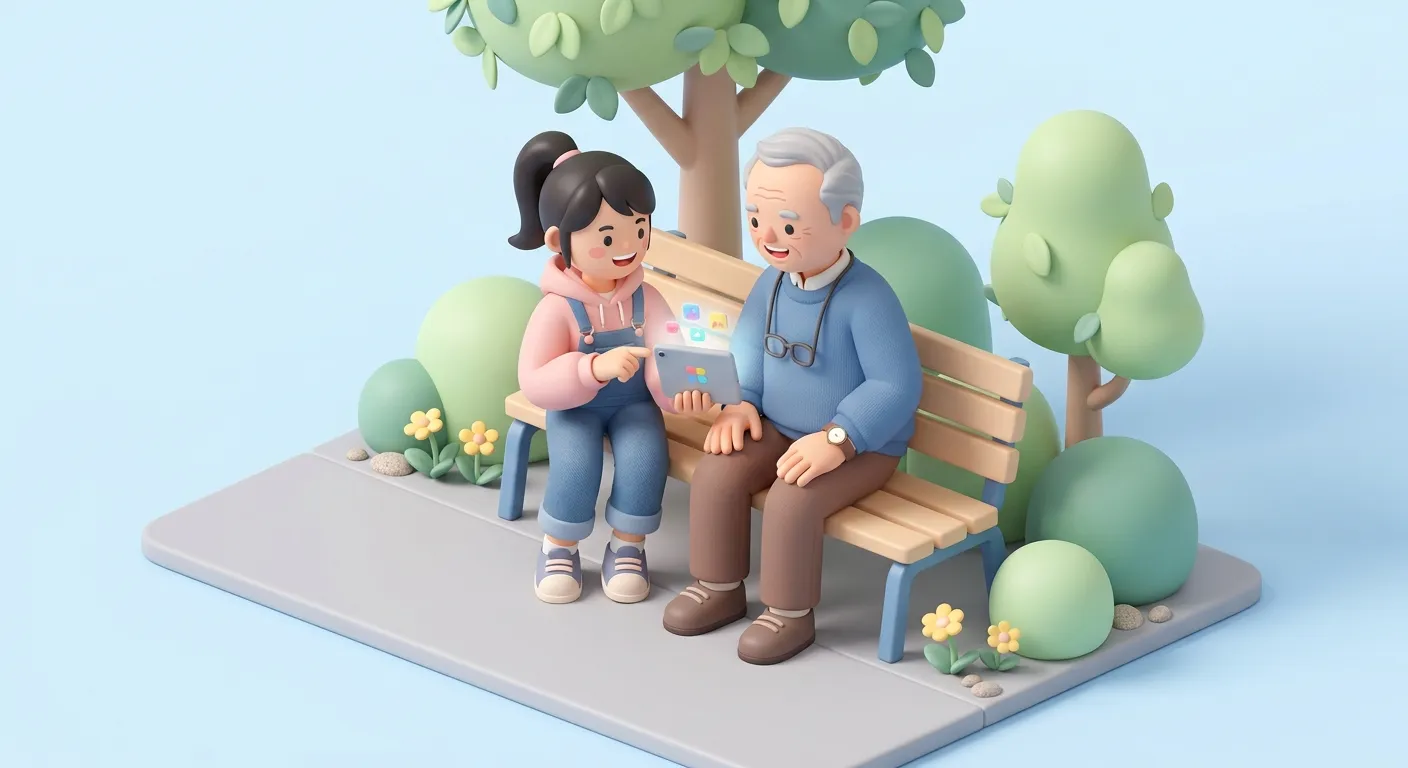
- Create opportunities, not obligations. “Hey, grandpa mentioned he needs help setting up his new phone — want to go over Saturday?” works better than “You need to visit grandpa this weekend.”
Tap into the interview effect
Many teens are more engaged with grandparents when the interaction has a purpose. Asking grandparents about their life for a school project, a family history assignment, or even just a casual “I’m curious” conversation often leads to real connection. Our guide on what age grandchildren lose interest in grandparents explores this dynamic in detail.
Don’t take the distance personally
If your teenager seems disinterested, it doesn’t mean the bond is lost. Adolescent pulling-away is temporary. The foundation you built in earlier years is still there — it just goes underground for a while and resurfaces in their twenties.
When Your Child Is Afraid of or Uncomfortable Around Grandparents
Sometimes the issue isn’t distance or age — it’s discomfort. Maybe your parent has changed physically due to aging or illness. Maybe a grandparent’s house smells unfamiliar. Maybe there’s been a long gap between visits and your child has simply forgotten.
This is more common than most families admit, and it requires extra sensitivity:
- Prepare your child in advance. “Grandpa uses a wheelchair now, but he’s still the same grandpa who loves your jokes.” Explain changes matter-of-factly, without fear.
- Use photos and video calls to rebuild familiarity before an in-person visit.
- Don’t force affection. High-fives, fist bumps, or sitting nearby are all valid ways to say hello. Hugs can wait.
- Give your parent context too. Let them know what your child is into right now so they have conversation starters ready.
If a grandparent is living with dementia or Alzheimer’s, visits will need thoughtful preparation. Sensory activities — browsing through old photo albums, listening to music from their era, handling familiar objects — can foster connection even when conversation isn’t possible. You can explore our guide on fun activities for grandparents and grandchildren at home for more ideas.
Bridging the Gap When Grandparents Live Far Away
The biggest challenge for most families is distance. When grandparents live far away, there’s so much pressure on every visit to somehow “make it count,” which paradoxically makes connecting even harder.
The solution is to develop a relationship between visits, not just during them:
- Regular, low-key communication is better than occasional, high-pressure calls. A weekly 10-minute video chat at a scheduled time establishes a routine and expectation.
- Use snail mail. A monthly family newsletter with photos, artwork, and news gives grandparents something to physically hold and read through. Services like Hug Letters will print and mail a family newspaper to your grandparents each month, making this simple — especially for grandparents who aren’t tech-savvy.
- Develop shared activities over distance. Watch the same movie and discuss it on the phone afterward. Plant a garden at the same time and compare notes. Send a “mystery box” back and forth.
For more information, see our full guide to long-distance grandparenting.
What to Do When a Grandparent Isn’t a “Natural” with Kids
Not every grandparent is the warm, cookie-baking, storytelling grandmother or grandfather you see in the movies. Some are more introverted. Some are less comfortable around small children. Some simply weren’t raised in households where physical affection was freely given.
That doesn’t mean a bond can’t develop — it just develops differently.
- Focus on their strengths. A quiet grandfather who likes birds may not engage in imaginative play, but he can take a grandchild on a bird walk. A book-loving grandmother may not want to chase toddlers, but she can swap books with an older child.
- Lower the bar. You don’t need hugs and “I love you” at every turn. Physical presence, consistency, and genuine interest will do.
- Have patience. Some grandparents will loosen up as the kids get older and can carry on a real conversation.
How to Help Your Child Bond with Grandparents: FAQ
How often should grandchildren see their grandparents?
There’s no magic number — what matters is consistency. A weekly video call and two or three visits in person per year can foster a strong relationship, as long as it’s supported between times with photos, calls, and shared activities.
What if my relationship with my parents is strained?
Your relationship with your parents and your child’s relationship with their grandparents are two separate things. Unless there’s a safety concern, most family therapists recommend facilitating the grandparent-grandchild bond even when the parent-grandparent relationship is complicated. Setting boundaries around your own triggers while keeping the door open for your child is possible — though sometimes it requires professional support.
At what age do kids benefit most from grandparent relationships?
Every age, honestly. Babies who are exposed to grandparents regularly develop familiarity early. School-age kids absorb family stories and values. Teenagers who have a foundation of connection are more likely to maintain it into adulthood. The National Association for the Education of Young Children emphasizes that the benefits are lifelong.
My child doesn’t want to visit grandparents. What should I do?
Start by understanding why. Is it boredom? Discomfort? A sensory issue with the environment? Once you know the root cause, you can address it — bring familiar toys, plan a specific outing, or shorten the visit. Avoid framing it as punishment (“You HAVE to go”) and instead make it about something positive (“Grandma just got that new puzzle you’ve been wanting to try”).
The Bond Doesn’t Have to Be Perfect — It Just Has to Be Real
The relationship between your children and their grandparents doesn’t need to look like a Hallmark movie. It doesn’t require weekly Sunday dinners or matching family pajamas. It requires showing up — imperfectly, consistently, and with enough intention to bridge whatever gap exists between generations.
Your role as the parent in the middle is both exhausting and irreplaceable. You’re the one who remembers to make the call, sends the photo, suggests the activity, and gently coaches both sides when things feel awkward. That effort matters more than you realize.
Because one day — maybe years from now — your child will tell a story that starts with “My grandma always used to…” and you’ll know that the bridge you built held.

About Martin Gouy
Martin is the founder of Hug Letters. Hug Letters is a family newsletter for grandparents. Every month, grandparents receive a heartwarming newspaper with photos and stories from the whole family.