

Your mom never measures ingredients. She uses a handful of this, a glug of that, and a pinch refined over forty years of instinctive repetition. You’ve dined on her chicken soup countless times, yet if you were handed the task of recreating it yourself, you’d be utterly clueless. And soon, perhaps sooner than you’d like to acknowledge, she won’t be around to demonstrate.
If you’ve long intended to preserve family recipes from your aging parents but keep delaying the effort, rest assured, you aren’t the only one who feels that way. The National Council on Aging notes that over 53 million family members in the United States serve as caregivers. Many of those surveyed wish they had seized the chance to record family recipes and stories while their parents were still available to share them.
In this post, I want to equip you with the know-how to actually get that done in the next couple of weeks, not “some day.” You don’t need professional equipment or a keen eye for gourmet photography. We just need to lay out an actionable plan to capture the recipes you’ve been longing to learn, the history that surrounds them, and the motions your mom makes while whipping up her specialties.
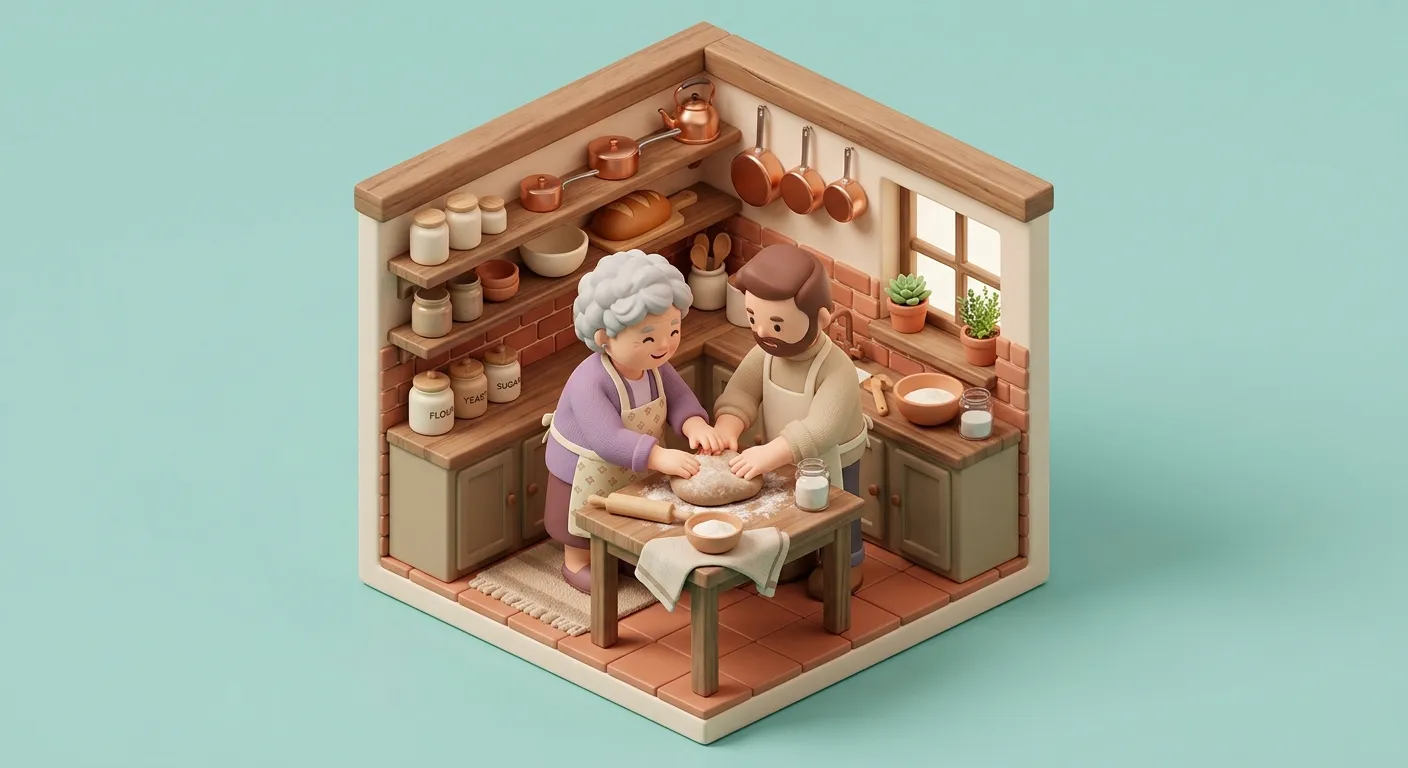
Why Preserving Family Recipes Feels So Urgent
One fact nobody tells you about family recipes: they don’t vanish immediately. They simply vanish over time. Your father no longer makes the same barbeque sauce because his back can’t tolerate standing by the grill. Your mom’s rolls each year have fewer steps. Less stirring and kneading. Less time making. Eventually, she’ll buy them in the store.
By the time you realize your parent’s recipe is no longer being made, they may no longer be able to guide you step by step. A lifetime of recipes can be lost when memory changes, mobility issues come about, and/or cognitive decline happens.
The Alzheimer’s Association reports that procedural memory, like knowing the recipe to prepare a dish, can persist into later stages of the disease. So, your parent may still be able to show you the recipe even if they can’t write or explain the recipe. That said, they still won’t do it forever. And the window to do it while you still can isn’t open to us all the time. The rush we feel to do this isn’t fear-based; it is a recognition that the next time you see your folks and you say, “I’ll get around to recording this recipe next time,” won’t result in “It’s time to finally make that stew,” but rather, “I wish I still had a way to make this stew.”
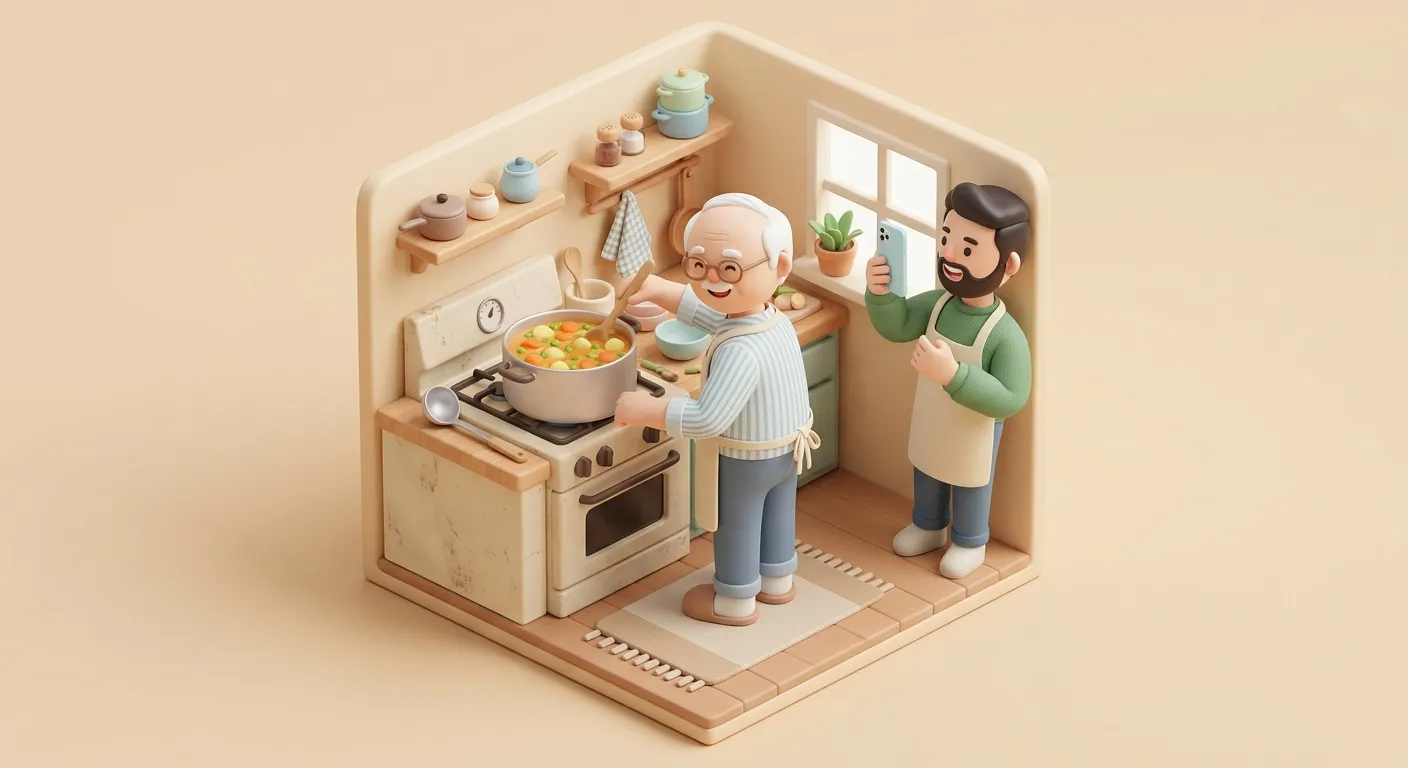
How to Record Recipes from a Parent Who Doesn’t Use Measurements
Here’s where we run into a common problem. Your mom uses no measuring cups or spoons. She eyeballs the ingredients. Translating a lifetime of instinct into precise measurements feels like an impossible task. So, how do you do it?
Cook alongside them
The very best way to learn a relative’s recipe is to cook the dish with them. Bring along your measuring cup and spoons, and resist the urge to get in their way. The moment they reach into a bag of flour to pinch what they need, measure what’s left inside before they reached in and when they are finished. If they say something as frustrating as “cook until it looks right,” take a picture of what right is.
Record video of the entire cooking process
Find a spot with your phone where you can easily record both their hands and the stove. Don’t worry about production quality here. Instead, focus on capturing all the moments that might be difficult to articulate later: How exactly do they fold the dough? How are the hands moving? What color are the onions when you’ve cooked enough of them? What size are they cutting the carrots?
Ask the right questions while cooking
Instead of “how much salt?”, ask them questions like:
- What does this look like when you know it needs salt?
- How do you know when it’s done?
- What would happen if I left this step out?
- Did grandma make her recipe any different?
The goal here is to get inside their heads, asking questions that dig into the logic behind why they’re cooking rather than focusing solely on what they’re doing.
Do multiple sessions for the same recipe
If the dish is made from your mom, it probably will come out slightly different every time she cooks it. This is okay, it’s the best possible result. Make the dish with your parents or partner two or three times. What will you likely discover is that certain variables (like ingredients) stay the same and some (like the exact size of your carrots) changes with their mood, the time of year, or who will be coming over for dinner.
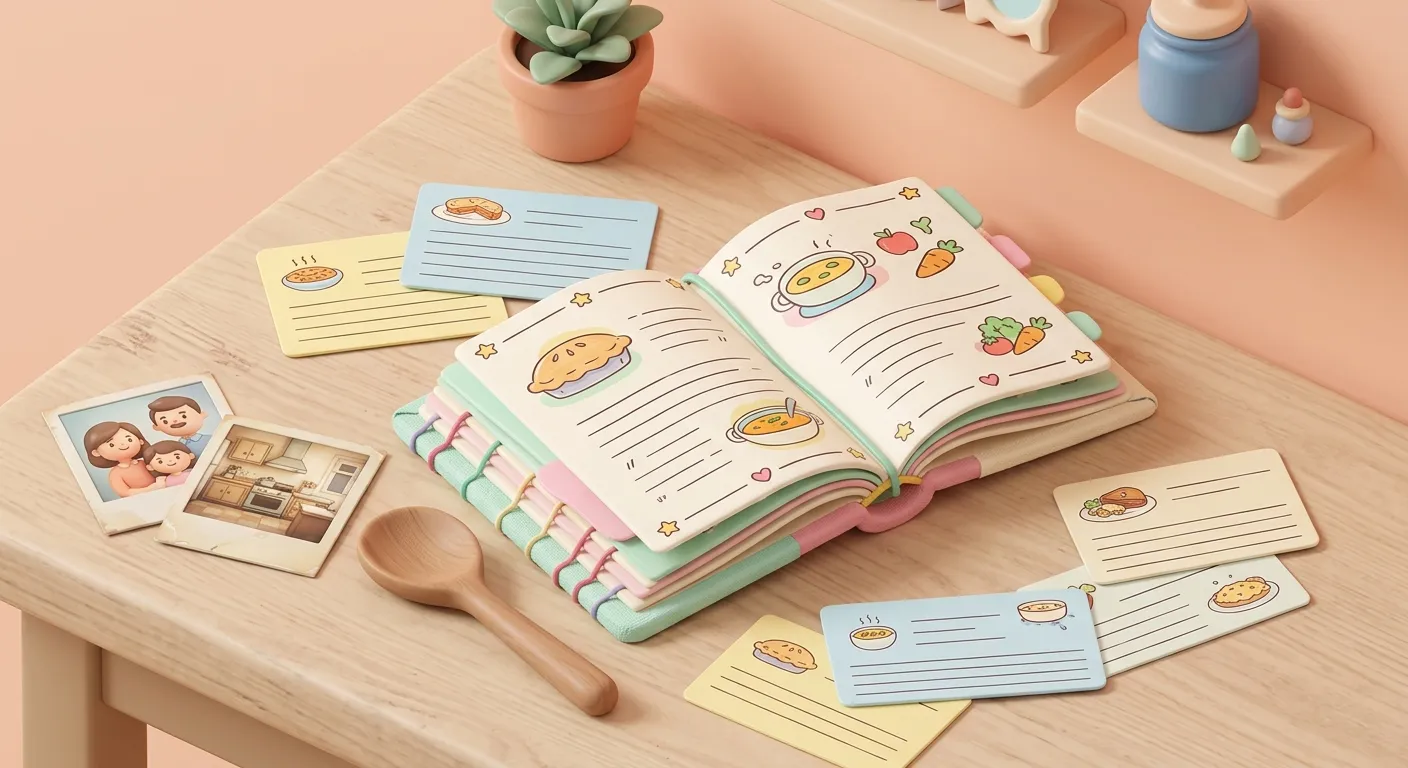
Capturing More Than Just Ingredients
Capturing the ingredients is only half of it. You’ll also need the surrounding context that turns an ordinary dish into a treasured family relic.
Sit down with your mom or dad (or cook with them!) and ask these questions:
- Where is this recipe from? Was it your grandmama’s? Your mother’s? From a friend or neighbor in the neighborhood? Did you make it yourself after you moved out?
- Why do they cook it? Did it come to her from every Sunday lunch to her kids as they came home from school? Was it a Thanksgiving specialty? Or did she make it when someone got sick or the weather turned cold?
- Has the recipe been adapted over the years? What was the original recipe and when was the first time they adapted it? What did that version taste like?
- What went wrong the first time she tried it? How did the dish fail? Did anything go wrong?
- Who liked it most? Who would eat it? Who had more servings than anyone else? This way, your kids and grandkids will have a compelling motive to try making the recipe on their own later in life. A collection of ingredients will inevitably fall out of use. But a story of your great-grandmother’s ingenuity in difficult circumstances? That has the potential to be shared for generations. As AARP’s guide to preserving family stories says, combining a physical artifact, such as a recipe, with a narrative can create the strongest legacy for your family.
And if you’re in the habit of already capturing stories from your parents, recipes can slot in quite nicely. Our guide to questions to ask your grandparents before it’s too late suggests some inquiries about the foods of your childhood memory that will work well with a recipe-keeping approach.
How to Preserve Family Recipes When You Live Far Away
Some of us don’t live in the same kitchen as our parents. If you live in an area far from where your parents live, you can still preserve those family recipes, though. You just need a different strategy.
Schedule a video cooking session
Set up a video conference like FaceTime or Zoom and call it a cooking date with your parent. Have your parent prepare the recipe, with you listening in or watching them do it. You can cook it in your own kitchen, too. Just ask questions as they come to mind.
Send a recipe recorder
Send your parent a voice recorder to use when preparing food. Even their phone’s voice memo app will work here. Have your parent narrate as they cook. It’s even OK if they simply go about their business and tell you what they’re doing. This approach records more than an actual recipe ever will, such as when your parent hesitates, second-guesses themselves, or adds, “And don’t forget to add…”
Enlist local help
If a sibling, relative, or family friend lives near your parent, ask them to come visit and take note as your “recipe detective.” Have them focus on the dishes you most want to save.
Request the artifacts
Have your parents send you their old recipe cards or photos of their recipe books. Even blurry photos of Grandma’s handwriting on an index card are worth a ton.
You can find more ideas for long-distance relationship success, including what kinds of communication work best to facilitate projects such as this one, in our guide to long-distance grandparenting.
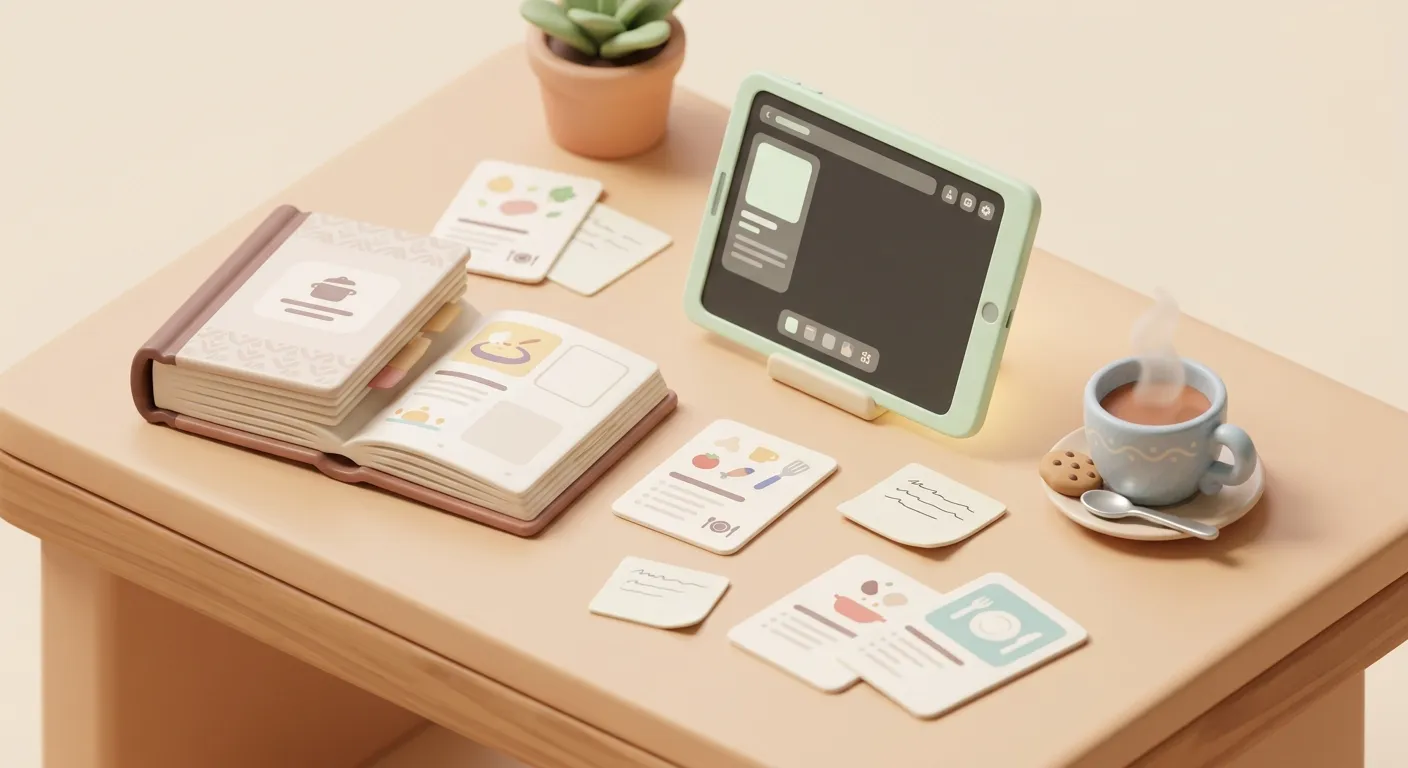
Turning Recipes into Something Your Family Can Keep
The work is done, your family recipes and stories are collected. The final step is to decide what to do with them so they can live to be used. Here are a few ways to start.
Digital backup (the bare minimum)
Enter each recipe into a collective notebook, a notepad app, or a cooking app (such as Paprika or AnyList), complete with pictures, and any audio files you make when they explain things. Keep it on a shared drive the whole household can access — Google Drive is great.
A printed family cookbook
If you use a book creation service like Blurb, Shutterfly, or Heritage Cookbook you can create a beautiful, bound family cookbook. Have pictures of the actual handwritten recipe cards alongside the typed recipe page. Include stories, family photos taken from mealtime and a short introduction for each recipe explaining when and who made it.
A recipe newsletter
If the idea of putting everything together at once feels daunting, spread recipes out across time. Share a recipe and its story alongside your regular family updates. The service, Hug Letters can print and deliver a newspaper in the mail to your grandparents each month with recipes and the recipe feature alone is reason enough to read it front to back!
Recipe cards as gifts
Print out single recipe cards, complete with a picture of your parent’s handwriting from a scanned card one side and a typed version the other side. Then, give those as gifts to brothers, sisters, cousins and grandchildren — frame the most meaningful ones on your kitchen wall.
Starting the Conversation Without Making It Heavy
There are parents who would be happy to spend an afternoon with you sharing recipes. Other parents might get uncomfortable, feeling like you see them as fragile and are trying to prepare for their future absence.
So what’s a best approach to gently suggest that you’re interested in hearing their stories?
- Make it about celebration, not preservation: “I want to learn your pot roast because it’s the best pot roast I have ever had” is better than, “I want to record it before you can’t make it anymore.”
- Start small: Don’t start with the announcement of a project. Instead say, “When can I cook dinner with you next time you come over?” and see if the conversation grows from there.
- Inquire with grandchildren: Are your kids interested in Grandma’s cookies? Start there. Grandparents are more likely to respond to grandkids than kids.
- It’s about the time together, the recipe’s the excuse: Make the afternoon together the goal and everything else is a bonus.
Recipes can be a doorway to conversations with parents while visiting or chatting on the phone. They often lead to a story, a memory or just a few good laughs. If your parent is currently living in a senior care community, sharing a well loved recipe can be a good conversation starter. Read more about what else makes senior living visits meaningful. If your family includes grandchildren who want in on the action, helping your child bond with grandparents by cooking together is as organic a way to do it as any.
FAQ
How do I preserve old handwritten recipe cards that are falling apart?
Immediately scan them or take photos of both sides, making sure the images are taken in a well-lit room. Keep the physical copies in acid-free sleeves (you can find them at any craft store) and store them away from heat or moisture. Then ensure that all of the scanned versions are backed up in at least two separate locations, like on the cloud and on a hard drive.
What if my parent has dementia and can’t describe their recipes?
Lean into what they can still do. Many people who suffer from dementia are able to maintain procedural memory—the physical acts of cooking—long after their verbal recollection has faded. Try cooking along with them, paying attention to what they do instead of asking them to recall what they did. Additionally, ask other family members if they recall having watched your parent cook at some point and are willing to fill in the blanks.
How do I organize recipes from multiple family members?
Divide the recipes according to person (a Grandma Rose section, a Dad section), by event (holidays, weeknight dinners, breakfasts), or by type of course. And don’t forget to include a family tree at the front, to help later generations figure out who everyone is. Most families find the organization method that’s most natural, which is typically by person, because it honors all contributors.
What is the best app to use for digital recipe storage?
Paprika, AnyList, and Notion are all good options. The best one, however, is the one that your family will actually use. For ease of access for everyone and lack of need to download any apps at all, consider using a shared Google Doc or Apple Notes folder. Ultimately, the most important factor is choosing ONE place to put everything in and keeping it all there.
Start with One Recipe This Week
You don’t need a weekend-long project or a family meeting to begin. What you need is one phone call. Call your parent and say something like, “Hey, I was just thinking about that [specific dish] you make—can you tell me how you make it?” Take notes. Record the call if they’re okay with that, too.
Then do it next week with a different recipe.
There’s no need for the entire family cookbook to be completed in one swoop; it can take place one recipe, one story, one afternoon at a time. And each and every recipe that you gather will never be forgotten by your future family, who will cook it and taste it and enjoy its legacy. Because the recipes will continue to be made long after the hands that invented them are no longer here; that is why we’re doing all of this, after all.

About Martin Gouy
Martin is the founder of Hug Letters. Hug Letters is a family newsletter for grandparents. Every month, grandparents receive a heartwarming newspaper with photos and stories from the whole family.