

Almost half of the Americans that a 2023 survey by Eterneva asked said that they wish they had recorded their family member’s voices, before they died. It is a statistic that should cause you, any adult child reading this right now, to pause. You have grandparents. They have stories that will go on forever. Stories your history books won’t contain, the way their mother’s kitchen smelled in the summertime, when they knew they had found a lifetime partner for themselves, the lessons they wished someone had taught them when they were your age.
But here’s the good thing about recording your grandparents’ life stories: You do not need a professional voice recorder to get your grandparents talking about their life, nor do you need a professional to edit their recordings for you. You do not need to set aside an entire day to do it. You only need your smartphone, a comfortable chair, and one well-timed question.
In the following paragraphs, we tell you everything you need to know. We share what equipment you need, how to set up your recording session, what questions to ask and, if necessary, how to do the whole process long-distance, over hundreds of miles. We even explain what to do with the recordings.
Why Recording Your Family’s Stories Should Matter to You
Researchers at Emory University found that children who know their family’s narrative, the struggles, the triumphs, the ordinary Tuesdays, show higher self-esteem, stronger resilience, and a deeper sense of belonging. These stories, in turn, become an inheritance.
But your grandparents also gain from recording. The American Psychological Association found that the older generation benefits from reminiscing as well as life review to improve their moods, alleviate feelings of loneliness and to maintain some level of brain activity for them. When you set up your recording to gather your family’s memories, you offer them a chance to reflect back on a life well-lived and give them the feeling it has meant to them.
And for you? You will end up with a recording that is one of a kind. Photos can show you a face. An audio file can tell you how someone sounded, their laugh, the way they pause in between sentences to give you a punchline, the way they tell you a story about their wedding day in the middle of the 20th century. In a few short years, it will feel like your grandmother is sitting across from you once again.
What Equipment You Need (And It’s Fewer Than You Think)
You already have the very best recording device you will ever need. That device is the phone you already own. Smartphones these days can record at a quality that would be worth thousands of dollars just ten years ago. Do not let your quest for the right equipment hold you back from your first session.
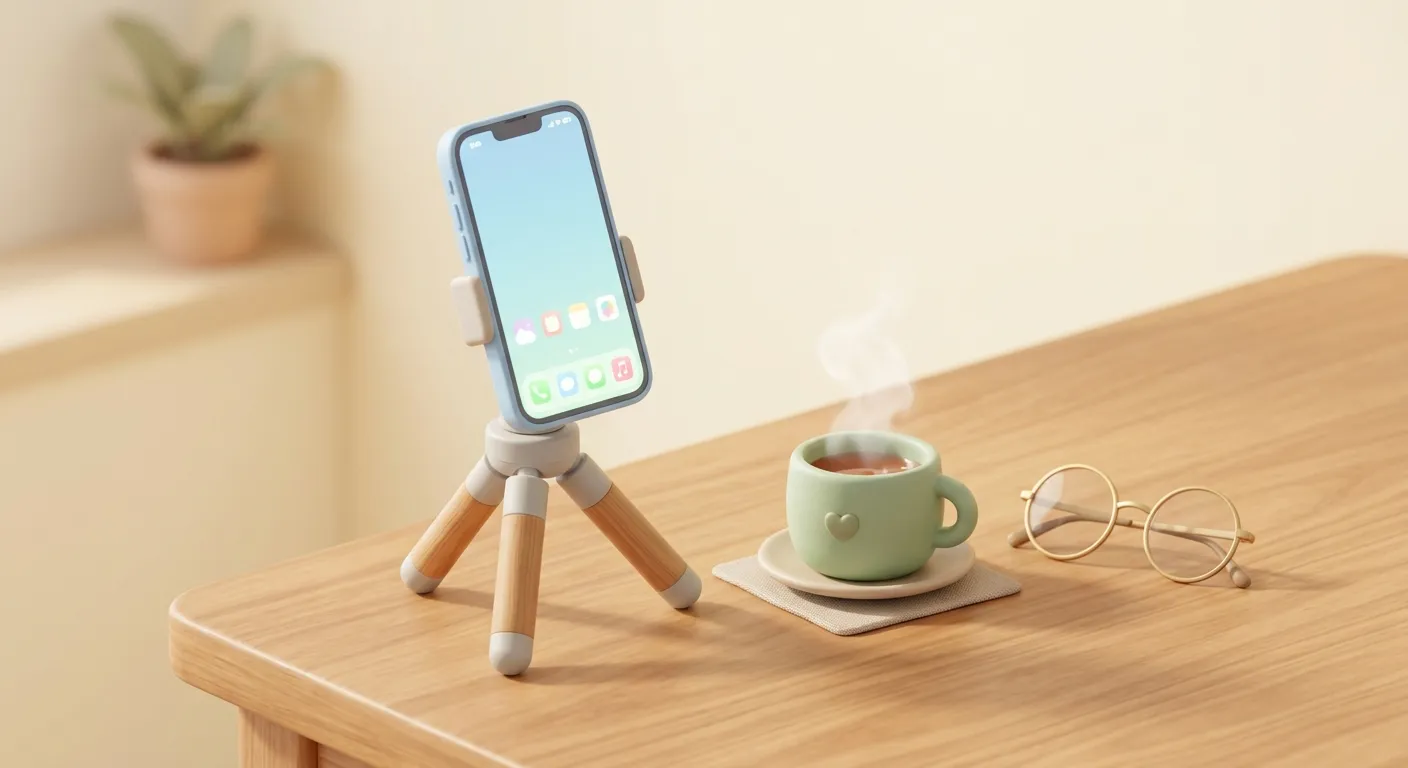
For recording audio only:
- iPhone: Launch the Voice Memos app (it’s installed), hit the red circle, then press done when the recording is finished.
- Android: Use your phone’s built-in Recorder app, or download the Google Recorder app to use it for free, which includes automatic transcription.
- Pro tip: Set the phone down on a table between you, screen-down, about 12 inches away from your grandparents. It is a perfect distance for them to speak naturally, yet clearly, and is not too noticeable for them.
For recording video:
- Simply hold your smartphone against a small pile of books or use a $15 tripod.
- Shoot horizontally (landscape orientation) to make it feel more authentic.
- Place the camera at your grandparent’s eye level so it’s neither looking up nor down.
Optional upgrades (not necessary):
- A lavalier mic with a clip ($15–$30) will lower distracting background noise.
- Download the free Otter.ai app, which will record and transcribe audio automatically, saving you a lot of time when you sit down to write later.
- Bring a portable battery bank to charge your phone so it doesn’t die on you in the middle of a story.
Here’s the important rule: your grandparent should not be expected to use the equipment at all. You handle that; they just speak.
How to Set Up a Great Recording Session
What makes the difference between an awkward and stiff exchange of a few scattered sentences and a rich, full conversation usually isn’t the question but the environment and timing.
Record in their space. Set up in your grandparent’s home, at the kitchen table, living room, front porch. Familiar places relax people and trigger memories. Don’t try to record outside of their home at a restaurant, hospital, or other public space where you can’t control the background noise. If you’re planning a visit specifically with this goal in mind, our guide to making visits with aging parents meaningful can provide a framework for the day.
Choose the right time. It is best in the morning for most elderly people since recall and energy levels are usually higher. Don’t try to record them right after lunchtime (when they may be sleepy) or in the evenings (when they will be tired).
Keep it short. Your sessions don’t need to go for more than 30 to 45 minutes and you’ll get better storytelling this way because it won’t feel as much like an interview. You can always come back later if there’s more you’d like to know. In fact, you’ll likely find that doing multiple sessions across months yields more than any single marathon interview.
Ask for consent. Always let your grandparent know you’d like to record. A simple, “I’d love to record your stories so the entire family can have them. Does that work for you?” is fine. Most grandparents are happy to be asked. Some get shy for a few moments until they become comfortable and forget about the recorder.
Make it distraction-free. Turn off the TV. Put your phone on silent. If your grandparent will be distracted by a clock you can see on the wall, remove it so they aren’t constantly looking at the time and rushing their stories.
The Best Questions to Get Grandparents Talking
The first mistake is asking, “Tell me about your life” as a way to kick things off. The question is so broad it confuses most people into shutting down. The trick to unlocking great stories is starting with just one very specific question.
Here are questions that almost always produce great stories:
- “What was your mom like when you were little?”
- “How was your first car?”
- “Walk me through each room in the house you grew up in.”
- “How did you and Grandma/Grandpa first meet?”
- “What was the day Mom/Dad was born like for you?”
When you get that first response, follow up on that thread. When they mention a person, a place, or an event, ask about that. “You mentioned Uncle Ray, what was he like?” is more powerful than jumping to your next prepared question.
Don’t shy away from harder topics. Many grandparents are waiting to be asked about challenges they overcame. Frame it gently: “Was there a time in your life when things were really difficult? How did you get through it?”
For a full list of prompts organized by life stage and theme, see our guide to 50 questions to ask your grandparents before it’s too late.
How to Record Family Stories Long-Distance
If you live far from your grandparents, and 43 million Americans are long-distance caregivers, so you are not alone, distance does not have to stop you from preserving their stories.
Phone call recording:
- On iPhone, use a third-party app like Rev Call Recorder or TapeACall (these work with regular phone calls).
- On Android, Google Recorder can capture speakerphone audio placed nearby.
- Always tell your grandparent you are recording. Some states legally require both-party consent.
Video call recording:
- Zoom’s built-in recording feature is the simplest option. Host a free Zoom call, hit Record, and the video and audio save automatically.
- Google Meet and FaceTime (on Mac) also support recording.
- Video calls add the visual dimension, facial expressions, hand gestures, the way they smile before telling a funny story, that audio alone misses. For more video call tips, see our video call ideas for grandparents and grandchildren.
Prompt-by-mail method:
For grandparents who are not comfortable with video calls or long phone conversations, try mailing one question per week on a postcard. They can write their answer on the back and mail it to you, or call you when they are ready to talk about it. This slow approach often produces the most thoughtful, detailed responses.
If you already send a family newsletter through a service like Hug Letters, you could include a “story prompt” in each issue, a question printed right in the newsletter that invites your grandparent to share a memory with the family next month.
Staying connected across the miles takes intentional effort. For more strategies, read our guide to long-distance grandparenting.
Recording Stories When a Grandparent Has Cognitive Decline
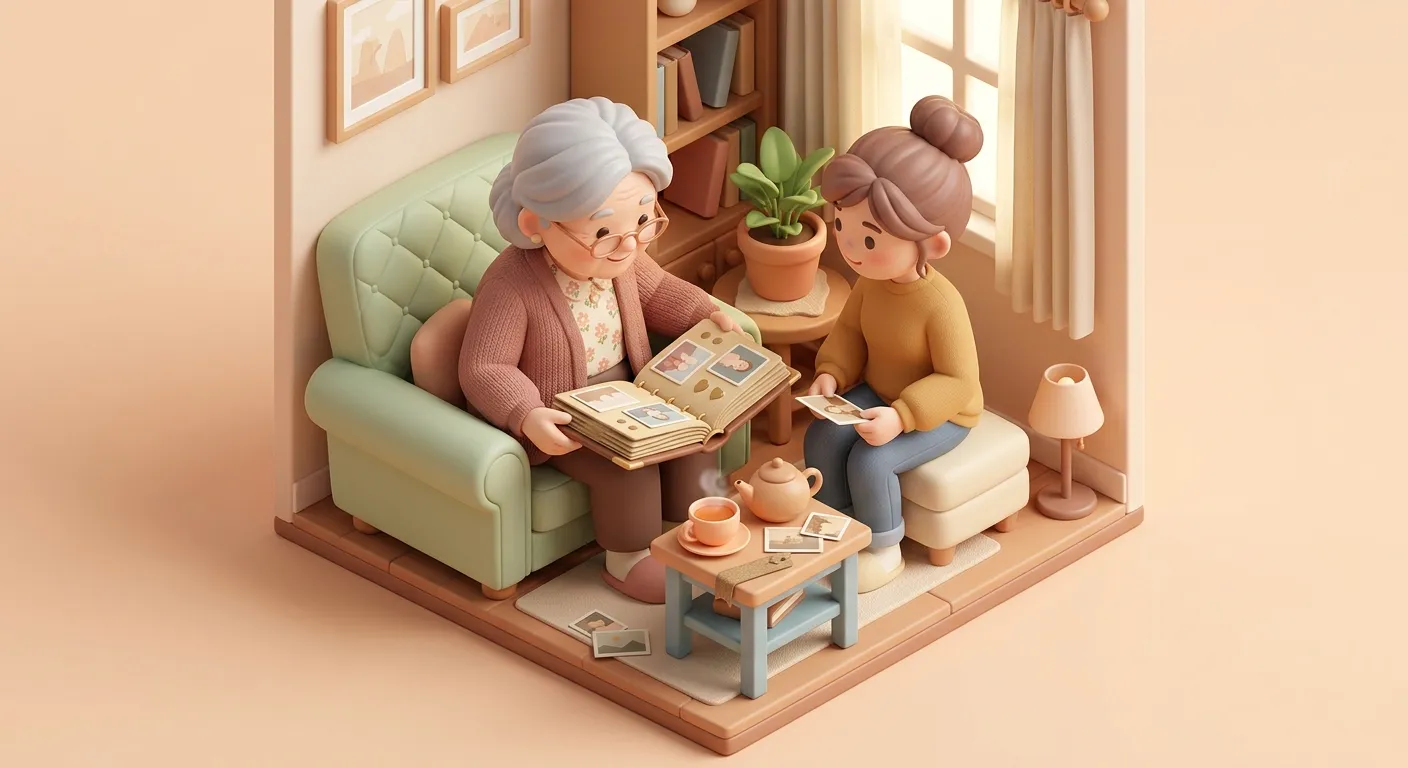
If your grandparent is living with dementia or Alzheimer’s, recording their stories is still possible and profoundly worthwhile. The approach simply shifts.
Keep sessions to 15 minutes or less. Shorter is better. Five good minutes of storytelling is a success.
Use sensory triggers instead of direct questions. Bring a photo album, play music from their era, bake something that fills the kitchen with a familiar smell. These sensory triggers can access long-term memory pathways that directed questions might not. The Alzheimer’s Association suggests using familiar items and photos to help your loved one with communication.
Prioritize feelings over facts. Instead of “When did you move to Chicago?” try “What was living in Chicago like?” Emotional memories are more often retained than factual ones.
Gracefully allow for repetition. If they repeat the same story they told you last week, record it again. The different details they tell each time can be revealing. They also reveal what was important to them.
Record the snippets. If your parent tells you one sentence that is very poignant, “Your grandpa always used to bring me daisies on Thursdays”, save it! It could be the most memorable audio file in your family’s library.
Read more about how to talk to a parent with cognitive changes in our article on how to talk to a parent with dementia.
What to Do With Your Recordings
Recording your parent’s stories is a large part of this, but you can help ensure the stories get to the people that need to hear them.
Organize your recording. Categorize recordings into folders on your computer or cloud storage account: “Childhood,” “Career,” “Marriage & Family,” and “Life Lessons.”
Transcribe your recordings. Transcription converts an audio file into searchable, sharable text. Here are a few ways to do it:
- Otter.ai — A free version transcribes 300 minutes per month, with generally decent results.
- Google Recorder (available on Android) — Automatically and completely free. It will work even offline.
- Rev.com — Human transcription is a professional service. It costs approximately $1.50 per minute but can be worth the cost for the accuracy.
Always keep multiple copies. Save recordings in two places: the cloud, whether Google Drive, iCloud, or Dropbox; and locally, like on your computer and your phone. Hard drives can fail. Phones get stolen. Cloud storage helps to avoid both of these things.
Share with the entire family. Create a Google shared folder, a cloud storage account everyone has access to, or use an online service to make sure your siblings, cousins, aunts, uncles, and great-uncles have access to your collection. Family stories that sit on one person’s computer aren’t helping anyone.
Make it physical. Create a family memory book with transcribed versions of family stories. Or send out a family newsletter with the recordings included. Include the most poignant family memories on a family holiday card. Physical versions will get your family stories heard by family members, especially those who are not tech-savvy enough to listen to online versions. You might even pair this with preserved family recipes for a complete family legacy.
Free and Paid Tools for Recording Family History
| Tool | Cost | Best For | Key Feature |
|---|---|---|---|
| Voice Memos (iPhone) | Free | Quick audio capture | Already on your phone |
| Google Recorder | Free | Android users | Auto-transcription |
| Otter.ai | Free / $16.99 mo | Live transcription | Real-time text with speaker labels |
| StoryCorps App | Free | Guided interviews | Curated question prompts |
| StoryWorth | $99/year | Structured memoir | Weekly prompts, printed book at end |
| Artifact | $50+/year | Video memoirs | AI-assisted video editing |
| Remento | $149/year | Multiple storytellers | Collaborative story collection |
In reality, free smartphone apps suffice for most families. Paid services can make this task simpler and sound more polished, but they certainly aren’t necessary.
Frequently Asked Questions
How long should a recording session be with grandparents?
Aim for 30 to 45 minutes for most adults. For grandparents over 80 or those with health concerns, 15 to 20 minutes is ideal. It’s far better to have five shorter and easy conversation sessions than a single long, exhausting session. Close your interview when your grandparent is feeling happy; you can even ask them to share a favorite memory or life lesson to end the conversation on a happy note.
What if my grandparent does not want to be recorded?
It’s okay if they decline! They may be camera shy, unsure if they can make something entertaining or interesting enough, or they just might not want to be recorded. Frame it as a request. “The grandchildren will enjoy hearing you tell this story in your own voice someday” is something you could say if they are reluctant. If they continue to say no, you can take notes by hand during your regular conversations with your grandparent. They may even prefer to write a letter or complete a guided journal as an alternative activity.
Can I record my grandparents over a phone call?
Sure! You can use an audio-recording app on your smartphone or place your grandparent on speaker and record the conversation with another device nearby. Be sure to let your grandparent know that you’re recording beforehand, which is both an ethical consideration and a legal one, as 38 states and the federal government have specific laws regarding call-recording consent. Video conference platforms like Zoom and Google Meet have built-in recording features, which makes recording a video interview much easier.
How do I get my grandparent to open up about their past?
If you have a specific story that you’d like to hear from your grandparent, ask them about it directly. Start with lighter, specific questions like “What is your favorite game as a child?” or “Tell me about your first job,” or “What is the funniest thing that ever happened at your wedding?” Don’t start with heavy or sensitive topics; if they are comfortable, they will likely bring these up themselves, particularly if they are already telling stories about their early life. You can also show them family photographs or heirlooms, which will often evoke strong memories from that era of their life.
Start With 15 Minutes Today
There is no perfect recording system for capturing family stories, but there is now. It can happen through a phone call this evening, a visit this weekend, or the next time you’re recording a voice memo while sitting across from someone whose voice deserves to be archived.
You don’t need a studio, script, or free weekend. You just need 15 minutes and this one question: “Tell me about the house you grew up in.”
Hit record. The rest will come.

About Martin Gouy
Martin is the founder of Hug Letters. Hug Letters is a family newsletter for grandparents. Every month, grandparents receive a heartwarming newspaper with photos and stories from the whole family.