

What if the cure for loneliness in senior living wasn’t more activities or more staff, but more 24-year-olds?
At Judson Manor in Cleveland, Ohio, that’s exactly what’s happening. Since 2010, graduate music students have been living rent-free alongside senior residents in a program that’s been featured on CBS News, NBC Nightly News, and in Smithsonian Magazine.
It’s called the Artist-in-Residence program. And the stories that come out of it are the kind that make you rethink what senior living can really look like.
How the Program Works
The concept is simple: the Cleveland Institute of Music has more students than affordable housing. Judson Manor has apartments and a community that loves music. So in 2010, a Judson board member proposed a solution: offer furnished one-bedroom apartments to graduate music students, completely free of charge.
In return, the students perform monthly concerts at Judson’s three communities in Northeast Ohio, play informally in common areas, and, most importantly, just live their lives alongside the residents.
Today, the program includes seven students at a time from the Cleveland Institute of Music, the Cleveland Institute of Art, and Ursuline College. They live among approximately 120 senior residents at Judson Manor and Judson Park.
It’s not a volunteer gig. It’s not community service. It’s genuinely shared living, and that’s what makes it different from anything else out there.
A Building With Serious History
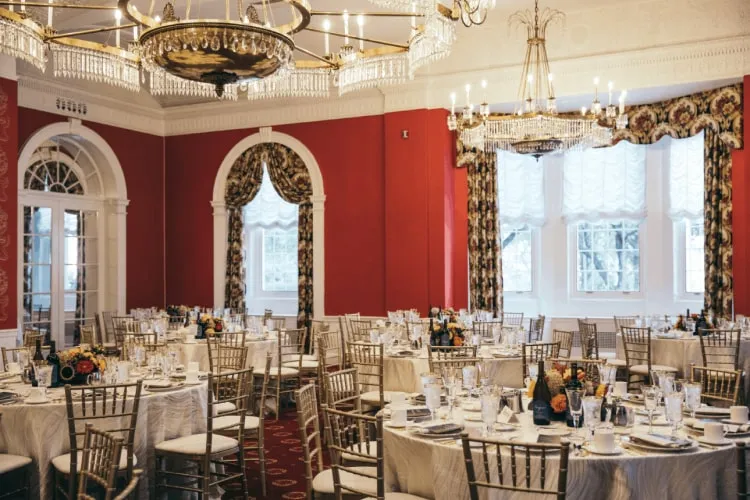
Judson Manor isn’t your average senior living facility. The building opened in 1923 as the Wade Park Manor, a luxury residential hotel designed by George B. Post & Sons, the same architectural firm behind the New York Stock Exchange.
At its peak, it was considered “the finest hotel between Chicago and New York.” Guests included Walt Disney, Eleanor Roosevelt, Dwight Eisenhower, and Babe Ruth with the entire Yankees team.
In 1964, the building was converted to a retirement community. Today, it sits in University Circle, which has been named the #1 arts district in the country, steps from the Cleveland Museum of Art, Severance Hall (home of the Cleveland Orchestra), and Case Western Reserve University.
It’s the kind of place where a 93-year-old resident can hear a doctoral piano student practicing down the hall. And that’s exactly the point.
The Stories That Make This Special
The program is brilliant in theory. The magic, though, is the intergenerational bonds that develop when students and seniors share a building 24/7.
”I Inherit 100 Surrogate Grandparents”
Daniel Parvin, a CIM doctoral piano student, lived at Judson Manor while he was earning his degree. He told Steve Hartman of CBS News, “I gain 100 surrogate grandparents here, and they’re really dear friends of mine.”
Not only would he play for them, but he would also have meals with them, talk to them in the hallway, and know that there were people in the building who cared about him.
The Cooking Friendship
When Tiffany Tieu, another student, moved in, she didn’t have an oven in her apartment. Laura Berick, who was in her early 80s at the time, offered the use of hers. They started cooking dinner together and became great friends.
As Laura said, “She’s as much my family. I see more of her than I do some of my adult grandkids.”
A Rooftop Proposal and a Judson Wedding Reception
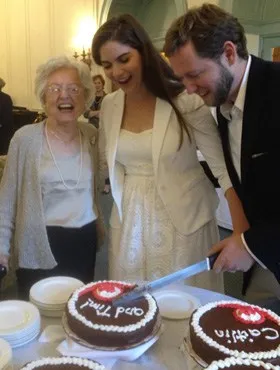
Caitlin Lynch, a violist, was one of the first students in the program. She had her first date with a fellow CIM violist, Tim Mauthe, in her apartment at Judson Manor. She cooked him dinner.
Six months later, Tim proposed to her in the rooftop garden at the Manor, overlooking the Cleveland skyline and Lake Erie.
When resident Clara Catliota found out, she threw the young couple a full wedding reception at Judson Manor so that the other residents could join in the celebration. That’s not a landlord-tenant relationship. That’s family.
Why This Model Matters for Senior Living
Chronic loneliness is a leading threat to the health of older adults. The National Institute on Aging connects social isolation with a higher risk of Alzheimer’s disease, heart disease and depression. Studies show that interactions with younger generations can combat dementia and stabilize blood pressure.
Judson Manor tackles this issue not with “social hours,” but rather, with daily interaction. If you live in the same building as people 30, 40 or 50 years younger, you don’t need a “social hour” on your calendar. It just happens.
“Judson feels like an extension of my family,” said Justine Myers, an oboist. “It’s like I have a lot of extra grandparents.”
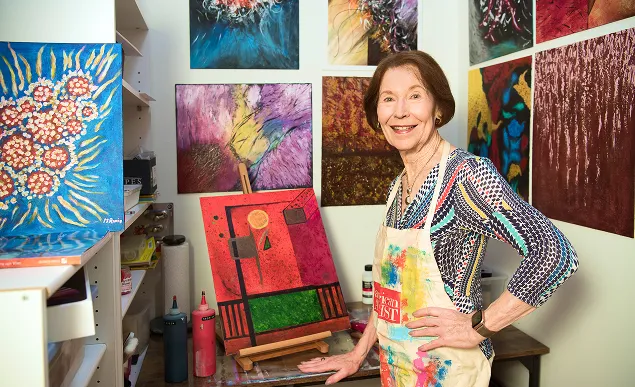
The feeling is mutual. While the students share their musical talents, residents share art lessons, cooking tips, career advice and relationship insights. It’s an equal exchange, as charity doesn’t flow in one direction.
Recognition and Awards
The program hasn’t gone without notice. Judson Manor was named to Newsweek’s America’s Best Continuing Care Retirement Communities 2024, ranking #1 in Cleveland and #8 in Ohio. The Artist-in-Residence program has been courted by universities and senior living communities nationwide, all hoping to replicate the program.
The list of media coverage speaks for itself: CBS, NBC, ABC, AARP, Smithsonian, Amy Poehler’s Smart Girls, Next Avenue (PBS) and more have covered the program.
What Families Can Learn From Judson Manor
If you are helping a parent or grandparent navigate senior living options, Judson Manor’s example provides a valuable framework for what to look for in a community:
- Ask about intergenerational programs. Does the facility have relationships with schools, universities or community groups to bring younger people into your loved one’s life?
- Look beyond scheduled activities. While an activities calendar is important, it’s essential to understand how the community enables more organic social interaction.
- Consider the environment. Living in an arts district means residents can easily engage with the outside world, attending concerts, lectures and more.
- Pay attention to resident stories. The best indication of a positive senior living community isn’t a glossy brochure; it’s when residents talk about their neighbors like family.
Keeping the Connection Alive
One of the most compelling aspects of the Judson Manor model is that it’s reminiscent of what so many families attempt to do: integrate grandparents into the lives of younger generations.
Many families don’t live in the same region, so regular visits aren’t possible. Many senior communities aren’t adjacent to music academies, so there aren’t students practicing violins down the hall. But there are ways to create that sense of intergenerational connection, through regular video calls, joint activities and even something simple like a family newsletter that arrives in the mail once a month.
The residents at Judson Manor beam because young people are truly a part of their lives. That’s something every grandparent deserves, regardless of where they live.
Judson Manor is located at 1890 East 107th Street in Cleveland’s University Circle neighborhood. To learn more about their communities and programs, visit judsonsmartliving.org.

About Martin Gouy
Martin is the founder of Hug Letters. Hug Letters is a family newsletter for grandparents. Every month, grandparents receive a heartwarming newspaper with photos and stories from the whole family.