

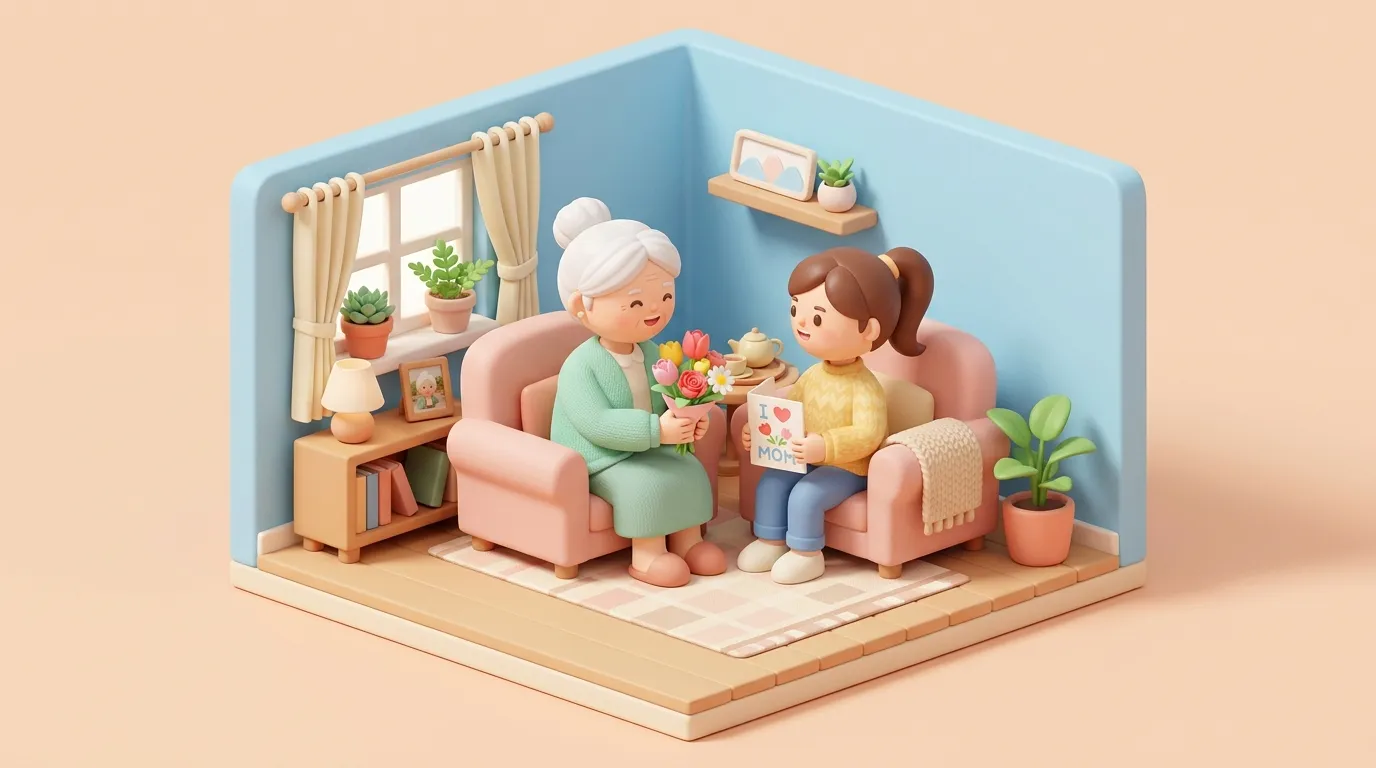
The first Mother’s Day after mom moved to assisted living is a strange one. You want it to feel special, but you’re also navigating a place that isn’t really hers yet — shared dining rooms, a smaller space, maybe a mom who seems a little more tired than last year. You want to show up well without overwhelming her, and you’re wondering what “celebrating” even looks like when the usual brunch-and-garden-walk routine isn’t on the table.
You’re not alone. Roughly 818,800 older adults live in assisted living communities in the U.S., according to the American Health Care Association, and every May their adult children face the same question: how do we make Mother’s Day in assisted living actually feel like Mother’s Day?
This guide walks through 12 ways to celebrate — whether you’re visiting in person, coordinating from across the country, or somewhere in between. The goal isn’t a picture-perfect holiday. It’s a day where mom feels seen, remembered, and genuinely loved.
Why Mother’s Day in Assisted Living Hits Different
Holidays in a care community carry extra weight. Mom is surrounded by reminders of the life she used to run — and Mother’s Day, of all days, can highlight what’s changed. The Family Caregiver Alliance notes that holidays often amplify both connection and grief for aging parents and their families.
A few things to keep in mind before you plan:
- Energy is the new currency. A 90-minute visit with one meaningful activity often lands better than a packed four-hour day.
- Her environment matters. Gifts and activities that fit a smaller room, limited mobility, or dietary restrictions will actually get used.
- She may not say what she wants. Many moms downplay the day so their kids don’t feel pressured. Plan like it matters anyway.
- Staff are your allies. Tell the activities director your plans — they can help with timing, room access, and logistics.
With that foundation, here are the ideas.
Planning the Visit: What to Do Before Mother’s Day
1. Call ahead and coordinate with the community
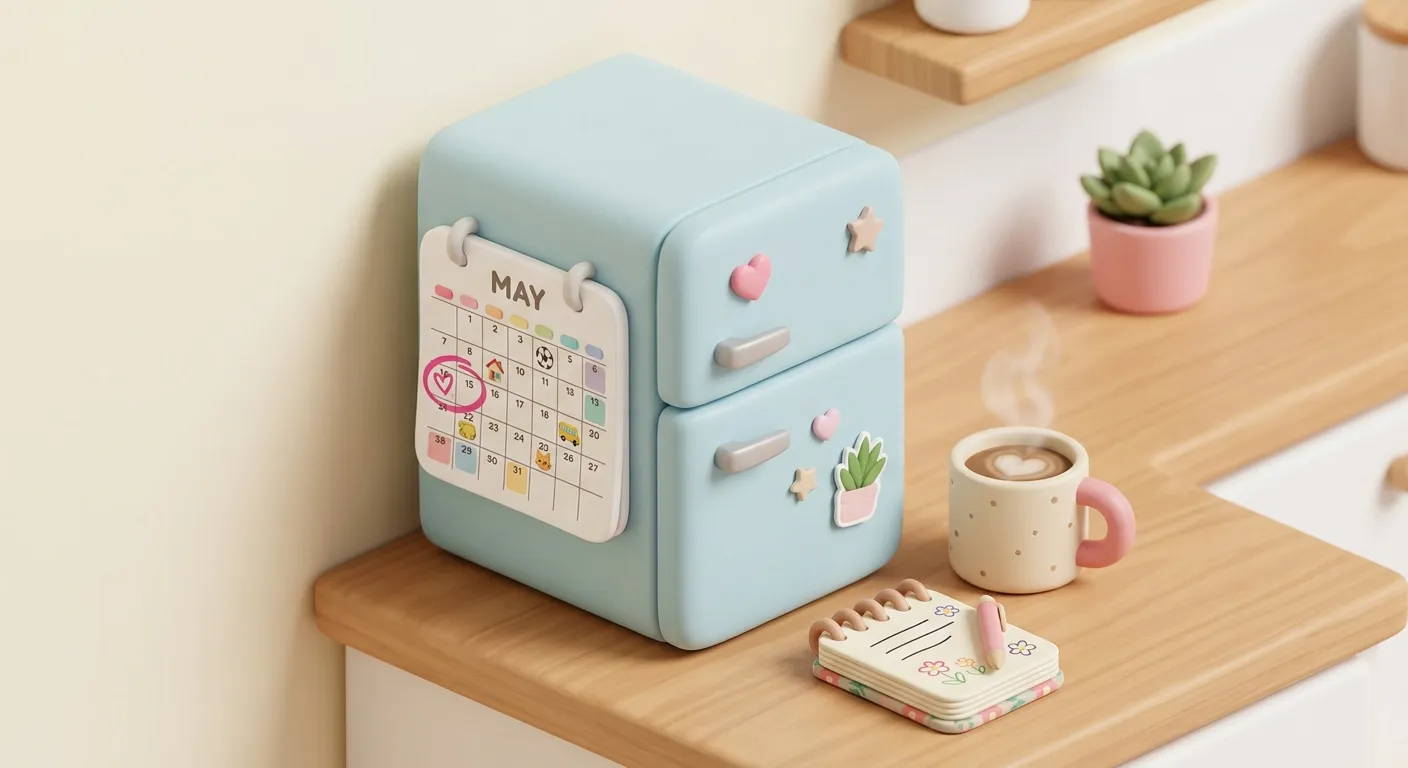
Mother’s Day is one of the busiest visitation days of the year in assisted living. Dining rooms fill up, parking gets tight, and many communities host their own events. Call a week ahead and ask:
- Is there a community Mother’s Day brunch or program? (You may want to join it — or deliberately plan around it.)
- Can you reserve a private room or patio space for family time?
- What are the current visitor policies and meal guest fees?
- Are there any health precautions you should know about?
2. Pick a time that matches her rhythm
If mom is sharpest in the morning, plan your main visit before lunch. If afternoons are her good window, skip the 9 a.m. brunch rush. Fighting her natural rhythm is the fastest way to turn a celebration into an exhausting obligation for both of you.
3. Get the grandkids involved early
Kids don’t need to be physically present to make the day feel full. A week before, have them:
- Record a short video message she can watch on repeat
- Draw or write cards (handwritten beats printed every time)
- Pick out flowers or a small gift “from them” specifically
If you’re navigating the logistics of keeping kids connected across distance, our guide on how to help your child bond with grandparents has age-by-age strategies that apply here too.
Meaningful Things to Do Together on the Day
4. Bring a “memory bag” instead of a big gift
Pack a tote with 5–10 items that prompt stories: an old photo album, a recipe in her handwriting, a piece of jewelry she used to wear, a favorite piece of music on a small speaker. Then just… sit and let her talk. This is often the single most meaningful thing you can do, and it costs nothing.
If you’ve never done a session like this, our list of 50 questions to ask your grandparents before it’s too late works beautifully as conversation prompts for aging moms too.
5. Take her outside — even briefly
Most assisted living communities have a garden, patio, or courtyard. Even 20 minutes of fresh air and sunlight can noticeably lift her mood. Bring a light blanket in case she gets cold, and a bottle of water.
6. Do a “usual” thing, not a fancy thing
If Sunday mornings used to mean coffee and the newspaper, bring her favorite coffee and read the paper together. If she always watched old musicals, queue one up. Familiar beats novel on hard days.
7. Have a real meal — on her terms
Brunch reservations are lovely if she’s up for it. But for many moms, a quiet picnic in her room with food she actually likes (and can chew easily) wins. Ask the community if you can bring food in, and double-check dietary restrictions.
8. Create something together
Low-effort, high-memory activities that work well in a small space:
- Plant a small herb pot for her windowsill
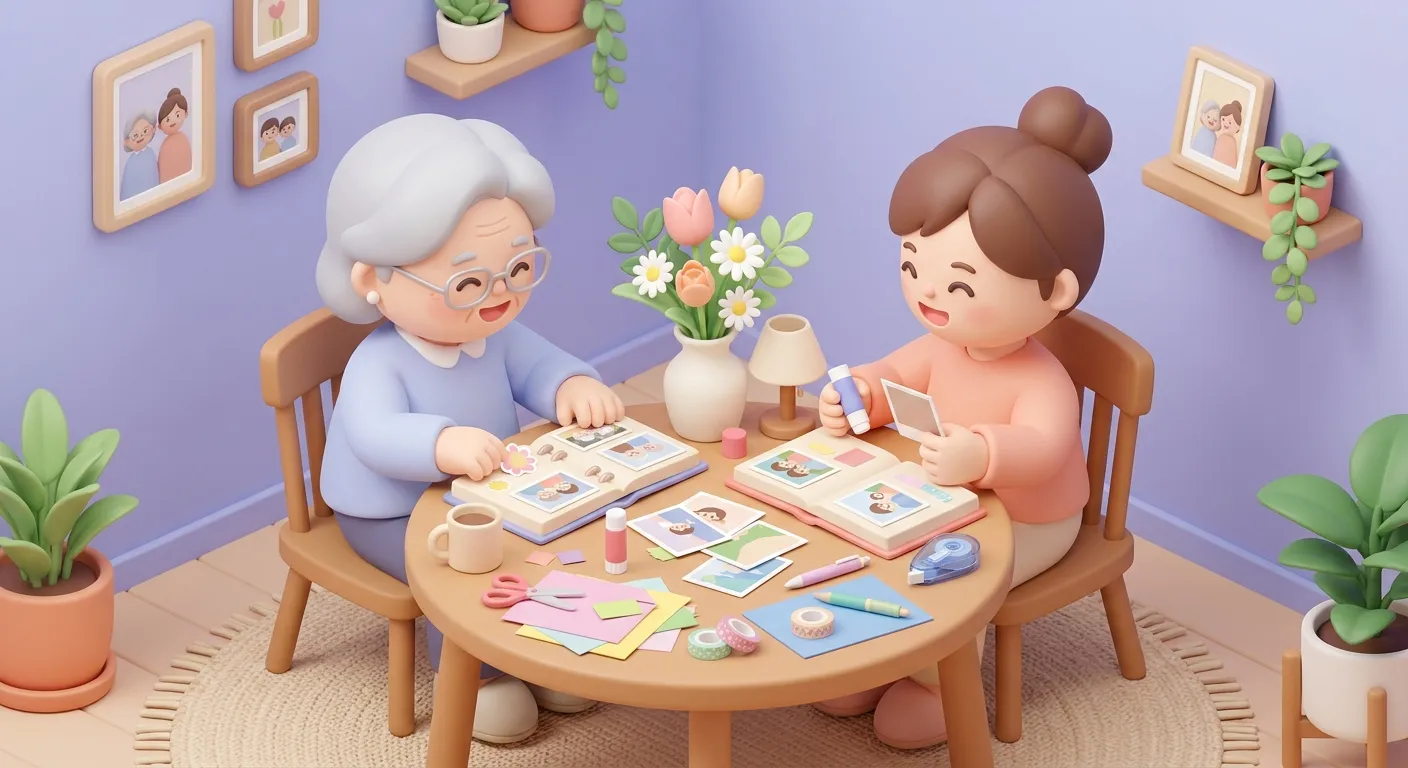
- Put together a mini photo album of the past year
- Write a list of “things I learned from you” together
- Decorate a small frame she’ll actually display
Long-Distance Mother’s Day Ideas (When You Can’t Be There)

Not everyone can fly home in May. If you’re celebrating Mother’s Day in assisted living from afar, the goal shifts: how do you fill her day with reminders she’s loved, even when you’re not in the room?
9. Schedule a “Mother’s Day hour,” not a phone call
Instead of a quick check-in, block off a full hour. Ask the community if they can bring her to a common area with Wi-Fi, or send a simple tablet ahead of time. Have the whole family — kids, spouses, siblings — rotate onto the video call. Play a song, show her the garden, read a card out loud. Make it an event, not a task.
10. Send something physical that arrives on the day
Digital messages are nice, but something she can hold, show her neighbors, and reread all week is different. Options that work well in assisted living:
- A printed photo book (not a frame she has to find a spot for)
- Fresh flowers delivered that morning — confirm the community accepts deliveries
- A handwritten letter from each grandchild, mailed together
- A monthly family newsletter she can keep and show friends
This is actually why we built Hug Letters — a monthly printed family newspaper mailed directly to grandma, no tech required. Many families start a subscription as their Mother’s Day gift precisely because it keeps giving all year, not just on May 10.
11. Coordinate with staff for a surprise
Call the activities director or a favorite aide a few days before and ask if they can deliver flowers, a card, or a small gift to her room on Mother’s Day morning. Most communities are happy to help, and mom will feel remembered from the moment she wakes up.
Gift Ideas That Actually Work in Assisted Living

12. Choose gifts that fit her new life, not her old one
The biggest mistake on Mother’s Day in assisted living is giving gifts that don’t belong in her current space. A huge flower arrangement takes over her entire room. A fancy appliance sits unused. A new sweater joins an already-overflowing closet.
What actually works:
- Consumables: her favorite lotion, good tea, specialty chocolates, nice soap
- Soft, warm items: a lightweight blanket, fuzzy socks, a wrap sweater
- Sensory/comfort: a small diffuser, weighted lap pad, handheld massager
- Connection-based: printed photo books, family newsletters, recorded audio messages
- Experiences: a booked hair appointment, a manicure, a private musician visit
Avoid anything fragile, overly complicated, tech-heavy (unless you’re there to set it up), or that requires a lot of space.
Mother’s Day in Assisted Living FAQ
What if my mom has dementia and doesn’t remember it’s Mother’s Day?
She may not remember the holiday, but she’ll feel the emotion of the day. Keep things simple, familiar, and calm. Stick to her routine, bring comforting objects, and don’t quiz her (“do you know what today is?”). Our guide on personalized gifts for grandparents with Alzheimer’s has more dementia-friendly ideas that apply to moms too.
Should I bring the grandkids to visit an assisted living community on Mother’s Day?
Usually yes — but keep visits short (45–90 minutes), prep kids for what they’ll see, and have an exit plan if things get overwhelming. Young children bring energy that almost always lifts a grandmother’s mood, even briefly.
What do you say in a Mother’s Day card to a mom in assisted living?
Skip “happy” if the year has been hard. Instead, tell her something specific: a memory, a lesson, a thing you caught yourself doing “just like her.” Specificity beats sentiment every time. The AARP has more ideas on meaningful card messages worth borrowing from.
Is it okay to skip Mother’s Day if mom is in hospice or very unwell?
“Skipping” in the traditional sense is fine. Showing up in some form — even just sitting with her in silence — isn’t. Presence is the entire point of the day.
The Point Isn’t a Perfect Day
Mother’s Day in assisted living won’t look like it used to. That’s not failure; that’s just this chapter. The moms I’ve talked to through this blog almost never mention the brunch, the flowers, or the gift. They mention who came, who called, and who made them feel like they still matter.
Pick two or three ideas from this list, tell the staff your plan, and show up. That’s the whole thing.
And if you’re looking for a way to keep the Mother’s Day feeling going after May 10 — something that lands in her mailbox every month with photos, family news, and grandkid drawings — that’s exactly what Hug Letters was built for. No screens, no setup, just a monthly reminder that she’s loved.

About Martin Gouy
Martin is the founder of Hug Letters. Hug Letters is a family newsletter for grandparents. Every month, grandparents receive a heartwarming newspaper with photos and stories from the whole family.