

So your mom asks if the kids can “stay the night this weekend,” and instantly your brain starts cycling through the nightmares. What if no one sleeps? What if your toddler only eats cookies? What if the first aid kit (aka EpiPen) gets left at home?
This feeling is incredibly common, and while a lot of parents might be worried at the prospect of that first overnight at Grandma and Grandpa’s, children aren’t the only ones struggling. There are numerous ways that sleepovers help children develop emotionally, and it’s a positive milestone when they are ready. Sleepovers with grandparents build emotional resilience, create lasting intergenerational bonds, and give children a sense of identity that is broader than just being part of your household.
Here is everything you need to know: when kids are ready for a sleepover, what to do the night before, how to handle the ground-rules conversation, and what to do when you get that phone call.
Why Sleepovers at Grandparents’ House Are a Good Thing
While the bonus of the occasional date night with the spouse is certainly nice, the benefits of grandparent sleepovers go much deeper than simply free babysitting. Studies have shown that sleepovers have significant developmental benefits:
For instance, A study at Boston College in 2014 found that emotionally close grandparent relationships were associated with lower depressive symptoms among both generations. When parents and grandparents are close, children grow up in an environment where they see and feel their family love. Sleepovers allow this connection to deepen; kids can see that there is still love when their grandparent is making breakfast in a different house. The children also realize that their lives are not confined just to the household they live in.
For grandparents, sleepovers help them keep their role in the family active and give them an ongoing sense of purpose in the lives of their grandchildren. According to AARP research, grandparents who spend a lot of quality time with their grandchildren report being more satisfied with their lives, and they feel less lonely.
And, let’s be honest: A sleepover is also a night away from all the arguments with a grumpy two-year-old about why it’s time to sleep now!
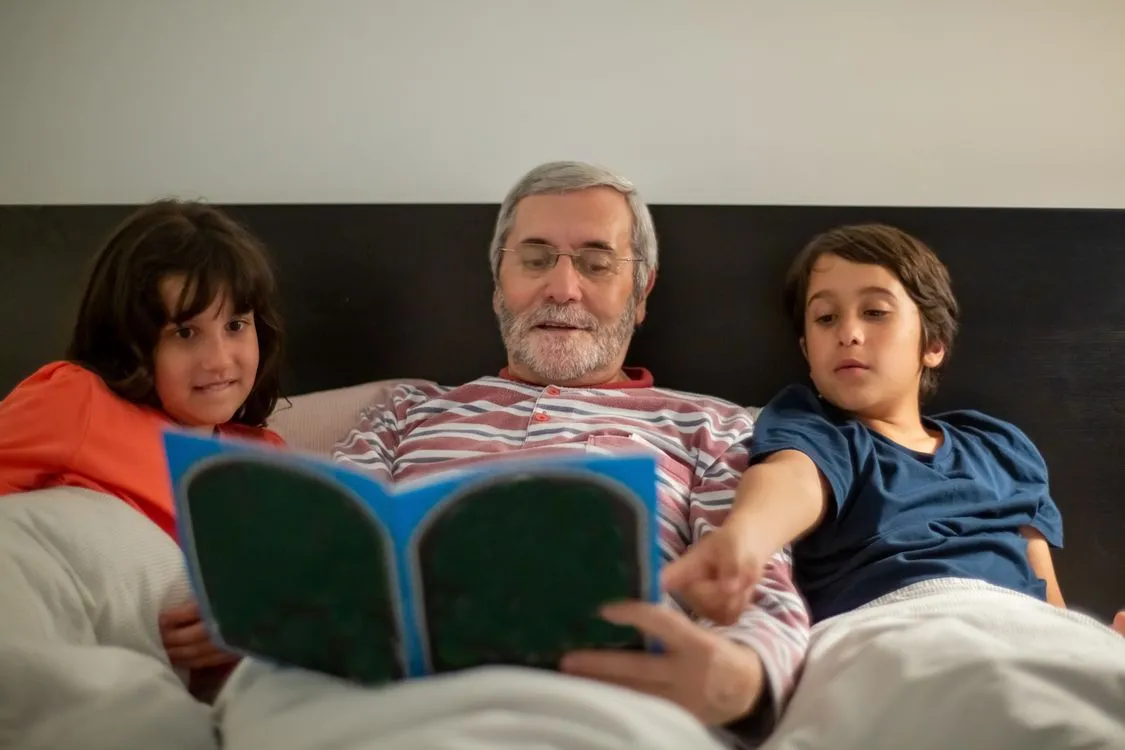
When Do Children Start Sleeping at Grandparents?
There is no single, clear answer to that question; however, there are a few things for parents to keep in mind as they prepare their child for this experience:
Ages 1-2: Generally speaking, any child of toddler age with a solid relationship with the grandparents and who has an established sleep routine is able to handle the experience of a sleepover. However, if it is their first time being away from you for any extended period of time, it is generally a good idea to try a single overnight at Grandma and Grandpa’s house. If your child has never spent the night anywhere else, you might consider doing a practice nap or two at Grandparent’s house first.
Ages 3-5: These are usually good ages for first sleepovers. Children at this age are typically old enough to understand the basic idea of where they are sleeping, when you will pick them up, and so on (“Mommy will pick you up after your breakfast”). They are also still young enough to feel like grandparents are cool and magical!
Ages 6-10: By this age, children are typically well-versed in sleepovers, and are more than able to handle a longer sleepover, such as a weekend grandma camp, or even a longer week-long camp. This is also an important age for family traditions, such as Saturday morning pancakes or movie nights with Grandma!
Ages 11+ (Tweens and teens): Don’t think the sleepovers need to stop once your kids have hit middle school. They might just need a different sales pitch (“Your grandpa wants to start a new woodshop this weekend” instead of “you’re spending the night at Grandma’s”), but the bonding that happens at sleepovers can be just as important when you have grandchildren in their teenage years.
Instead of focusing on ages, consider asking yourself these questions instead: Can your child fall asleep without you nearby? Do they already have a good relationship with the grandparent? Are they capable of communicating their needs, like being hungry or needing to use the restroom?
How to Prepare Your Child for Their First Grandparent Sleepover
There can be a fine line between a great sleepover and a sleepover rescue mission.
Start the conversation early. Give your child a few days to think about it. Break it down into simple, chronological steps so they know exactly what will occur: “Once you finish dinner at Grandma’s house, you’ll take a bath in her bathroom. After that, she’s going to read you a bedtime story, and then you’re going to sleep in her guest room. In the morning, Grandpa will make pancakes, and when you finish breakfast I’ll come and get you.”
Set up a trial run. If your child has never stayed anywhere without you, start with an extended visit that concludes right before their bedtime. Then, the next time around, allow it to go to bedtime, though you should plan to pick them up. After that’s worked well, try the full overnight. This way, they’re eased in slowly instead of being thrust head-first into a deep end scenario.
Pack a comfort item. Your child might want to bring their favorite stuffed animal or blanket, or even a pillowcase from their own bed, to help the unfamiliar night space become less intimidating. A lot of families will actually have a backup comfort item at grandma’s house in case sleepovers are the only place they’ll need it.
Don’t force the situation. If your child seems genuinely anxious, not just nervous and excited, don’t make it happen. Other weekends exist. Forcing a child through intense fear could make any subsequent sleepovers even more difficult than the first.
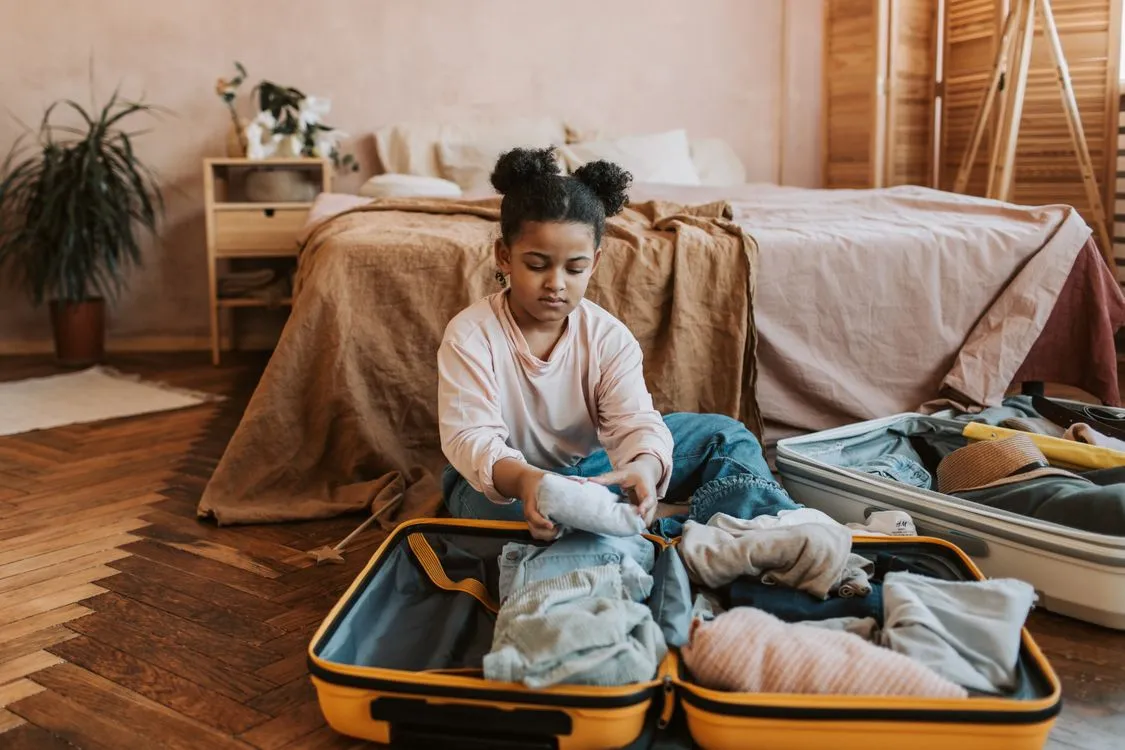
What to Pack for a Sleepover at Grandparents’ House
It’s safer to overpack than it is to not bring enough.
Essential items:
- Clothes, plus an extra outfit for younger kids
- Pajamas
- Toothbrush and toothpaste
- Any medications the child may be on along with clear directions
- Diapers, wipes, or pull-ups (if appropriate for their age)
- Car seat (if the grandparents are responsible for driving)
Comfort items:
- Favorite stuffed animal
- Favorite blanket
- Favorite pillowcase (or another small blanket)
- White noise machine, or whatever device they normally use at home
- Nightlight (if they normally use them)
Fun and games:
- A few of their favorite books
- Coloring materials, or a small activity kit
- A board game or a couple decks of cards
Information sheet:
- List any allergies or dietary restrictions
- Any bedtime routine steps they need to go through (make sure this is written down, rather than just relayed to the grandparents in conversation)
- Emergency phone numbers
- Pediatrician phone number
- A copy of their insurance card (just in case)
Pro tip: You could create a bag that stays at grandparents’ house so they don’t have to worry about packing and unpacking between sleepovers. Refill it after every sleepover and it’s all ready.
Setting Boundaries Without Being a Pain
For most families, this is the toughest part. You want your child to be safe and your parenting to be honored. Your parents want to be fun and feel like their relationship with their grandkids hasn’t changed. Neither of these are wrong.
Start from appreciation rather than a demand. Rather than printing out a list of rules, try this: “I’m so happy that they get to stay with you. If this helps, here are a few things that will make the evening go smoothly.”
Determine what’s worth fighting over. Is it the end of time if bedtime is pushed back 30 minutes? If you give them an extra cookie? These are not deal breakers for the rest of your child’s childhood. Save your fighting spirit for things that can’t be compromised: a child needs to be buckled into a car seat, they have allergies that they can’t be exposed to, they have medicines they need to take at set times. What is most important is that if it’s not safe, they’re not going to be swimming or playing in the pool.
Rephrase it to be more helpful and less authoritative. “She tends to have really bad meltdowns when she’s stayed up past 8:30, so you’re going to want to wind things down around 8 or she won’t sleep all night” works better than “It is non-negotiable that she is in bed by 8:30.”
Ask about screen time before they arrive. If you feel strongly about this, be crystal clear. “It would be great to give her a little time in front of the TV or iPad, but one show before bed and then it’s off the table. If it’s after the sun sets, we’re not allowing that, so it’s not a matter that night for us.” If you don’t have strong feelings, say that. If there’s not a conversation, there will be a misunderstanding.
Talk about what they’re comfortable serving, too. If you have strict dietary limitations, such as severe allergies, write them down and talk about it in person. But if it’s not life threatening, then let them run wild. “They eat everything, so let them decide what they want. Just if it’s not too much trouble, can we get a little bit of veggies in there?” is better than making up a menu.
If setting boundaries in general with family and loved ones is something that is a struggle for you, you could take this weekend’s sleepover conversation as practice and work towards more effective communication over time.
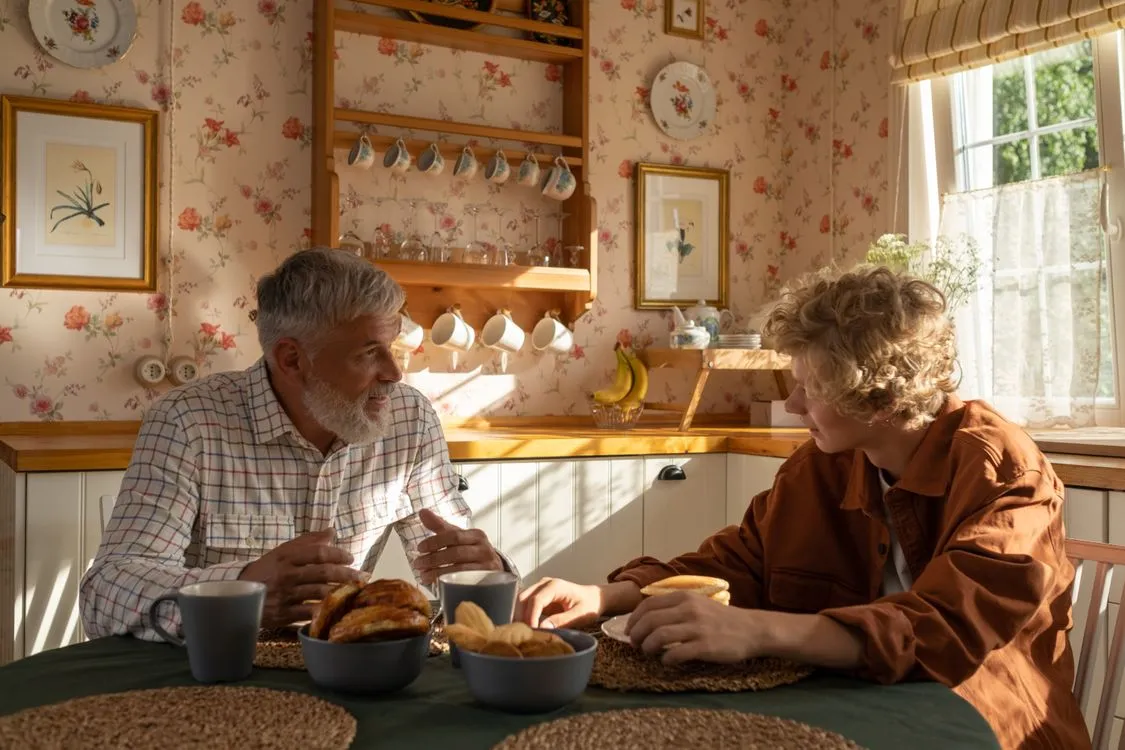
Childproofing Your Parents’ House: The Bare Essentials
Safety rules have changed since your parents had you. What was acceptable in the 80s and 90s, like crib bumpers, walkers and stairs, unlocked medicine cabinets, is now deemed dangerous.
According to the Consumer Product Safety Commission, the three most common child injuries while at a grandparent’s house involve falls, poisoning, and drowning. Poisonings involve unsecured medications. Here’s a safety check to review together:
- Medications: Everything, including vitamins and herbs. All should be kept in a locked box, a high cupboard/shelf that’s hard for a child to access.
- Sleep area: If it’s a baby less than 12 months, you’ll need a firm, flat mattress surface (or pack-n-play) without any loose blankets, comforters, pillows or stuffies. If it’s an older kid, you’ve got the bed for now.
- Stairs: Make sure that toddlers and young children are protected from the steps using gates or some other barrier.
- Swimming, pools, bathtubs: No young child should ever be left unsupervised near a pool, bathtub, or bucket of water.
- Small objects: Do a sweep for choking hazards: coins, batteries, any small knick-knack, small plastic toys (from the pet, for example).
- Cleaning supplies: Keep them at least three feet up or behind locked doors.
Approach it as a joint project: “Let’s do a quick walk-through of the house so that both of us feel good about what’s going on.” Once you’ve gotten through the defensiveness, most grandparents are glad you said something.
Separation Anxiety (Yours and Theirs)
Here’s something nobody ever discusses: parents often have more separation anxiety than the kids.
If your kid is anxious:
- Keep your goodbyes simple and positive. A quick hug, “Have a good time! I’ll see you tomorrow,” and a firm exit are all you need.
- Don’t sneak away. Let your child know you’re leaving and reassure them that you’ll always say goodbye. If they wake up and you’ve disappeared, they won’t have a reason to trust your return.
- Give them a “connection object”: A photo of your family for them to hold when they miss you, or a bracelet, something small but tangible.
- Set up a phone call to check in (especially if your grandparent isn’t tech-savvy enough to get them in touch with you), but limit it to a few minutes. Calls that run longer tend to bring homesickness back.
If you’re the anxious one:
- Resist the urge to check in every hour via text the grandparent about what’s going on, but give your calls some space.
- Plan some fun stuff to do in the evening. Go out to dinner or the movies, or just have a relaxing night at home. Being unoccupied and alone leads to worry.
- Remember that some anxiety is normal and beneficial. Your child has the chance to gain confidence and independence in one of the safest places on earth.
If your plan falls apart. Not every kid is ready for a sleepover yet. If you get the late-night call, come get them. No drama, no disappointment; just, “I’m glad you gave it a try. We’ll try again when you’re more ready.” Turning it into a huge deal just means they’ll never try again.
Long-Distance Grandparents
A sleepover at a distant grandparent’s house comes with a whole different set of challenges. Your child might not see them frequently enough to get comfortable, and it will be more of a logistics-heavy trip.
- Get familiar first. Frequent phone or video chats, shared activities over FaceTime, and exchanging photos help build that connection before the trip. Keep your grandparent engaged with daily life by creating a family newsletter for the month and sending it to them, whether through a monthly email or through a service like Hug Letters. When your child does get to sleepover, Grandma and Grandpa are still just a part of their life, not just people they see when the opportunity presents itself.
- Stay close the first night. If you are traveling to see the out-of-town grandparent, stay at their house or nearby on the first night. Have your child stay in the grandparent’s house but with you still accessible. Go one, two, or three more nights as full-on sleepovers.
- Stay longer if you can. A one-night visit is just the beginning. If you are able, stay a long weekend or even a week and a half. It’s enough time for both sides to get into a routine and to create lasting memories that last until the next visit.
- Send a piece of home. Mail them a small care package before the visit, something like your child’s favorite brand of cereal, their own pillow, or a family picture for their nightstand. It doesn’t feel so foreign.
Frequently Asked Questions
How old should a child be for a grandparent sleepover?
Many toddlers as young as 3 years old are developmentally ready for their first grandparent sleepover, with some 4 and 5 year olds being ready as well. Some 18 month olds are also fine for a grandparent sleepover if they have a good relationship and routine at home. It varies child by child, so just go on the cues of your own toddler.
What if my child wakes in the night and wants to come home?
Just go get them without much fuss. Something like, “It sounds like you really liked the idea, and we can try it again another time.” Don’t force a child to stay if they’re struggling with the whole thing. It won’t make things better. And, if you do that the first time, they probably won’t be back for a second or third time when they’re more willing and able. It’s a learning process for the little one.
What if the parenting style is different at the grandparents house?
Make sure the important stuff is non negotiable (carseats, allergies and meds, water safety), and everything else is a let go. One less sleep with the child’s bed on the floor or an extra cookie is not going to ruin your parenting. If something is genuinely off, it may help to just talk to grandma or grandpa about the specific situation, but be careful how you go about that. A phrase I use with my parents is, “I know, this is how you did it and we all turned out fine, but things have been researched and changed, and I’d just feel better if we did it this way.” This helps to open dialogue without being too blunt. Read our post about setting boundaries with grandparents for a bit more.
How can I safety proof a grandparents’ house? How do I bring that up?
Don’t call it safety proofing. Call it something like, “I want to get everything ready so that you can relax and not worry about safety.” If the grandparents are resistant, then take it upon yourself to set up the house the day of the visit and don’t tell them. They’ll be surprised at how many safety precautions they need to take, once they see how much things have changed since their own child raising days!
Making the Sleepover a Tradition
I’ve found the best grandparent sleepovers are not a one time deal. They’re something that happens as part of your family routine, and it can change with time. I think of ours as our “first Friday of the month sleepover,” though sometimes we do more than one a month or even more like a week at a time during our summer time with them. It doesn’t matter the exact time of day or week, it’s about consistency.
Don’t be too quick to give it all a go; go on your toddler’s cues and make sure all communication is clear. Take this time to enjoy your time with the grandparent, and give yourself grace as a first timer. You might not do things perfectly, but there’s always a second time with better preparation. This isn’t about the sleepover itself, it’s about a relationship with grandma or grandpa.

About Martin Gouy
Martin is the founder of Hug Letters. Hug Letters is a family newsletter for grandparents. Every month, grandparents receive a heartwarming newspaper with photos and stories from the whole family.