

You slide the smartphone over to your four-year-old. Suddenly, you’re face to face with Grandma. Your kid gazes for three seconds before uttering a flat “hi” and scurrying off to hunt for their LEGO set. You are left holding the bag while you engage your mother in polite conversation, and when the call concludes you all exit, slightly drained. If you’re looking for video call ideas for grandparents and grandchildren that really work, you are not alone, and it’s certainly not because your kid doesn’t love their grandparents. Video calls are just an awkward way to connect with kids. The screen flattens everything. There’s no snack to share, no toy to pick up, no lap to climb into. Little kids don’t really do “talking on the phone,” and older kids go monosyllabic the moment a camera is pointed at them. Successful video calls with grandparents aren’t about having a better conversationalist. It’s about sharing an experience. Below are 20 video call activities for grandparents and grandchildren sorted by age, covering toddlers, grade-schoolers, and teens — plus guidance for the grandparent who is still asking “can you hear me now?” every 30 seconds.
The Five-Minute Rule: Why Shorter Calls Build Better Relationships
Before we look at these ideas, here is a quick adjustment. The research out of the University of Cambridge (released in the Conversation) reports that grandparents video call their grandchildren on average two to three times a week, for roughly five to ten minutes each. That’s it. That’s the right number. A separate AARP Research study reached a similar conclusion: most meaningful video encounters between grandparents and young grandchildren lasted under 30 minutes, and often far less. If your calls are ending with a cranky kid and an uncomfortable goodbye, it probably isn’t that you picked the wrong activity. It might be that your sessions are lasting too long. A general rule of thumb:
- Toddlers (2-4 years): 3 to 7 minutes with one activity
- Preschoolers and early school age (5-8): 10 to 15 minutes with one or two activities
- Older kids (9-12): 15 to 25 minutes with some sort of activity
- Teens: 5 to 15 minutes if it’s a casual catch-up. Go longer if they’re interested.
Short sessions are best. Cut it off before everyone wants to leave.
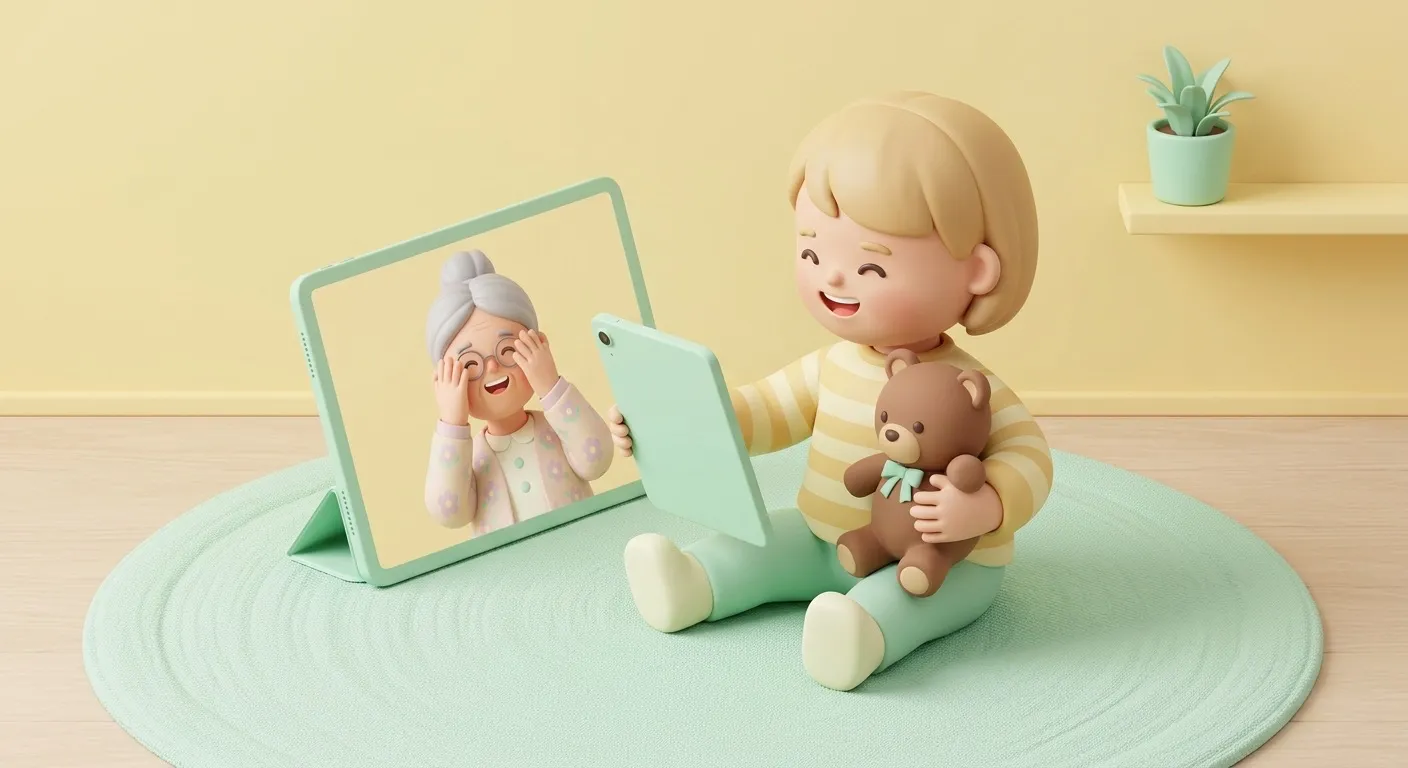
Video Call Ideas for Toddlers and Preschoolers (2-5 Years)
Young kids can’t just chat with you on the phone, but they do love playing games. Every productive video call with a toddler must include a prop, a game, or a movement.
1. Peek-a-Boo or Silly Faces
Try the old-fashioned stuff. Put your hands over your eyes. Hide behind your couch. Pop out. Make the most exaggerated, goofy face you can possibly manage and hold it there until they mimic you. Toddlers will think this is absolutely hilarious, plus it helps them to get used to looking at a screen.
2. Read a Book Together
Grandma will hold up a copy of a book; your toddler will sit on your lap to help them hear. Better yet, send grandma a copy of their favorite book ahead of time so they can read it together on the screen. Books like Goodnight Moon, The Very Hungry Caterpillar, or any of the board books by Sandra Boynton work great for this!
3. Show-and-Tell
Have your child go find something and walk it over to show grandma. Whether it’s their favorite toy, a craft project they made at daycare, or a really cool bug they found in the backyard, it’ll be fun to have them bring that into frame to show grandma. This also helps your child to have a mission during the call that can keep their attention focused.
4. Dance Party
One song. Turn on something goofy, like “Baby Shark,” “Old MacDonald Had a Farm,” anything from Sesame Street, and dance on video together. Three minutes, total joy, then everyone is happy to hang up.
5. Sing the Same Song
Have grandma sing the same goodnight song, welcome song, or silly tune during every call. Toddlers remember things by repetition, so after a few tries, they will know that song by grandma. You may even have your child sing it during the week when grandma is not on screen! (If your toddler is really shy and clingy when doing video calls, our tips on helping your child bond with grandparents has more age-specific ideas.)
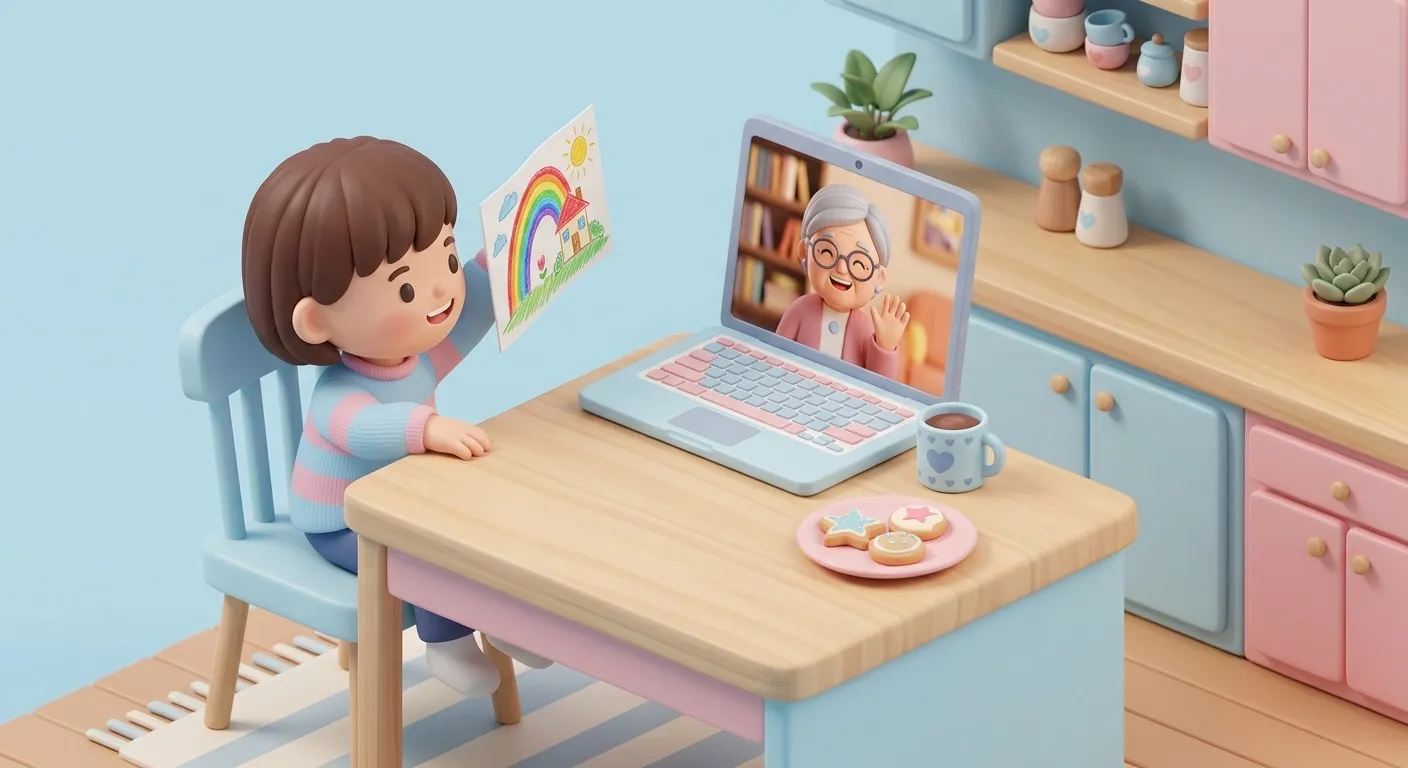
Video Call Games and Activities for Grade Schoolers (Ages 6–10)
This is when you start using video calls to your advantage. They can follow simple rules, enjoy a game a bit more, and still like showing grandma everything they’ve made that week.
6. Virtual Scavenger Hunt
Grandma gives your child a list to follow. “Find something red. Find something that begins with the letter T. Find something that makes a loud noise.” Your child runs around the house and shows each item at the end. Also, if you’ve got a family with multiple grandkids, you can turn it into a scavenger hunt race.
7. I Spy
It’s the no-prep game for everyone. Someone chooses an object in view of their camera and says, “I spy with my little eye, something green.” The viewer guesses based on the items they can see on their own end.
8. Memory Tray
Grandma will have 5–7 items placed on a tray and lets your child study them for a moment. Then, she’ll put her camera away and take something off the tray, only to show it to them after that. What is missing? Start off with only a couple items and work your way up. Long-distance grandparents frequently recommend this game on family-focused sites like More Than Grand.
9. Pictionary or Hangman
You’ll each need a notebook and a marker. One person draws while the other guesses. Hangman works with just letters and is ideal for children who are learning to read and spell. For Pictionary, prepare a list of categories like “animals,” “foods,” or “cartoon characters” so no one gets stuck with “I don’t know what to draw.”
10. Cook or Bake Together
Have grandma send the recipe over beforehand. Everyone should have their ingredients prepped on their respective countertops. Grandma can then guide your child through the measuring, mixing, and (inevitably, messy) portions. Bonus: both households end the call with cookies.
11. Read Chapter Books Out Loud
For kids age seven and older, choose a chapter book to tackle one chapter, or a few pages, during each phone call. Whether it’s Charlotte’s Web, The Chronicles of Narnia, the Ramona Quimby series, or any of Roald Dahl, making this a weekly ritual creates a shared memory that extends beyond the screen.
12. Play Card Games
Go Fish, War, Crazy Eights—you can play all of these over video if you have two decks. Just keep your cards in your lap or on the table and call out your moves as you go. Sure, it’s slower than sitting side-by-side, but oddly satisfying.
13. Interview Grandma
Set your child up as a reporter “interviewing” grandma or grandpa. The questions don’t have to be serious—some might just be “what was your favorite food when you were little?”—but others could dive deeper, like “what was the hardest thing that ever happened to you?” Write down their responses and you’ve just created the foundation for a family history project. Here’s a list of 50 questions to ask grandparents if you need some ideas to get you started.
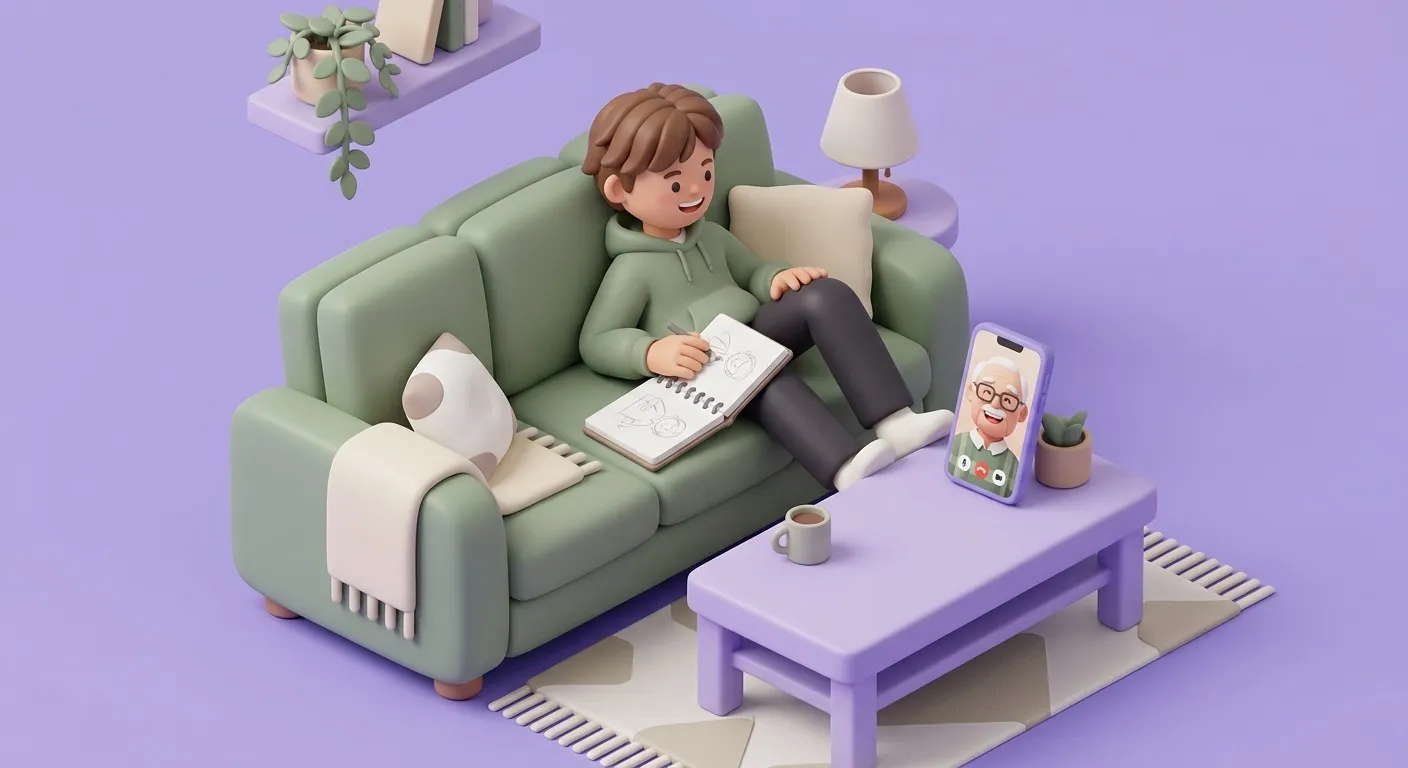
How to Get Tweens and Teens to Actually Engage on Video Calls (Ages 11+)
Teens are the toughest group to engage, having mastered the art of the one-word answer. Making sure to give grandma her weekly scheduled call feels more like a burden than a connection. The secret to getting them involved doesn’t involve making the calls longer—it just involves making it worth their while to log in. (This is also an age when grandchildren tend to gradually pull away, as we describe at what age do grandchildren lose interest in grandparents.)
14. Share a Hobby
Is your teen interested in drawing, photography, gaming, cooking/baking, guitar-playing, or tracking baseball stats? Grandpa probably has some overlap. Find the common ground. If you can get a grandparent to ask to see your child’s latest sketch or start playing chess with their own board and share their thought process, then you’re already halfway there. A grandparent who only wants to ask you “how’s school?” is a wall you’re going to bounce off.
15. Establish a Two-Person Book or Show Club
You’ve got some ideas in mind: a novel, a TV show on Netflix, or a classic movie. You each do it alone, then jump on the phone via FaceTime for 10 minutes to talk about it. Teens will go for it when they’re actually invested in the thing. Star Trek, Lord of the Rings, a Stephen King book — any sort of shared obsession will work.
16. Teach Each Other Something
Have grandpa teach your teen how to tie a tie, how to change a tire, how to fix a leaky faucet. Or reverse it: have your teen teach grandma how to use Instagram or edit a photo on a laptop. The role switch is fun on both ends.
17. Play an Online Game Together
You can try chess on chess.com, Words With Friends, Scrabble GO, or an online jigsaw puzzle site. Start the game, then video-call while you play. It removes the pressure of small talk. The game itself keeps the conversation moving.
18. Cook From a Family Recipe
“Grandma, teach me how to make your meatballs.” While this is a more involved production than a toddler cooking call, it’s one of the best ways to pass down a family recipe and spend time together over video. Record the whole thing if grandma lets you.
19. Send a Voice Memo
This isn’t a video call at all, but it’s worth noting: many teens respond better to asynchronous communication. A voice note from grandma saying “I was thinking of you today — loved that photo your mom sent” gets read. A planned 30-minute video call often doesn’t.
20. Watch the Game Together
Pick a sport grandpa follows — baseball, football, college basketball — and watch the same game on a shared video call. Mute the call during the plays, talk during the commercials. It’s the virtual version of sitting on the couch together, and for sports-minded grandparents and grandchildren it’s one of the easiest ways to spend an hour without having to “make conversation.”
What to Do When Grandparents Aren’t Tech-Savvy
The best ideas for activities to do with a grandparent don’t mean much if grandma can’t figure out how to accept a call. Here are some things that work when your parents have problems using FaceTime, Zoom, or Google Duo.
Simplify the device. If you have a tablet permanently plugged in by the couch where they spend most of their time and leave a FaceTime app open at all times, they can be ready for a video call more easily than if they were to have to unlock the screen of a smartphone. AARP has a detailed guide for setting up seniors to take video calls.
Use FaceTime, or whatever they have already set up. If they have an iPhone, don’t teach them how to use a Zoom call. FaceTime opens with one tap.
Call them every time at the same time. They’ll get used to the rhythm: “It’s Sunday, the tablet is going to ring, I tap the green button.”
Have auto-answer turned on. FaceTime has a accessibility setting which automatically answers calls from pre-approved contacts—your mum doesn’t even have to touch her phone. An enormous way to reduce tech anxiety.
Don’t try to resolve the issue on the call. If grandma has her camera facing up or the screen is stuttering, don’t get stuck on a 10-minute fix right in front of a bored kid. End the call and text grandma the fix, and then book another time to try. (Related: Our guide to how to share family photos with grandma who don’t use technology includes more ideas for tech-averse grandparents.)
What to Do When Video Calls Just Don’t Work
Here’s the thing nobody likes to admit to you: for certain grandparents, video calling will never click. Hearing difficulties may mean conversation is too hard to follow. Poor vision can make the screen difficult to read. Early dementia might make the entire exchange bewildering. Or simply, a grandparent just really doesn’t want to look on camera. If that sounds like your family, stop trying to force the video call and rather develop a hybrid contact system.
- Phone calls are simpler for a lot of older adults. A ten-minute phone call from your child to grandma, en route from school, is going to be better than a 30-minute video chat that leaves her hearing about half of what’s being discussed.
- Audio voice memos and voice notes through WhatsApp or iMessage allow anyone to contribute in their own time.
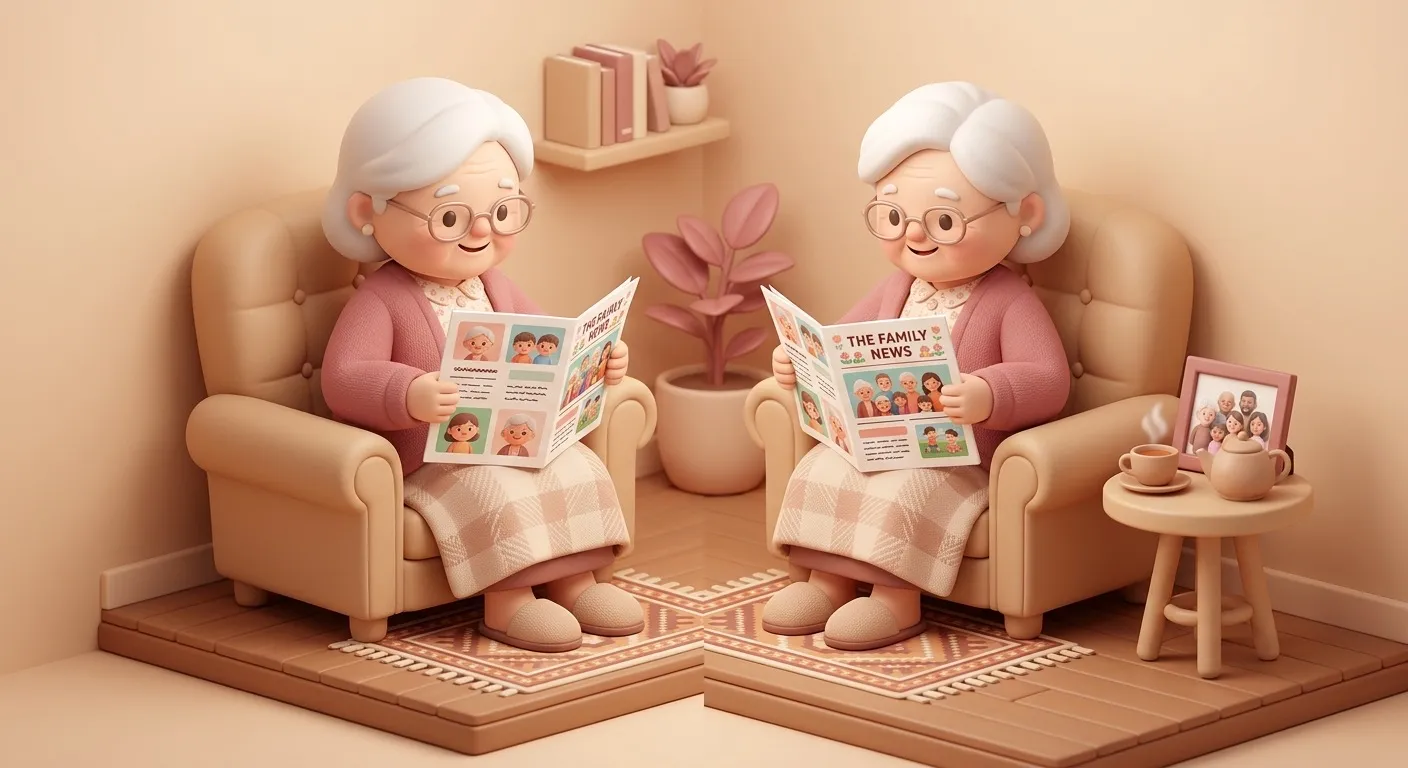
- Something mailed is easily the most underused tool. A single family photo or a kid’s drawing, a note, or family news—anything grandma can hold in her hands and share with her friends.
That final option is what Hug Letters was designed for. We publish and post a family monthly magazine to your folks or grandfolks — photos, updates, and special moments from your grandchildren. No apps, no swiping, no “can you see me now?” That’s not a substitute for a video chat when that goes smoothly. But for the ones that don’t, it gives your parents something concrete that signals they’re still “in the loop.” Family members who remain close long-distance don’t use one way alone. They combine them. The video call each week, the mailed update every month, the text voice notes once or twice a month, and a couple of in-person visits in the course of a year. Any single one of these is flimsy on its own. All four together form a true relationship. (For the whole playbook, read through our complete guide to long-distance grandparenting.)
Frequently Asked Questions
What’s the ideal video chat length with grandchildren?
For babies and preschoolers, five to 10 minutes is usually all you need. Kids in grade school do well with 15 to 20 minutes, especially with an activity. Teens often prefer brief interactions; 5-15 minutes of actual conversation is far more effective than a long chat that neither participant desired. Be sure to hang up while the interaction is still fun, rather than after someone has said “okay bye” a third time.
How frequently should grandparents video chat with grandkids?
Studies suggest that two to three times a week is the average for long-distance grandparents that want to keep in contact. The calls typically run 5 to 10 minutes. It’s the consistency that matters. A quick call at the same time every week is a ritual. But an hour a month every other week is not. Choose a cadence that works for you.
What’s the best video chat app for grandparents?
The one they already use. FaceTime is the easiest if they have an iPhone. It’s one tap to pick up the phone. Google Duo / Meet works across any operating system. Facebook Messenger is good for grandmas and grandpas that use Facebook already. WhatsApp is a good international option. Don’t ask a less tech-savvy senior citizen to learn a new technology. Just go to what they already use.
What do you do when your child won’t talk on video call?
Stop talking on the call. Make something happen. Show-and-tell, a game, drawing, read a book, etc. Your aim is to have a shared experience. If your kid won’t do anything, do it for 3 minutes and then hang up. It is better to have 3 fun minutes once a week than a full 20-minute call where you both struggle. If you drag out a grumpy toddler you are teaching that video chats with grandparents is not great.
What do you do if a grandparent has dementia / memory loss?
Call for short times with the same consistency as you do for a toddler. Try not to ask about names or to remember information. That only makes the person feel stress. Talk about the pictures, sing a favorite song, or read the book. Showing the grandchildren to their grandma on video chat is often easier than talking. See this article on personalized gifts for grandparents with Alzheimer’s for some more ideas on keeping in touch with memory loss.
The Real Goal Isn’t a Perfect Video Call
If you came here looking for the one trick that makes video calls with grandparents feel effortless, the honest answer is that there isn’t one. There’s just a stack of small habits — a game on Tuesday, a book on Sunday, a voice note on Wednesday, a mailed photo in February — that add up to a grandchild who knows their grandparents, and grandparents who feel like they know their grandchildren.
Pick two or three ideas from this list. Try them next week. Drop the ones that don’t work for your family. Keep the ones that do. Over a year, that’s how a long-distance grandparent relationship becomes a close one.
The screen is the tool. The relationship is what you build around it.

About Martin Gouy
Martin is the founder of Hug Letters. Hug Letters is a family newsletter for grandparents. Every month, grandparents receive a heartwarming newspaper with photos and stories from the whole family.