

You know you should write more often. Maybe your mom mentioned how much she loved getting a card last Christmas, or your dad has been struggling with loneliness since moving to assisted living. You’ve been meaning to send something, anything, but every time you sit down, the blank page wins. What do you even say? “How are you?” feels hollow. A full update on your life feels self-centered. And the big things you really want to say, the gratitude, the love, the things you might regret not saying, feel impossibly hard to put into words.
Here’s the truth: your aging parents don’t need a perfect letter. They need to hear from you. And a simple, heartfelt letter can do something a phone call or text message can’t: it stays. It sits on the nightstand. It gets reread on lonely afternoons. It becomes a keepsake. This guide will help you get past the blank page with practical prompts, full letter examples, and tips for making letter writing a meaningful habit, not a chore.

Why a Handwritten Letter Means More Than You Think
In a world of texts, emails, and video calls, a physical letter stands out. Research from the National Institute on Aging shows that social isolation and loneliness among older adults are linked to higher rates of depression, cognitive decline, and even heart disease. Regular, meaningful contact, in any form, helps. But letters carry a unique emotional weight. Here’s why:
- They’re tangible. Your parent can hold it, reread it, and keep it in a drawer. A phone call disappears the moment it ends.
- They’re intentional. The act of sitting down to write signals that someone took time specifically for them, and elderly parents notice that.
- They reduce pressure. For parents who struggle with hearing, cognitive changes, or phone anxiety, a letter lets them absorb your words at their own pace.
- They become heirlooms. Long after you write it, that letter could be found by grandchildren who never got the chance to know the full story.
A study published by the American Psychological Association found that people consistently underestimate how much others appreciate receiving expressions of gratitude. Your letter will mean more than you expect.
What to Write: The 5 Building Blocks of a Great Letter
You don’t need to be a gifted writer. Every meaningful letter to an aging parent follows a simple structure:
1. A Warm, Personal Greeting
Skip “Dear Mom” if it feels stiff. Use whatever you actually call them, “Hi Mama,” “Hey Pop,” “Dear Daddy-o.” The greeting should sound like you.
2. A Small Life Update
Share something specific and recent. Not a formal report, just a snapshot of your life that makes them feel included:
- “Jackson lost his first tooth last Tuesday and insisted the Tooth Fairy write him a receipt.”
- “We finally painted the kitchen that shade of yellow you suggested. You were right, it’s perfect.”
Parents in their 70s, 80s, and beyond often feel cut off from the daily details. These small moments are exactly what they miss most.
3. A Shared Memory
This is the heart of the letter. Pick one memory you share and describe it with enough detail to bring it back to life:
- “I was making pancakes this morning and suddenly remembered those Saturday mornings when you’d let me flip them, and I’d always drop at least one on the floor.”
- “Do you remember that road trip to the lake in ‘94? I can still hear you singing along to the radio, completely off-key, with the windows down.”
Shared memories do something profound for aging parents: they help them remember that their lives have mattered, that the moments they spent creating are still very much alive inside of someone else.
4. An Expression of Gratitude or Love
This is the part people struggle with because it’s uncomfortable, but it’s also the part of the letter they will read the most. Be specific:
- “I never said thank you for driving three hours every weekend to watch my soccer games. I didn’t appreciate it at the time, but now that I’m driving Jackson to practice, I think about it all of the time.”
- “The way you handled things after Dad passed taught me more about strength than anything I’ve ever read.”
You don’t have to write a love letter. One honest sentence is enough.
5. A Positive, Forward-Looking Close
End with warmth and something to look forward to:
- “I’ll call you Sunday afternoon — save me your best garden update.”
- “We’re planning to visit in June. The kids are already counting down the days.”
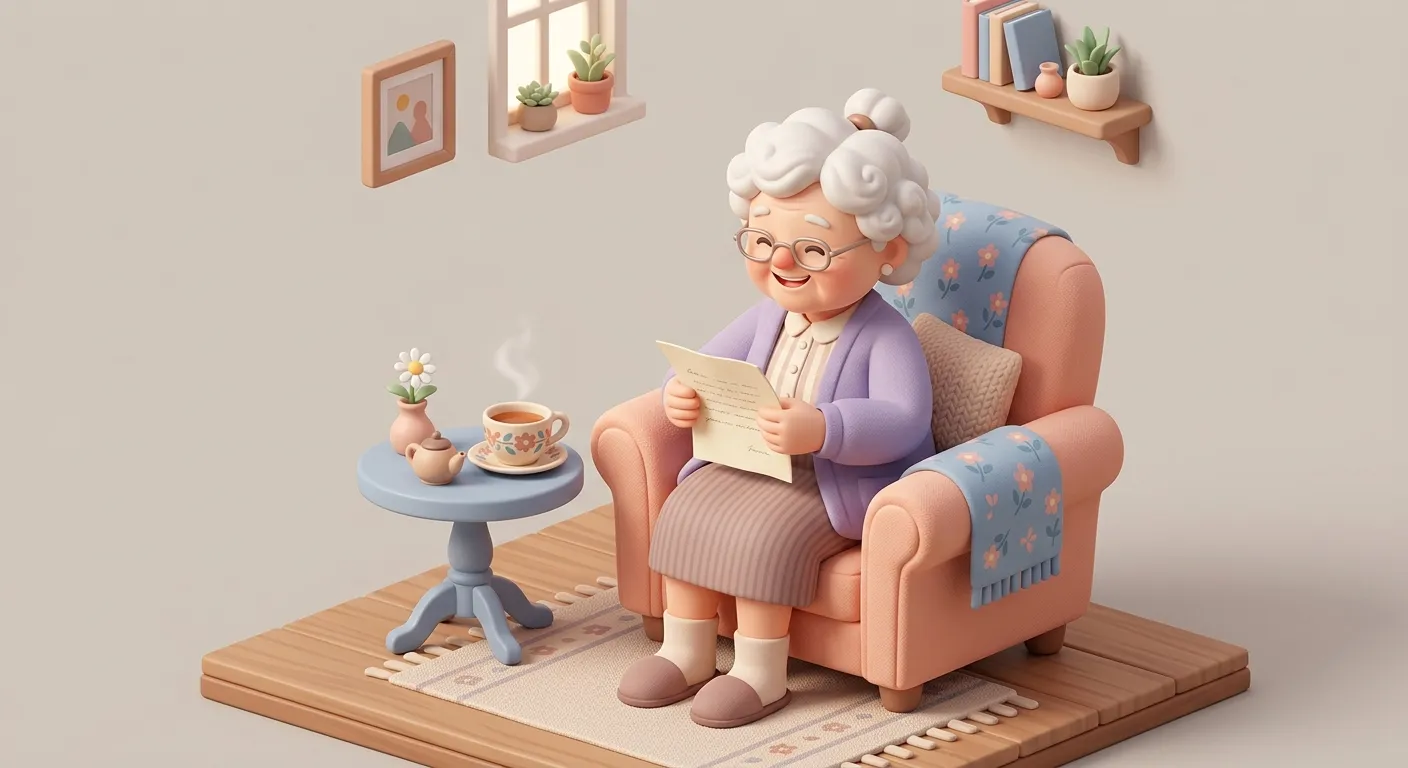
20 Prompts for When You Don’t Know What to Say
Sometimes you need a jumping-off point. Pick one, set a timer for 10 minutes, and just write:
Memory Prompts
- What’s your earliest memory of your parent comforting you?
- Describe a family meal that stands out in your mind.
- What skill or value did they teach you that you use every day?
- What’s the funniest thing that ever happened on a family vacation?
- What’s a recipe, phrase, or habit you picked up from them without realizing it?
Gratitude Prompts 6. What sacrifice did they make that you only understand now that you are an adult? 7. What’s one thing about the way they raised you that you are repeating with your own kids? 8. When did they show up for you at exactly the right moment? 9. What’s something they said years ago that has stuck with you? 10. How did they shape who you are today?
Life Update Prompts 11. What would make them laugh about your week? 12. What’s something new your kids are into that they would find interesting? 13. What’s a recent moment that reminded you of them? 14. What project are you working on that they would have an opinion about? 15. What’s the best thing that has happened to you this month?
Looking Forward Prompts 16. What’s one thing you would love to do together on your next visit? 17. What question have you always wanted to ask them? 18. What family tradition do you want to keep alive? 19. What would you want them to know if you could only say one thing? 20. What are you most grateful for right now?
If you’re also struggling with what to talk about on the weekly phone call, many of these prompts work just as well for conversations.
3 Letter Examples You Can Adapt
Example 1: A Simple Check-In Letter
Hi Mom,
I was at the grocery store yesterday and saw those butter cookies you always kept in the blue tin. I bought a box, obviously. They don’t taste the same without your kitchen and a glass of cold milk, but they made me smile.
Things here are good. Emma started swimming lessons and spends every bath time “practicing her strokes,” which mostly means flooding the bathroom. You’d get a kick out of it.
I know the weeks can feel long sometimes. Just wanted you to know I’m thinking of you more than I say. I’ll call Saturday morning, tell me what you’ve been reading.
Love you, Sarah
Example 2: A Gratitude Letter
Dear Dad,
I’ve been meaning to write this for a while, and I keep putting it off because I’m not great at this stuff. But here goes.
Thank you for coaching my little league team all those years, even though you worked six days a week and probably wanted to spend Saturday mornings sleeping in. I didn’t say thank you enough back then. Now that I’m the one waking up early for Ben’s games, I understand what it cost you, and what it meant.
You taught me that showing up is the most important thing. I try to live by that every day.
Ben hit his first home run last week. I wish you could’ve been there to see his face. I’ll send you the video.
Love, Michael
Example 3: A Letter for a Parent in Assisted Living
Hi Mama,
I hope you’re settling into your new room. I know this transition hasn’t been easy, and I think about you every day.
I wanted to share something that happened yesterday. I was helping Lily with her homework and she asked me, “How come Grandma always knows the answer?” I told her it’s because you’ve been learning things for a lot longer than her teacher has. She thought about it and said, “I want to be smart like Grandma.” You would have loved that.
I’m sending a few photos with this letter, one from Lily’s school play and one of the garden. The tomatoes are finally coming in, just like yours used to.
We’re coming to visit on the 15th. Is there anything you’d like me to bring? I was thinking those magazines you like and some of your favorite hand cream.
All my love, Jessica
If your parent is living in a care facility, you might also find our guide on reducing loneliness for parents in assisted living helpful.
Tips for Making Letters Readable for Elderly Parents
The best letter in the world won’t land if your parent can’t read it. A few practical considerations:
- Type if your handwriting is tough to decipher. It’s perfectly fine if you type up a letter and print it out for your parent to read. In fact, consider printing it in a large font (14pt or larger) for easier reading. The important part here is that you’re taking the time to write the letter, not that you write it by hand.
- Use dark ink on light paper. Dark or black ink on white or cream-colored paper provides the highest contrast and is often easiest for aging eyes to read.
- Keep paragraphs short. Aim for three or four sentences per paragraph. That way, the letter doesn’t feel overwhelming. Lots of white space is okay, in fact, it’s a good thing!
- Include photos. Include a printed photo or two with the letter. It’s a fun surprise for your parent to find inside the envelope. Even a photo taken with your smartphone that you print out at your local drug store is a lovely gesture.
- Skip heavy topics. Save the heavier stuff for another time or medium. Unless you’re writing about something specific that you need to discuss, aim to keep the content light and uplifting. A letter isn’t the right place for family conflicts, health anxieties, or financial worries.
How to Make Letter Writing a Habit (Not a One-Time Thing)
It’s great if you write your parent one letter. But it’s far more meaningful if you can commit to writing on a regular basis. Here’s how to make it stick:
Set a reminder. Choose a day — the first Sunday of every month, every other Friday — and set a recurring reminder on your calendar. It doesn’t matter if you write every week or every six weeks, just aim for some level of regularity.
Keep it short. Every letter doesn’t need to be a long, beautifully crafted piece of prose. Even just a simple note that says hello and updates your parent on your life can suffice. A five-sentence note is better than a three-page letter you never get around to writing.
Involve the grandkids. If you have children, consider enlisting their help with writing letters to grandparents. Kids’ artwork, handwritten notes (even just scribbles, if they’re very young), and school photos are all great ways to make a letter feel like a care package. Most grandparents will treasure these small mementos almost more than anything else in the world. For more ideas on keeping grandparents connected to grandkids, see our guide on long-distance grandparenting.
Use a service. If writing and mailing a letter every month feels like just one more thing to add to your never-ending to-do list, consider using a service to help. Hug Letters prints and mails a personalized family newspaper to your parents or grandparents every month — filled with photos, updates, and messages from the whole family. It’s like writing a letter, except the whole family contributes and it shows up in their mailbox automatically.
Batch your writing. Write two or three short letters in one sitting and mail them out at staggered intervals. Your parent gets regular surprises, and you only sit down once.
When a Letter Says What a Phone Call Can’t
There are moments when writing is better than calling. If you need to say something meaningful but struggle to get the words out in conversation, a letter gives you time to think and edit. If your parent has hearing difficulties, a letter removes that barrier. And if you’re navigating a complicated relationship — where visits feel more like obligations than connection — a letter can be a safe, low-pressure way to rebuild.
Letters are also powerful for things you’ve never said:
- An apology you’ve been carrying
- Gratitude for something they never got credit for
- A simple “I’m proud to be your kid”
You might never say these things out loud. But you can write them down, seal the envelope, and let the words do their work.
Frequently Asked Questions
How often should I write to my aging parents?
Whatever you feel comfortable with. Once a month is a good goal to start with. Even a short note every few weeks can make a huge difference. According to the AARP, over 40% of adults over 60 report feeling lonely on a regular basis. A predictable, recurring letter gives them something to look forward to.
What if my parent has dementia or cognitive decline?
Write anyway. Keep letters short, focused on one memory or one simple update, and include a photo. Even if they can’t fully process every word, the act of receiving mail — seeing their name on an envelope, holding a letter from someone who loves them — provides comfort and stimulation. Use familiar names and references. Avoid anything that requires them to remember recent events.
Should I handwrite or type my letters?
Either works. Handwritten letters feel more personal and many older adults prefer them. But if your handwriting is hard to read, a typed letter in large print (14pt+) is a better choice. The goal is for your parent to actually read the letter without frustration. Some people type the letter but add a handwritten “I love you” at the bottom — a nice middle ground.
What if I have a difficult relationship with my parents?
Start small. You don’t need to write a long, emotional letter. A brief note sharing something from your week — neutral, warm, low-stakes — can be a first step. Letters are less confrontational than phone calls and give both sides time to process. If there are deeper things to address, a letter can be a thoughtful way to open the door, but consider whether this is the right format for conflict resolution or whether a counselor might help.
Your Letter Doesn’t Have to Be Perfect
The biggest barrier to writing a letter to your aging parents isn’t time, postage, or even knowing what to say. It’s the pressure to get it right.
But here’s what your parents actually want: proof that you thought of them. A few sentences about your week. A memory that makes them smile. A reminder that they matter.
Start with one letter. Pick a prompt from the list above, grab a pen or open a document, and write for 10 minutes. Don’t edit. Don’t overthink. Just let the words come.
Your parents won’t grade your letter. They’ll treasure it.

About Martin Gouy
Martin is the founder of Hug Letters. Hug Letters is a family newsletter for grandparents. Every month, grandparents receive a heartwarming newspaper with photos and stories from the whole family.