

There’s a recipe card taped inside your mother’s kitchen cabinet. The ink is faded, the handwriting belongs to her mother, and the card has a faint smear of butter in the top left corner from the last time it was actually used.
That card is a family tradition. Not the recipe itself — though it probably is delicious — but the act of passing something forward. The knowing that your hands are doing what your grandmother’s hands did, and her grandmother’s before that.
Most of us want to give our children that kind of rootedness. The problem is we tend to think of family traditions as things that already exist, inherited and automatic. We forget that someone, at some point, had to start them.
This spring is a good moment to do exactly that. Not because the calendar demands it, but because there’s something about the shift from winter to longer days that makes people think about fresh starts, new rhythms, and the things they want to carry forward.
And if you’re trying to build traditions that actually include your parents or grandparents — not just tolerate their presence at a holiday dinner — this guide is for you.
Why “Traditions” Sound Harder Than They Are
The word “tradition” carries a certain weight. It implies years of repetition, formal ceremony, something you could put in a family history book. That framing is part of why people stall.
But the traditions that end up mattering most rarely started with ambition. They started with repetition. You made a particular meal on Sunday evenings, and then you made it again, and then your kids started asking for it by name. That’s a tradition. It started with dinner.
The same principle applies to traditions that involve grandparents. You don’t need to build a ceremony. You need to build a habit — something small and repeatable that creates the conditions for connection.
What makes a tradition work for grandparents specifically is that it:
- Has a predictable rhythm they can look forward to
- Doesn’t require them to navigate technology they don’t trust
- Gives them a role, not just a seat at the table
- Creates a product — a photo, a dish, a story — they can share with others
That last point matters more than it sounds. Grandparents in assisted living or living alone often measure their social standing in part by what they can bring to the table with neighbors and friends. A printed photo from a grandchild’s soccer game, a letter, a newspaper filled with family updates — these aren’t just keepsakes. They’re social currency.
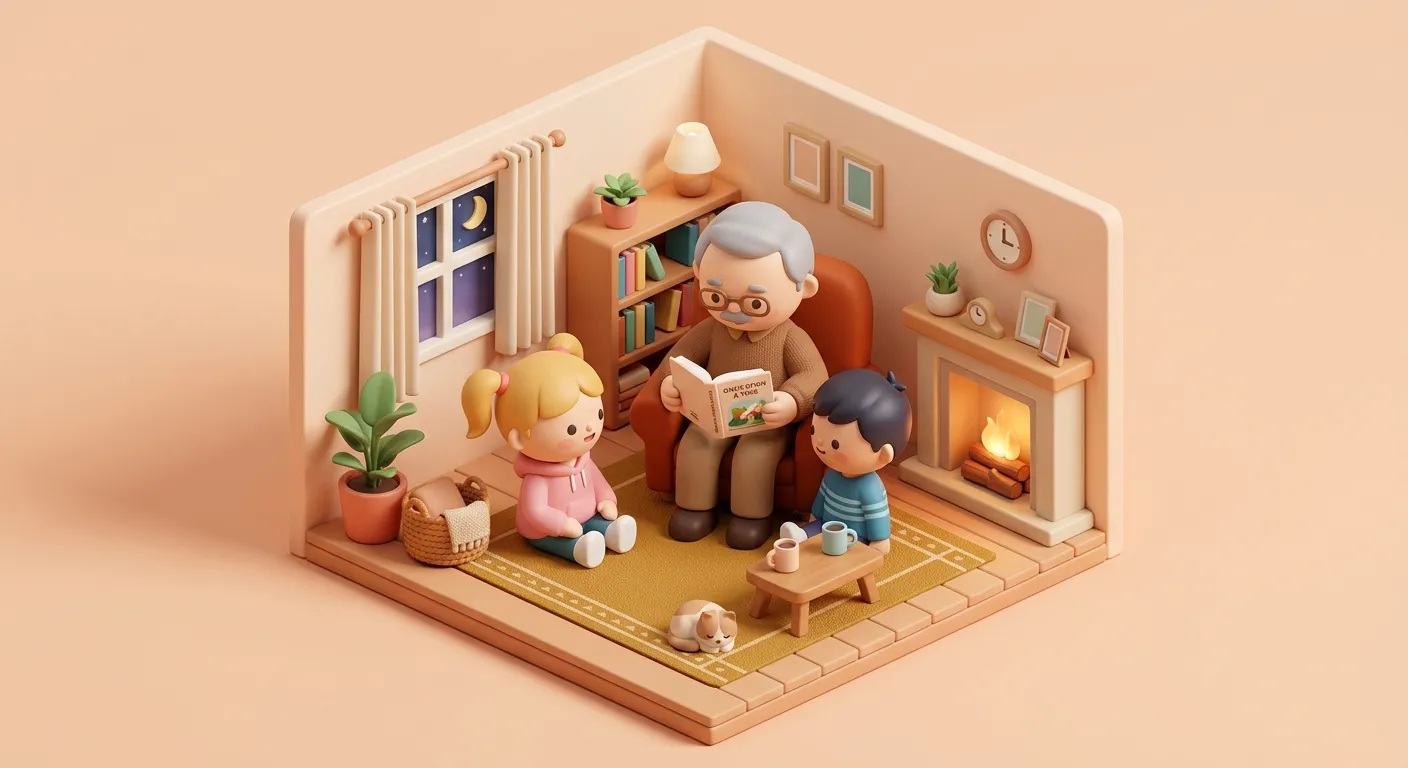
Start With What Your Grandparent Already Does Well
The easiest traditions to sustain are the ones that grow from existing strengths. Before you try to introduce something new, ask: what does your grandparent already love, know, or do that a grandchild could learn?
Some examples:
Cooking or baking. This is the classic for a reason. The act of making something together is tactile, focused, and ends with something everyone can eat. If your parent has recipes that have never been written down, this is the moment to transcribe them. Make the recipe together over a video call, or during a visit. Turn the card into a printed keepsake.
Cards and letters. Some grandparents are prolific letter writers. If yours is, build a tradition of exchanging handwritten notes — a postcard once a month, a birthday letter that goes deeper than the Hallmark version. Children who receive physical mail light up in a way that a text message simply doesn’t produce.
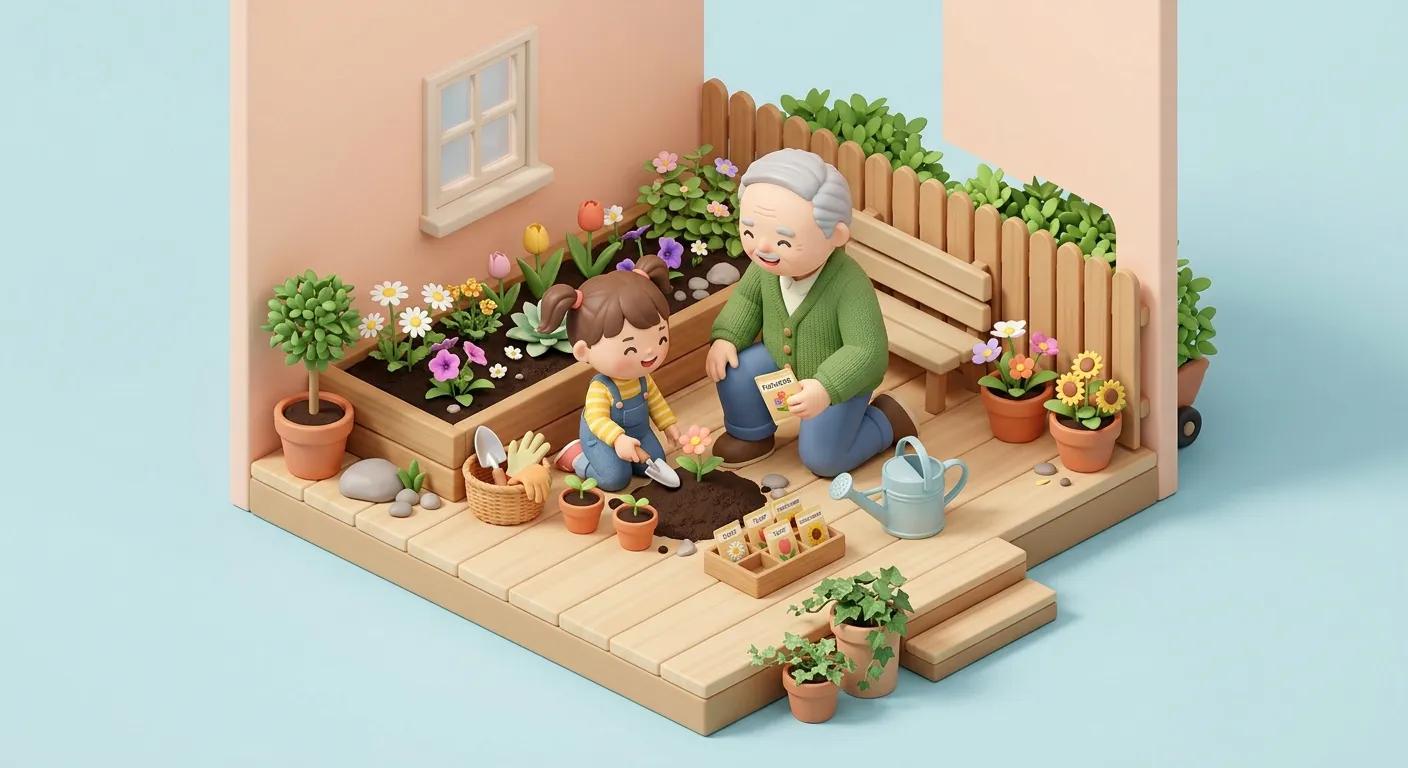
Gardening. If your parent has a garden, consider planting the same seed at home with your children in the spring. Send photos of the progress. Compare notes. It’s a tradition that runs on patience and observation — exactly the kind of rhythm that suits a grandparent’s pace.
Storytelling. Some grandparents are natural storytellers; they just need an audience and a prompt. Build a tradition of a “story of the month” — one memory your parent shares with the grandchildren, recorded by voice memo, saved in a shared folder. Over ten years, that becomes an archive.
Games. A standing game night over video call — cards, chess, trivia — works surprisingly well once you commit to a regular time. The key is consistency: same day, same time, same game to start.
The Traditions That Survive Are the Ones With Anchors
A tradition lives or dies by its anchor: the fixed point in time or the ritual object that triggers the habit.
Without an anchor, a good intention remains exactly that. “We should do a monthly call with grandma” dissolves by week three. But “Sunday at 4 PM is Grandma Time” has a fighting chance — because it asks the family to protect a specific slot, not just to mean well.
Some anchors that work well for grandparent-inclusive traditions:
The calendar anchor. A fixed day and time that belongs to the tradition and nothing else. It goes on the family calendar before anything else can take that slot.
The seasonal anchor. Something that happens at the first sign of spring, or on the first day of school, or on the night before a holiday. Seasonal anchors are easier for grandparents to remember and anticipate, and they give the tradition a narrative arc over the year.
The object anchor. A physical item that marks the tradition — a particular cookbook, a letter box, a game that only comes out on grandparent days. Objects make traditions tangible in a way that digital rituals often can’t match.
The mail anchor. This one is underused. A monthly package or printed publication that arrives like clockwork builds anticipation in a way nothing else quite does. Grandparents who receive physical mail consistently report that it remains one of their most meaningful touchpoints with family — something they can hold, reread, and show to others.
Hug Letters works as exactly this kind of anchor. It’s a monthly printed family newspaper — assembled from photos and short updates your family submits through an app — that arrives in your grandparent’s mailbox every month without them having to do a thing. Families who use it often describe it becoming the centerpiece of visits: “We sat down with the new Hug Letters and went through it together.” That’s a tradition.
How to Include Grandparents Who Live Far Away
Long-distance grandparenting adds a layer of logistical friction that can kill traditions before they take root. But the families that manage it well share a few strategies.
Let the grandparent contribute, not just receive. One of the quiet failures of long-distance family life is that grandparents end up as passive recipients — they receive photos, they get updates, they watch videos of grandchildren who barely look at the camera. That’s connection-adjacent, not actual connection.
Build traditions where the grandparent is a creator, not just an audience. Ask them to record a short voice message each month with a memory or a piece of advice. Have them select a poem or a quote for a family “word of the month.” Ask them to review the grandchildren’s drawings and send back a written response. The act of contributing changes the emotional math entirely.
Bridge the distance with physical objects. Video calls are valuable, but they don’t leave anything behind. Physical objects — a letter, a pressed flower from the garden, a recipe card — travel across the distance and exist in the room after the call is over. Build traditions around physical exchange, not just digital contact.
Reduce the friction of participation. The traditions that survive long-distance are almost always the ones that ask the least of the person with the least energy and mobility. If your tradition requires your 80-year-old mother to download an app, manage a login, and figure out a new interface every time, it will fail. The best long-distance traditions for grandparents are low-friction, predictable, and require no technical competence. A phone call at a fixed time. A letter that arrives in the mail. A printed newspaper that just shows up.
You can read more about practical strategies in Long-Distance Grandparenting: 12 Ways to Stay Close When Miles Stand Between You.
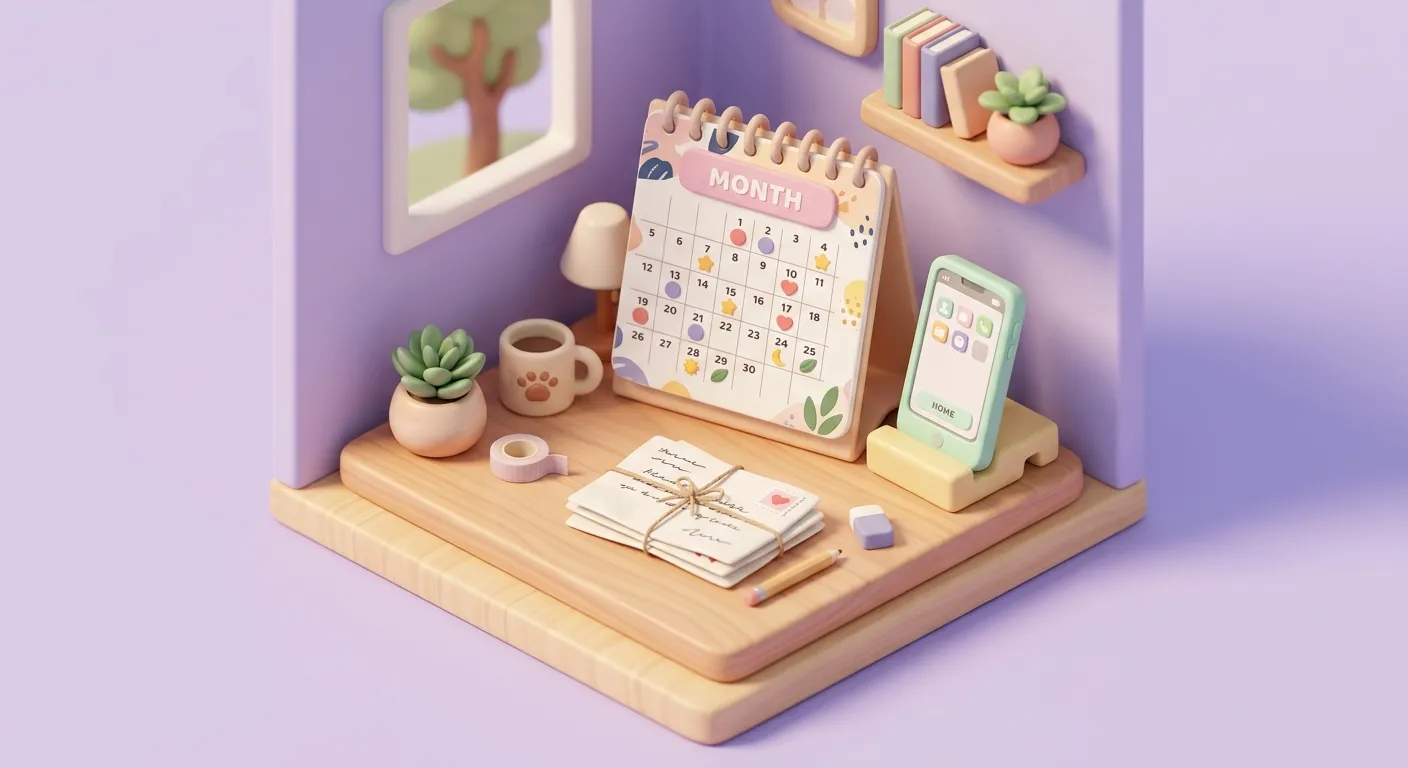
A Simple Framework: The Monthly Touchpoint Stack
If you want to build a tradition-based connection system with your grandparents this spring, here’s a framework that works for most families without requiring a complete overhaul of your schedule.
One weekly anchor: A fixed phone or video call, no longer than 20 minutes, at the same time every week. Keep it light. A standing question (“What was the best thing that happened this week?”) gives it shape without making it feel like homework.
One monthly anchor: Something physical that either arrives at or leaves from your grandparent’s home. This could be a handwritten letter from the grandchildren, a printed photo, or a monthly family newspaper. The goal is a physical artifact that marks the passage of time and gives your grandparent something to hold.
One seasonal anchor: Something tied to the calendar — a spring baking session, a summer garden update, a fall recipe swap, a winter memory project. Seasonal anchors give the relationship a narrative arc and something to anticipate.
One annual anchor: A tradition that belongs entirely to the grandparent relationship — a trip, a meal, a project, a ritual that the grandchildren will remember as “the thing we do with grandma and grandpa.” This one takes more planning, but it’s the one that tends to appear in eulogies.
You don’t need all four to start. Start with one, sustain it for three months, and then add another.
What to Do When a Grandparent Is Reluctant
Not every grandparent is going to embrace a new tradition enthusiastically. Some are private. Some feel awkward receiving focused attention. Some are dealing with health changes that make participation feel unreliable or embarrassing.
A few things that help:
Lower the ask. Start with something so small it’s almost hard to refuse. Not “let’s do a monthly video call” — that feels like a commitment. Try “can I call you Thursday for 10 minutes to show you what Emma made at school?” That’s just a phone call.
Give them a role with dignity. Reluctant grandparents often warm up when they have something to teach or offer, not just receive. Frame the tradition around their expertise: “I want Emma to learn how you used to make that soup.”
Be patient with the technology conversation. If a grandparent’s reluctance is rooted in technology anxiety, don’t push the digital channel. Find the analog version of the same tradition. A phone call instead of FaceTime. A printed newsletter instead of a Facebook group. Physical mail instead of email. Connection doesn’t require a smartphone.
Accept that some traditions will fail. The first three attempts at a new rhythm often feel awkward. That’s normal. Give it time before you decide it isn’t working.
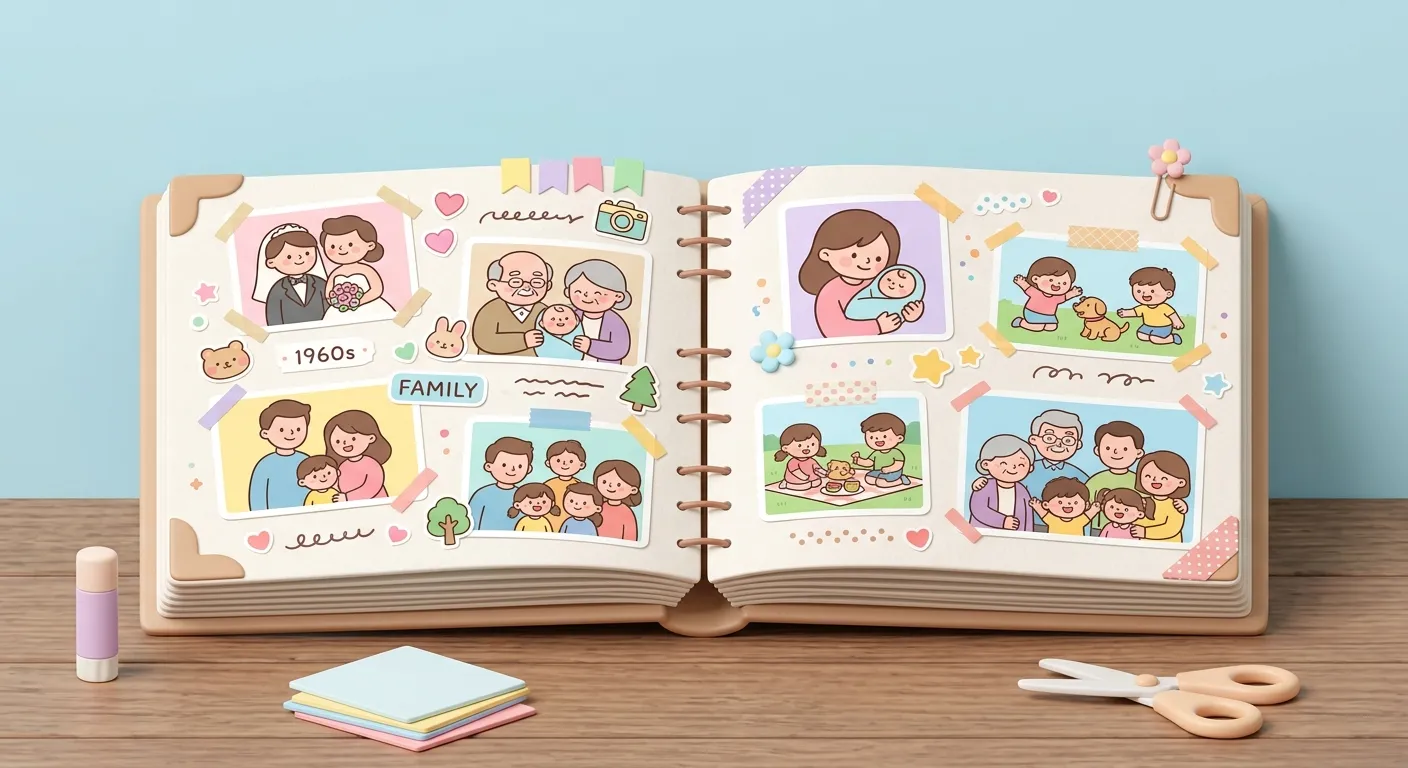
The Traditions You Build Now Are the Ones They’ll Remember
Here is the thing about family traditions and grandparents that is easy to lose sight of when you’re coordinating schedules and fighting the friction of distance: the grandchildren are watching.
They are absorbing the message you send about how this family treats its elders. They are learning whether grandparents matter, whether the past matters, whether connection is worth the effort. And someday — sooner than any of us would like — they will be the ones deciding how much to stay in touch.
The traditions you build now are not just for your parents. They are practice for your children. They are the habits that will shape how your family navigates distance and age for the next two generations.
That recipe card taped inside the cabinet with the butter smear in the corner? Somebody started it. Somebody decided that this meal, this handwriting, this ritual was worth repeating.
That somebody can be you.
Where to Start This Week
If this resonates and you want to take one concrete step before the end of the week, here are three options — pick whichever fits your situation:
-
Call your parent and ask them to tell you about one family tradition from their own childhood. That conversation will surface more ideas than anything in this guide.
-
Set one recurring calendar event — a weekly call, a monthly letter-writing session with the kids, anything — and protect it for one month before evaluating.
-
Send something physical. A photo print, a handwritten postcard from the kids, a letter. Today, not next week. See how it lands.
The goal isn’t a perfect tradition system. The goal is one more point of connection this month than there was last month. That’s enough to start.

About Martin Gouy
Martin is the founder of Hug Letters. Hug Letters is a family newsletter for grandparents. Every month, grandparents receive a heartwarming newspaper with photos and stories from the whole family.