

Your parents are in Ohio. You’re in Oregon. Your kids see their grandparents twice a year if you’re lucky — once at Thanksgiving, maybe again in the summer. In between, there are phone calls that feel rushed, video chats where the Wi-Fi freezes at exactly the wrong moment, and a quiet guilt that your children aren’t growing up the way you did: with grandma and grandpa just down the street.
You’re not alone. According to AARP, nearly one in five grandparents lives more than 200 miles from their grandchildren. Long-distance grandparenting is the new normal — but that doesn’t mean the relationship has to be shallow.
The families that manage to build close grandparent–grandchild bonds across the miles share something in common: they’re intentional about it. Not in a stressful, calendar-blocking way, but in a low-key, consistent, “this is just what we do” kind of way. This guide is for the adult child in the middle — the one holding the family together across time zones.
Why the Grandparent–Grandchild Bond Is Worth Fighting For
Before we get to the how, a quick word on the why — because it helps to remember why you’re putting in the effort on a Tuesday evening when you’re already exhausted.
Research consistently shows that close grandparent relationships offer children a sense of identity, emotional security, and resilience. Grandparents transmit family values and stories in a way that parents, frankly, can’t. They’re the living archive of your family. They offer unconditional love with none of the bedtime-routine tension. And for the grandparents themselves, a close relationship with grandchildren is strongly associated with better mental health, lower rates of depression, and increased sense of purpose.
Distance is an obstacle. It’s not a dealbreaker.
1. Make Video Calls a Ritual, Not a Chore
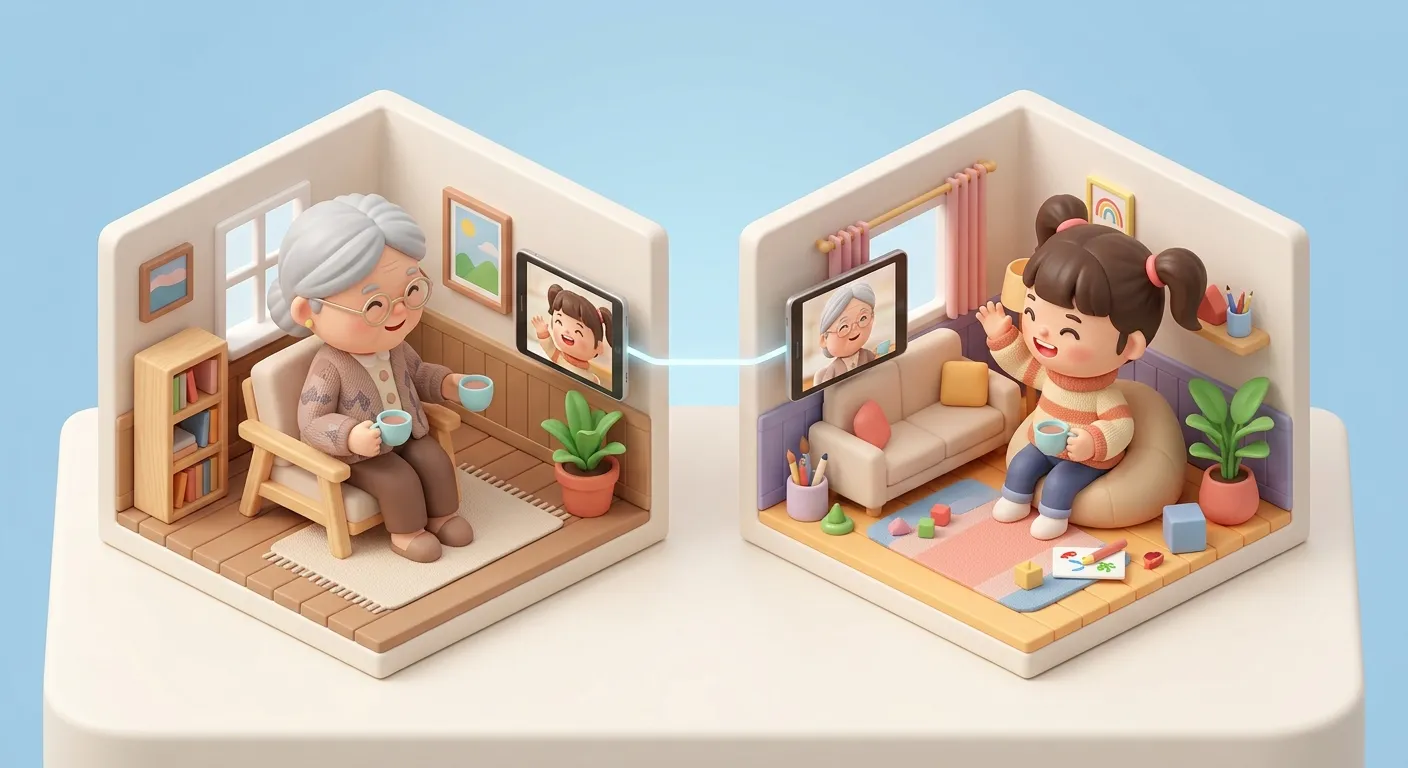
The number one tool for long-distance grandparenting is the video call — FaceTime, Zoom, Google Meet, WhatsApp. You already know this. What most people miss is the difference between a scheduled video call and a spontaneous one.
Spontaneous calls feel intimate but rarely happen. Scheduled calls feel like homework — until they don’t. Give it six weeks of a standing weekly call (Sunday evenings at 5 PM, for example), and it becomes the thing everyone looks forward to. Your kids start asking about it. Your parents start planning what to share.
Pro tip: Give the call a light structure. A game, a show-and-tell, or a simple “Rose, Bud, Thorn” round (best thing this week, something I’m looking forward to, something hard) turns a check-in into an actual memory.
2. Send a Monthly Family Update
This is underrated, and it’s exactly what Hug Letters was built for.
Most families rely on real-time communication — video calls, texts, the occasional group chat — but none of it creates a record. A monthly family update or newsletter changes that. It gives grandparents something physical to hold, read, and reread. Something to put on the fridge. Something to show their neighbors.
Services like Hug Letters print and mail a monthly family newspaper — you supply the photos and updates, they handle the printing and postage. For grandparents who aren’t comfortable with technology, it’s pure magic: a real newspaper about their grandchildren, arriving in the mailbox each month.
Even a simple monthly email update — photos, a few lines about what each child is up to, a funny quote — builds a rhythm that grandparents anchor their months around.
3. Physical Mail Still Works Magic
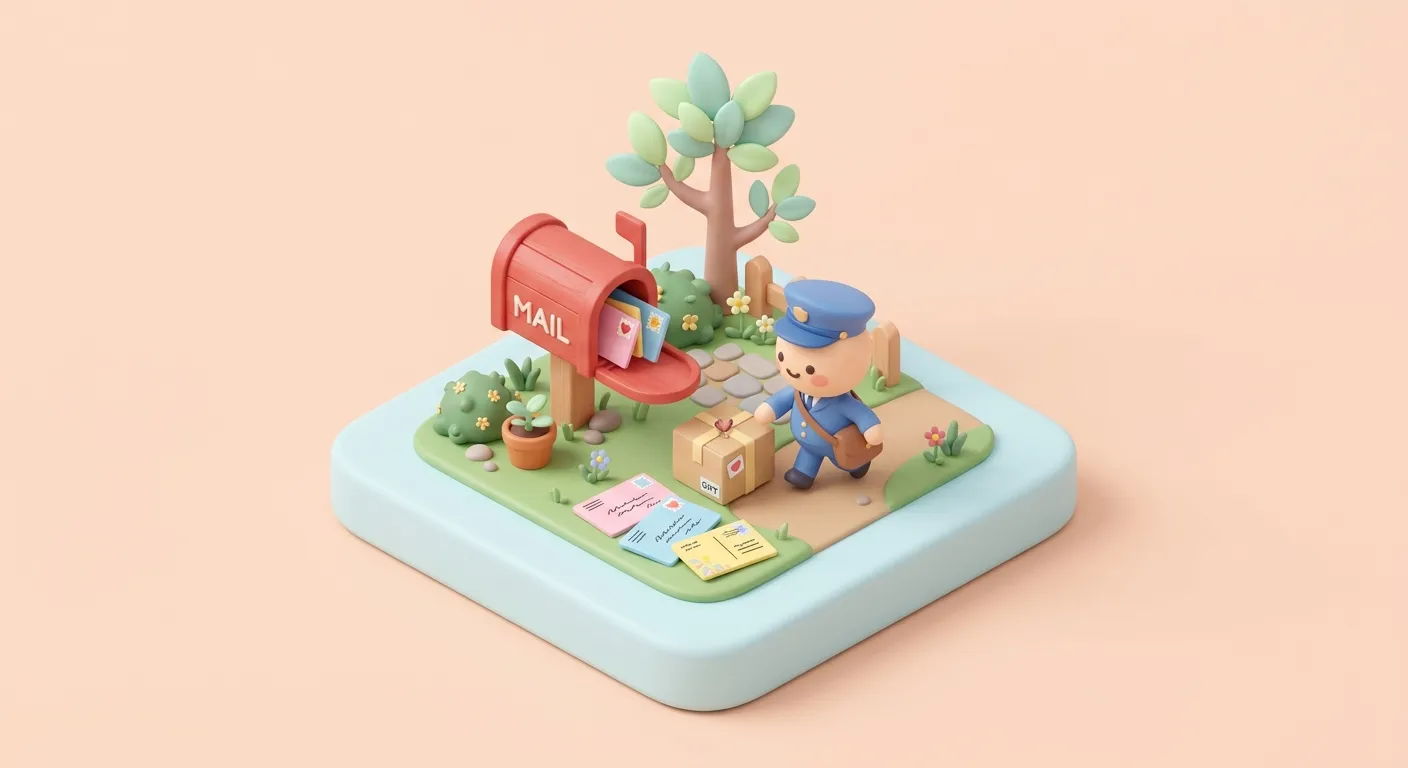
There’s a reason grandparents keep every drawing, every card, every hand-addressed envelope their grandchildren ever sent them. Physical mail triggers an emotional response that a text message simply cannot. It’s tangible proof that someone was thinking of you.
Encourage your kids to send postcards, drawings, or little notes — not for big occasions, but for no reason at all. A drawing of the family dog mailed on a random Wednesday is more meaningful than a birthday card bought at the last minute.
If your children are too young to write, scan their artwork and mail it. If they’re older, let them pick out postcards or stationery. The act of choosing what to send, addressing it, and putting a stamp on it is itself a lesson in caring for people who aren’t in the room.
We have a full guide on sharing family photos and memories with grandparents who don’t use technology, including printable options that require zero tech on their end.
4. Set Up a Shared Photo Album That Runs Itself
Photo sharing is the second most common piece of advice you’ll find on this topic — and for good reason. But there’s a critical distinction between asking grandparents to join yet another app versus setting up something that works for them automatically.
The Skylight Frame and Aura Frame are digital photo frames that family members can update remotely from their phones. You take a photo of your kid’s first lost tooth, you click send, and it appears on grandma’s frame within minutes. She doesn’t need to do anything. It just updates.
For families where everyone has iPhones, the built-in Shared Albums feature in the Photos app works well. For cross-platform families, Google Photos albums are easy to share and update.
The key is removing friction from grandparents’ side of the equation. If staying connected requires them to navigate an app, it will stop happening.

5. Do Activities Together — Virtually
This sounds harder than it is. You don’t need elaborate setups. You need a video call and a shared activity:
- Cook the same meal together — grandma teaches the kids her lasagna recipe over Zoom while everyone stands in their respective kitchens
- Read a book together — a grandparent can read a chapter aloud to their grandchild over video; older grandchildren can take turns reading aloud to grandparents
- Plant seeds simultaneously — send the grandparents the same seed packet your kids have, plant them together on video, and compare growth photos each week
- Watch a movie “together” — pick a film, press play at the same time, and text or call afterward
- Play online board games — sites like Tabletopia and BoardGameArena offer free games for all ages that work well over video chat
Activities turn video calls from status updates into shared experiences. That’s where the real connection lives.
6. “Open When” Letters From Grandparents
This one is especially meaningful for children going through milestones: starting a new school year, dealing with a hard moment, celebrating a birthday.
Ask grandparents to write a set of “Open When” letters — physical letters sealed in envelopes labeled “Open when you’re feeling sad,” “Open when you need to feel brave,” “Open when you miss me.” Bundle them together and mail the whole set.
When your child opens one, it’s a private moment between grandparent and grandchild — no screens required. It can start a phone call, or it can simply be held. Either way, it communicates: I was thinking about you before this moment even happened.
7. Keep Grandparents in the Loop on the Little Things
Grandparents aren’t just interested in milestones. They want to know that your daughter is obsessed with horses right now, that your son just started saying “actually” in every sentence, that your family tried a new restaurant and hated it.
The little things are the texture of a life. When grandparents know those details, conversations feel intimate rather than formal. They can ask follow-up questions. They become real participants in the story of your children’s childhoods.
Text threads, voice memos, and brief video clips are all low-effort ways to share these moments as they happen. A five-second clip of your kid attempting a cartwheel means more than a three-paragraph email.
8. What to Do When Grandparents Aren’t Tech-Savvy
This is where many long-distance grandparenting plans fall apart. You set up a video calling routine, and then grandma’s iPad gets a software update and suddenly nothing works. Or grandpa simply refuses to learn another new app.
For tech-resistant grandparents, lean into analog:
- Scheduled phone calls over email or text — they know how to answer a phone
- Physical mail (see above) — requires no technology on their end
- A printed family newspaper delivered to their mailbox each month
- Pre-addressed and stamped envelopes sent to grandchildren, so writing back requires zero friction
- Printed photo books — services like Chatbooks and Shutterfly let you create books from your phone; grandparents receive a physical book they can flip through without any screens
Our post on keeping grandparents connected without technology has more ideas specifically for this challenge.
9. Involve Your Kids in Maintaining the Relationship
Here’s something the grandparenting advice articles often miss: the relationship isn’t just between grandparents and grandchildren — it’s facilitated by you. And that’s exhausting if you’re doing all the work.
One of the best things you can do is make your children active participants in maintaining the connection. Let them:
- Choose a photo to send to grandma each week
- Leave a short voice memo as a “letter”
- Help pick out a birthday card (not just sign one you bought)
- Draw something specifically for grandpa and be responsible for mailing it
- Remember to ask grandma about her garden, or grandpa’s golf game
When children take ownership of the relationship, it becomes theirs — not an obligation you’re managing for them.
10. Create Low-Maintenance Routines Over Grand Gestures
The families with the strongest long-distance grandparent bonds aren’t the ones flying grandparents out every six weeks. They’re the ones with boring, reliable rhythms: the Sunday Zoom call, the monthly update email, the Tuesday drawing that gets photographed and texted.
Consistency signals care. A grandparent who hears from their grandchildren every week — even if it’s just a two-minute phone call — feels far more connected than one who gets one tearfully wonderful five-day visit per year with silence in between.
Start small. One reliable rhythm is worth ten ambitious plans that fizzle.
11. Plan Visits Around Experiences, Not Logistics
When grandparents do visit — or when you travel to see them — make the most of the time by planning around experiences rather than sitting around catching up.
Cook a family recipe together. Do a day trip somewhere nearby. Let the grandchildren be the “tour guides” of their school, their sports field, their favorite park. Activities create shared memories that fuel conversation for months afterward.
You can find plenty of screen-free activity ideas in our guide to fun things grandparents and grandchildren can do together at home.
12. Be Honest With Yourself — and Gentle With the Guilt
Long-distance grandparenting involves real grief, on everyone’s part. Grandparents mourn the casual proximity they imagined. You carry the quiet guilt of raising children who aren’t growing up down the street from their grandparents. Your children may not fully understand what they’re missing until they’re older.
That’s okay. Acknowledging it — even gently, to each other — makes room for the relationship you can have, rather than mourning the one you can’t.
The goal isn’t to replicate the experience of living nearby. It’s to build something real within the constraints you have. And with intention and a few good systems, you absolutely can.
The Bottom Line
Long-distance grandparenting works when it’s treated like a relationship rather than a problem to solve. You don’t need every tool on this list. You need a few that fit your family’s rhythm and your parents’ comfort level — and you need to stick with them.
Start with one: a weekly video call, a monthly family update, a shared photo frame. Let the rest build from there. Your kids will grow up knowing their grandparents — and your parents will feel it too.
Looking for a low-effort way to send a beautiful monthly update to grandparents? Hug Letters prints and mails a custom family newspaper to grandparents every month, so you stay connected without the effort of crafting something from scratch.

About Martin Gouy
Martin is the founder of Hug Letters. Hug Letters is a family newsletter for grandparents. Every month, grandparents receive a heartwarming newspaper with photos and stories from the whole family.