

Your mom is three states away. She sees the grandkids maybe twice a year. She asks the same question every time you call: “So, what’s new with the kids?”
You give her a quick summary, promise to send more photos, hang up, and then life takes over. Three weeks later you realize you still haven’t sent those photos. And the guilt creeps back in.
Sound familiar? You’re not alone. Most adult children genuinely want their parents and grandparents to feel connected to family life — but staying on top of regular updates is hard when you’re juggling work, kids, and everything else.
A family newsletter for grandparents solves this problem beautifully. It’s one intentional, regular update that lands in their hands (not on a screen they can’t quite navigate) and gives them something to savor, share, and look forward to every single month.
Here’s how to make one — and make it stick.
Why Grandparents Love Getting a Family Newsletter
Before getting into the how, it helps to understand why a newsletter works so well for older adults.
Phone calls are wonderful, but they’re easy to forget. Text threads get buried. Photos shared in a family group chat disappear before grandparents can figure out how to save them. Email? Many older adults either don’t use it or feel overwhelmed by a cluttered inbox.
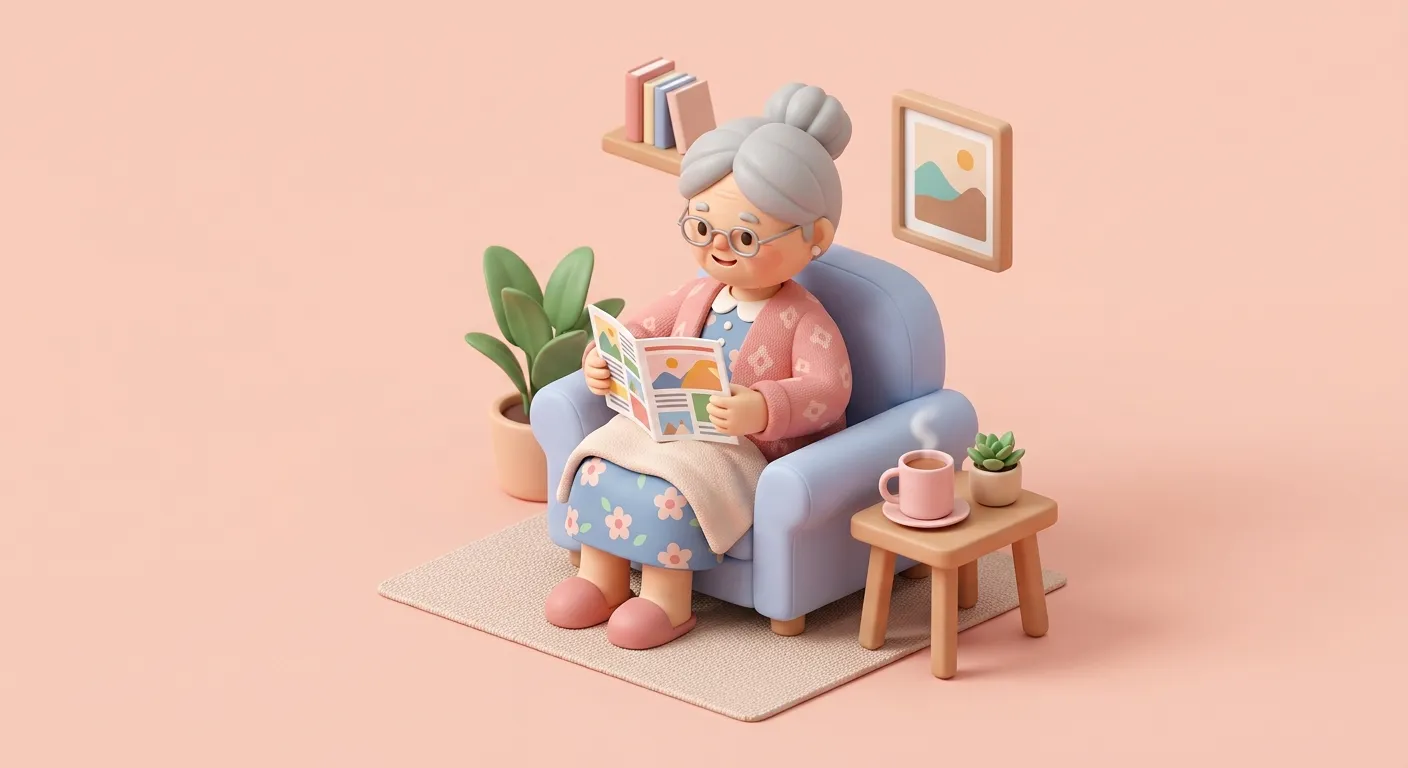
Physical mail is different. For your grandparents’ generation, receiving a letter or a printed newsletter is a genuine event. It’s something they can hold, re-read over morning coffee, and set on the coffee table to show a neighbor. For grandparents living in assisted living communities, a printed family newsletter becomes even more meaningful — it’s a tangible reminder that family is thinking of them, and something they can proudly share in common areas.
Research on senior wellbeing consistently shows that feeling connected to family is one of the strongest buffers against loneliness and cognitive decline. A monthly newsletter isn’t just a nice gesture — for many grandparents, it’s a lifeline.
What to Include in a Family Newsletter for Grandparents
The most common question people ask is: what should actually go in a family newsletter? Here’s what works best when your primary audience is grandparents.
Photos first, always. Aim for a 60/40 split of photos to text. A photo of the grandkids at a birthday party, a muddy after-school moment, a family dinner — these are worth a thousand words. Don’t curate only the “perfect” shots. Grandparents love seeing real life.
Milestone updates. Lost a tooth? Got a part in the school play? Hit a personal best in swimming? These moments matter enormously to grandparents, even if they feel small to you. Write them down.
A quote or note from a grandchild. Even a scrawled “I love you, Grandma!” from a five-year-old makes grandparents beam. If your kids are old enough to write a sentence or draw a picture, include it. This is often the part grandparents re-read the most.
Family news. Job updates, a home improvement project, a funny thing that happened at the grocery store — grandparents want to know about your life, not just the children’s. Include a brief personal note from you.
Upcoming dates and events. A simple calendar corner listing birthdays, anniversaries, or the next planned visit gives grandparents something to look forward to and mark on their own calendar.
Optional extras. A family recipe, a “this time last year” throwback photo, or a pet update can add warmth and variety. Don’t overthink it — even two or three of the above items is enough to make a genuinely meaningful newsletter.
How to Format a Family Newsletter for Grandparents
Generic newsletter advice often assumes your reader is tech-savvy and reading on a screen. For grandparents, the calculus is completely different.
Print beats digital. Even if your parents can use email, receiving something in the physical mailbox creates a very different experience than a digital attachment. If your goal is a newsletter grandparents will actually read and cherish, print it.
Large text and high contrast. If you’re designing your own newsletter, use a minimum 12pt font — ideally 14pt — and avoid light-colored text on pale backgrounds. Good contrast and generous line spacing make a real difference for older eyes.
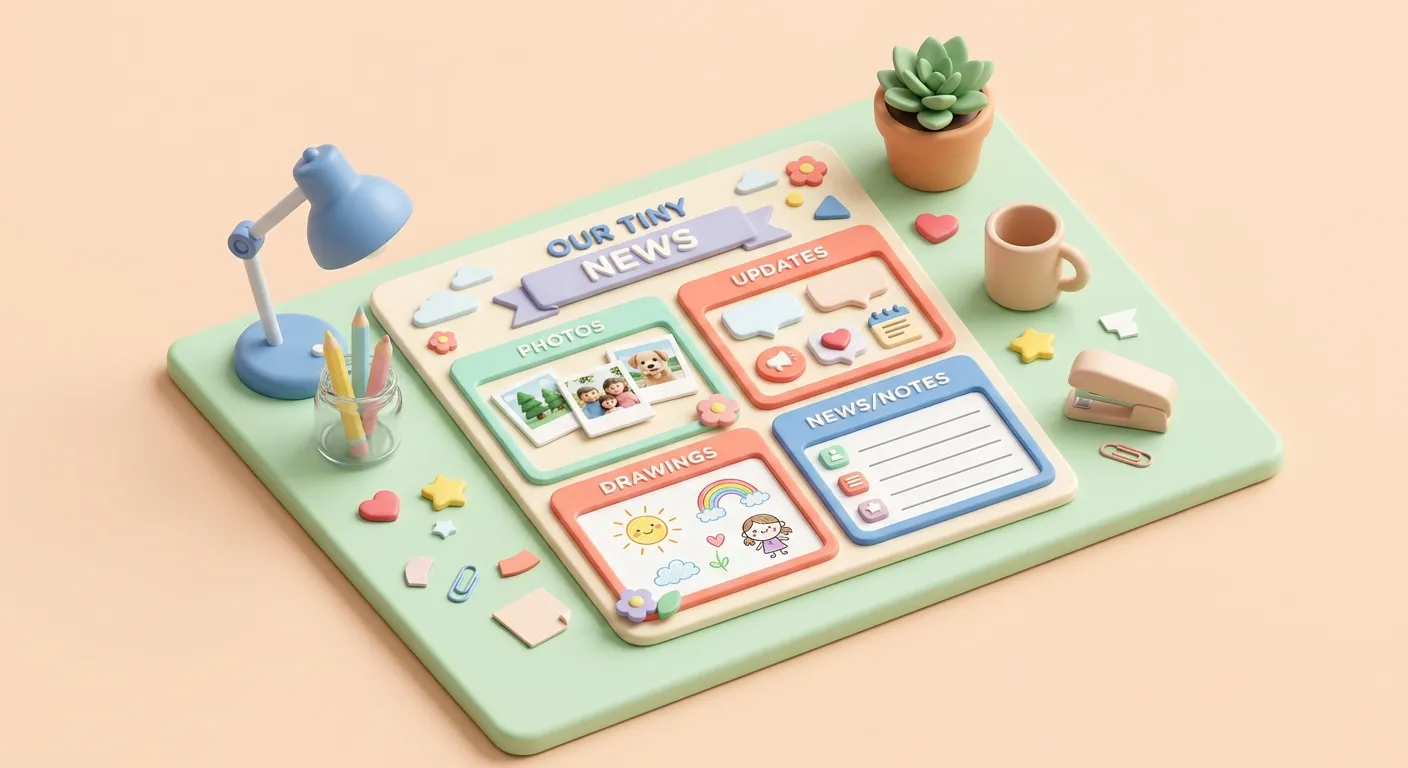
Keep it to one or two pages. A grandparent-focused newsletter doesn’t need to be a magazine. One well-designed page (front and back) with several photos and brief updates is perfect. The goal is warmth and connection, not comprehensiveness.
Simple layout wins. Resist the urge to get too fancy. A clean header with the date and family name, a few photo blocks, and short text sections is all you need. Tools like Canva have free family newsletter templates that make this easy to put together in 20 minutes.
How Often Should You Send a Family Newsletter?
The sweet spot for a family newsletter for grandparents is monthly.
Quarterly or annual newsletters feel like catching up after the fact. By the time grandparents read about something, it feels old. Monthly newsletters, on the other hand, create a rhythm grandparents can anticipate — and it ensures you’re capturing the small everyday moments, not just the big events.
If monthly feels like too much, start with every other month and build the habit. A consistent, imperfect newsletter is infinitely better than a perfect one that never actually gets sent.
How to Involve the Whole Family (Without Herding Cats)
One of the biggest reasons family newsletters stall is that one person ends up doing all the work. Here’s how to share the load.
Create a shared folder or group chat for submissions. A simple shared Google Photos album or a WhatsApp thread labeled “Newsletter Photos” gives everyone a place to drop content throughout the month. You collect, you publish.
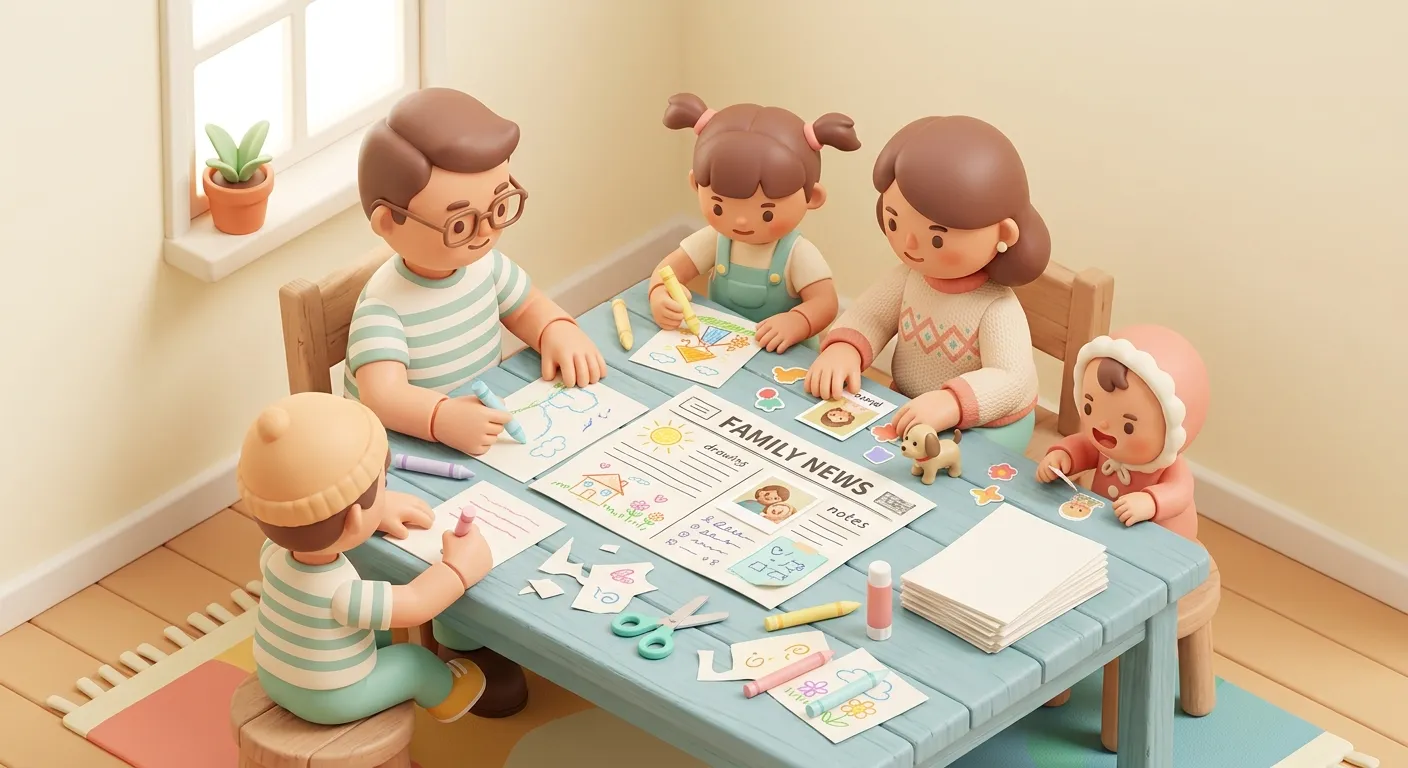
Assign a monthly “correspondent.” Rotate the job of writing one paragraph update among siblings, your partner, or even older grandchildren. Even a few sentences from a different family voice adds welcome variety.
Let kids contribute in their own way. Draw a picture. Write three sentences about their week. Record a voice message you can transcribe. Children’s contributions are gold in a grandparent newsletter — make space for them.
Set a deadline and keep it light. “Newsletter goes out on the 1st of the month — drop anything you want included by the 25th.” Keep the barrier to participation low and you’ll get more.
Should You DIY Your Family Newsletter or Use a Service?
If you have the time and enjoy the process, DIYing a family newsletter is completely doable. Design it in Canva, print it at home or at a local print shop, address the envelopes, and mail it out. It’s meaningful and personal.
The honest reality, though, is that most families start with great intentions and then stall by month three. The design takes longer than expected. Printing and mailing is fussy. Life intervenes.
That’s exactly where a service like Hug Letters comes in. You contribute photos and updates through an app, family members can add their own, and a beautifully printed family newspaper is mailed directly to your grandparents every month — no design skills or Post Office trips required. For families managing busy lives from a distance, the “set it and let it run” model is often what actually makes a newsletter sustainable long-term.
Tips for Keeping Your Family Newsletter Going Long-Term
The hardest part isn’t the first issue — it’s issue seven when the novelty has worn off.
Batch your content collection. Spend five minutes at the end of each week saving photos and jotting notes to a running document. When newsletter day comes, you’re not starting from scratch.
Done is better than perfect. A short newsletter with three photos and two paragraphs is worth infinitely more than a “perfect” newsletter you never send. Lower the bar and keep going.
Remind yourself of the impact. Ask your parents to describe how they feel when the newsletter arrives. Hearing “I put it right on the refrigerator and showed everyone who visited” is remarkably motivating.
Make it a family tradition. When grandchildren are old enough, let them know they have a regular “column” in the family newsletter. This sense of ownership keeps kids engaged and gives grandparents an anchor to look forward to.
The Connection Your Grandparents Are Craving
Here’s what we know: grandparents who feel informed about and involved in their family’s daily life are happier, less isolated, and often healthier. They don’t need something elaborate. They need something regular.
A family newsletter — even a simple one — says: we thought of you. We wanted you to know what’s going on with us. You are part of this.
That message, delivered monthly to a mailbox, is one of the most loving and low-effort things a family can do.
Whether you create it yourself with Canva and a printer, or let a service handle the production, starting a family newsletter for your grandparents this month is one of those rare investments that pays emotional dividends for years.
Looking for more ways to keep grandparents connected from a distance? Read our guides on how to share family photos with grandparents who don’t use technology and long-distance grandparenting strategies that actually work.

About Martin Gouy
Martin is the founder of Hug Letters. Hug Letters is a family newsletter for grandparents. Every month, grandparents receive a heartwarming newspaper with photos and stories from the whole family.