

There’s a story your grandmother has never told you.
Maybe it’s what she wore on her first date with your grandfather. Maybe it’s how she felt the morning she left her hometown for good, suitcase in hand, not knowing what came next. Maybe it’s something harder — a loss she carried quietly, a choice that changed everything.
The story is there. But if no one asks, it goes with her.
This is the part that gets most of us in the chest: we don’t realize how much we wanted those stories until the person who held them is gone. Adult children everywhere carry the same quiet regret — not that they didn’t love their grandparents, but that they didn’t ask. That they ran out of time before running out of questions.
This guide exists to help you not become that person. It’s practical, it’s organized, and it doesn’t require you to be a filmmaker or a journalist. You just need an afternoon, a phone, and the willingness to sit down and listen.
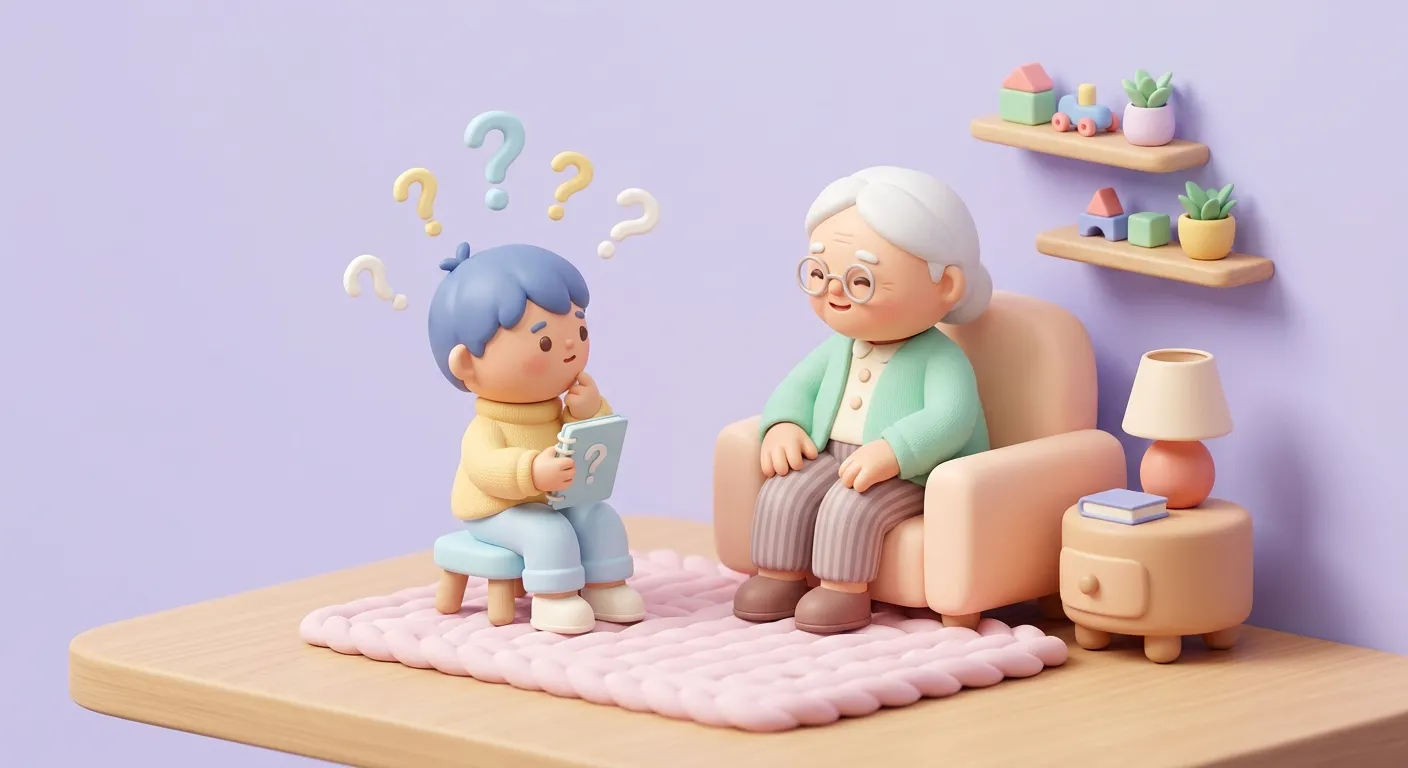
How to Start the Conversation (Without Making It Feel Like an Interview)
The biggest mistake people make is treating this like a formal project. They show up with a list, a recorder, and the energy of a documentary crew — and their grandparent freezes, self-conscious and uncertain what to do with all the attention.
Here’s what actually works.
Frame it as curiosity, not history. Don’t say “I want to record your life story.” Say “I’ve been thinking about what it was like when you were young — can I ask you some questions?” The first feels like a legacy project. The second feels like a conversation.
Start with something concrete. Abstract questions (“Tell me about your childhood”) invite blank stares. Specific questions (“What did your bedroom look like when you were ten?”) unlock memories. Details open doors.
Don’t rush the silences. The most important moments in these conversations often come after a pause — when your grandparent is reaching for something they haven’t thought about in decades. Let the silence breathe.
Do it over food. Kitchen tables are powerful. There’s something about cooking together, or sharing a meal, that loosens people up. Offer to make tea. Sit down with no agenda. Let the questions come naturally.
Tell them why it matters. Some grandparents feel embarrassed by the attention, or genuinely don’t believe their lives were interesting enough to document. Tell them directly: “I want my kids to know who you were. I want to remember.” That usually does it.
A Note on Reluctant Grandparents
Not every grandparent is a natural storyteller. Some are private. Some are humble to the point of self-erasure. Some grew up in families where feelings were not discussed, let alone preserved.
For reluctant grandparents, try indirect questions. Instead of “How did you feel when you emigrated?” try “What was the most surprising thing about your new neighborhood?” Feelings are easier to access through specific scenes and sensory details.
Photos are another powerful door-opener. Sit down with an old photo album together and let them narrate what they see. You don’t even need to ask questions — just listen, and have your phone recording.
50 Questions to Ask Your Grandparents
Childhood and Growing Up
- Where were you born, and what do you remember about the house or neighborhood you grew up in?
- What did your bedroom look like? Did you share it with anyone?
- What was your mother like? What do you remember most about her?
- What was your father like? What did he do for work?
- What were your favorite things to do as a child — before screens, before schedules?
- What did you eat for breakfast every morning? Is there a food from childhood you still think about?
- Who was your best friend growing up? What happened to them?
- What were you afraid of as a kid?
- Did you have any pets? Tell me about them.
- What was the best day of your childhood — the one you’d go back to if you could?
Love, Marriage, and Family
- How did you meet Grandma/Grandpa? What was your first impression?
- When did you know you wanted to marry them?
- What was your wedding day actually like — the parts that didn’t go as planned?
- What’s the hardest thing you ever got through together as a couple?
- What’s something you wish you had said to your partner more often?
- What was it like when your first child was born?
- What do you remember about raising my parent as a child? What were they like?
- Is there something you regret not doing differently as a parent?
- What’s the secret to a long marriage, in your honest opinion?
- What do you hope your grandchildren remember about you?
Career and Life’s Lessons
- What was your first job, and how much did it pay?
- What did you want to be when you grew up — and did it happen?
- What was the hardest job you ever had?
- What’s the best piece of advice anyone ever gave you about work?
- Is there a professional risk you took that you’re glad you took?
- What’s one thing you wish you had done differently in your career?
- What did you learn about money the hard way?
- What does a good day’s work feel like to you?
Historical Moments They Witnessed
- What do you remember about where you were when [a major historical event in their lifetime] happened?
- How did your family feel the first time you got a television?
- What was it like living through a major economic period — the Depression era, the oil crisis, a recession?
- Were you or anyone in your family affected by military service? What was that like for the family?
- How did your community change over the years you lived there?
- What invention or technology change made the biggest difference to your daily life?
- What do you think the world has lost since you were young — something that just doesn’t exist the same way anymore?
Family Heritage and Traditions
- Where did our family originally come from, as far back as you know?
- Is there a family recipe that came from your parents or grandparents — one you still make?
- Did your family have any traditions around holidays that you remember most?
- What was the most important thing your parents taught you about how to live?
- Do you know anything about your own grandparents — what they were like, where they lived?
- Are there any family sayings or phrases that were passed down — things your mother or father always said?
- What does your family name mean to you? Is there a story behind it?
- Is there a part of our family history you think younger generations don’t know — something that should be remembered?
Reflections and Wisdom
- What period of your life do you look back on most fondly?
- Is there something you believed when you were young that you no longer believe?
- What’s the best decision you ever made?
- What do you know now that you wish you’d known at 30?
- What does a good life look like to you — what does it require?
- What are you most proud of?
- What do you want to make sure I know before it’s too late to tell me?

How to Actually Record Their Answers
Reading this list and nodding is one thing. Sitting down and capturing the conversation is another. Here’s how to do it in a way that produces something you’ll actually be able to use.
Your Phone Is Your Best Friend
The voice memo app on any smartphone records hours of clear audio. Before the conversation, test it: hold the phone a foot away from someone and play it back. Make sure you can hear them clearly. Then set the phone on the table, face down, and forget about it. Visible recorders make people self-conscious; a phone on the table barely registers.
For video, the camera on most modern phones produces genuinely beautiful results in good natural light. Sit near a window. Don’t use the flash. A 30-minute video conversation recorded this way is something your family will treasure for generations.
Apps that help:
- Voice Memos (iPhone) or Recorder (Android) — simple and reliable
- Otter.ai — records audio and generates a transcription automatically
- Rev — professional transcription service for a per-minute fee; excellent accuracy
StoryCorps: The Gold Standard
StoryCorps is a nonprofit that has recorded and archived hundreds of thousands of American family conversations. Their free app — StoryCorps — guides you through the interview process, records the audio, and (with your permission) archives a copy in the Library of Congress. It comes with suggested question sets for different situations, including conversations with aging grandparents.
If you want to do this only once but do it well, use StoryCorps.
Written Notes Still Work
Not every family is comfortable with recording. For grandparents who clam up on camera, a handwritten approach can open doors that technology closes. Sit down with a notebook and write as they talk. The notes don’t need to be perfect — key phrases, dates, names of places. You’ll remember the texture of the conversation when you read them back.
After, type up your notes while everything is fresh. Even rough notes, typed up and saved, are infinitely more durable than memory.
Dedicated Apps for Family History
- Storyworth — sends your grandparent one question per week via email; they write their answer, and at the end of the year, their answers are compiled into a printed book
- Ancestry and MyHeritage — include tools for recording and attaching audio to family tree profiles
- Remento — an app designed specifically for capturing family stories through voice prompts; it transcribes automatically and presents stories in a beautiful format
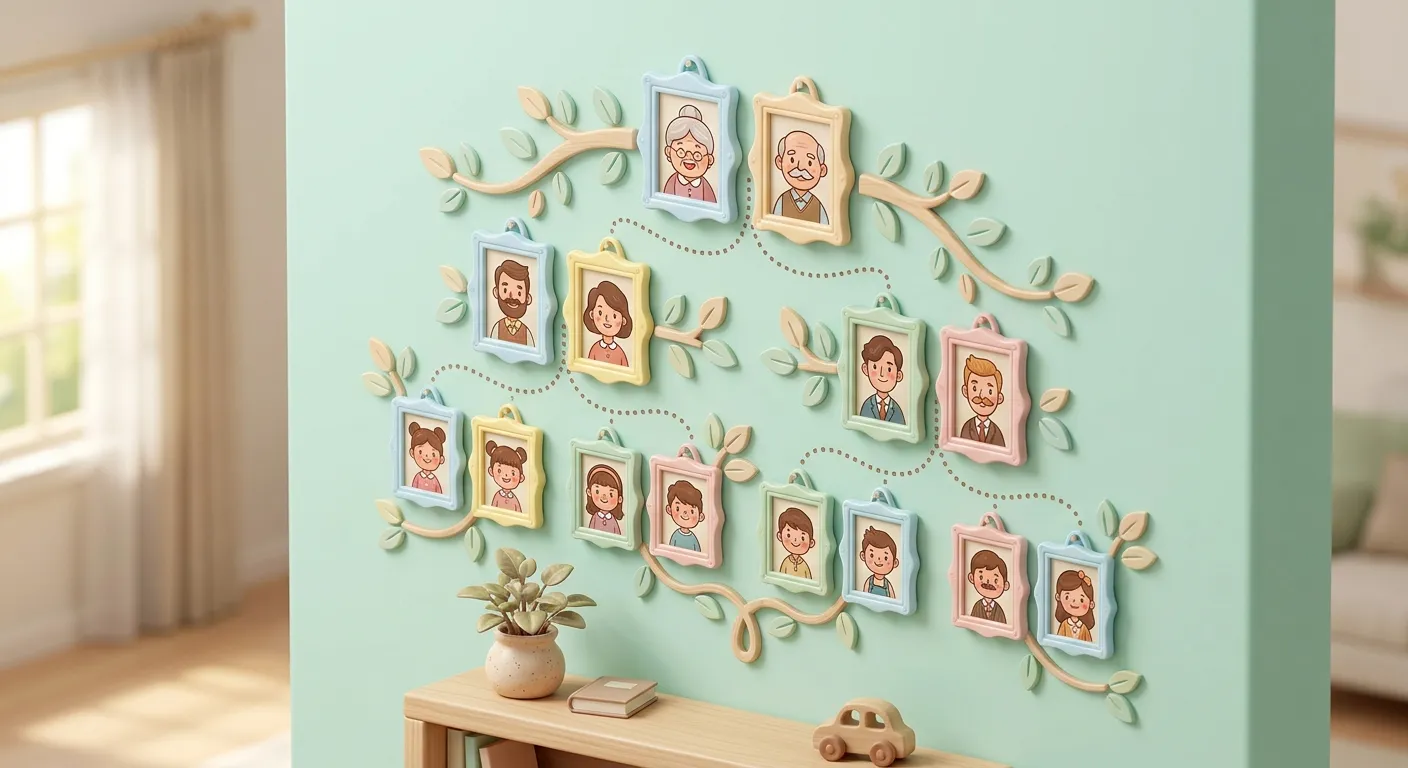
What to Do With the Stories Once You Have Them
Recording is step one. What you do with the recordings is what turns a project into a legacy.
Transcribe the key moments. You don’t need to transcribe every word — just the stories that hit hardest. A paragraph of your grandmother describing her first day in America. Your grandfather’s account of proposing. The story behind a family recipe. These excerpts, saved and shared, are what your children will read someday.
Create a shared digital archive. A shared Google Drive folder with audio files, transcripts, and photos organized by theme is something every family member can access. Label files clearly — “Grandma Ruth, childhood memories, March 2026” — so future family members can find them easily.
Make a printed memory book. Services like Chatbooks, Shutterfly, and Artifact Uprising allow you to combine photos with text to create a printed book. A “Stories from Grandma” book, given to each branch of the family, is one of the most meaningful gifts you can pass down.
Share excerpts with the wider family. One way families are preserving and sharing these stories is by including quotes, excerpts, or family history snippets in a monthly printed family newspaper mailed to grandparents — services like Hug Letters make this easy to set up. Imagine your grandmother reading a quote from her own interview, reprinted in a family newspaper alongside photos of her great-grandchildren. That’s something that doesn’t require any special occasion to be extraordinary.
If you’re already creating a regular family update, our post on how to create a family newsletter your grandparents will love walks through exactly how to structure one that grandparents will treasure each month.
When Memory Is Fading: A Different Approach
For families where a grandparent is living with dementia or cognitive decline, the urgency of this conversation is sharper — and the approach needs to shift.
Long-term memory often remains more intact than short-term memory in the early and middle stages of dementia. Your grandmother may not remember what she had for breakfast, but she may vividly remember the smell of her mother’s kitchen in 1952. That’s where to meet her.
Focus on the senses. Ask about textures, sounds, smells. “What did it smell like when you walked into your childhood home?” These questions access a different kind of memory — procedural and emotional rather than factual — that often remains available longer.
Bring photos and objects. Physical triggers work powerfully for people with memory loss. An old photograph, a piece of jewelry, a familiar smell can unlock detailed memories that open-ended questions cannot reach.
Keep sessions short. Twenty minutes of clear, present conversation is worth more than an hour that ends in confusion and frustration. If your grandparent is having a good day, use it gently. If they’re not, come back another time.
Record what’s there, not what’s gone. The goal shifts from comprehensive family history to capturing whatever is still present and alive. A five-minute recording of your grandmother singing a song she remembered from childhood is worth infinitely more than an unfinished list of questions you never got around to asking.
Involve other family members. Sometimes a grandparent responds differently to different people — a sibling they haven’t seen in a while, a grandchild they have a special bond with. Don’t assume that because they don’t open up to you, they won’t open up to anyone.
For families navigating this situation, our post on long-distance grandparenting strategies that keep relationships real has additional advice on maintaining meaningful connection through changing circumstances.

The Conversation You’ll Never Regret Having
Here’s the thing about these conversations: they are almost universally described, afterward, as one of the most meaningful things people have done. The grandparents feel seen. The grandchildren feel connected to something larger than themselves. The recording sits on a hard drive for years and then gets played at a family gathering, and everyone in the room gets a little quiet.
The regret — the grief that comes from not asking — is also almost universal. “I never knew she went through that.” “I wish I had asked him about the war.” “She died and I realized I never once asked what she dreamed about when she was young.”
You don’t have to capture everything. You just have to start.
Pick three questions from this list. Call your grandparent today, or this weekend, or the next time you see them. Set your phone on the table. Ask.
The stories are still there, waiting to be heard.
Want to make sure those stories reach the whole family? A monthly printed family newspaper is one of the most reliable ways to keep grandparents connected and celebrated. Explore how Hug Letters works.

About Martin Gouy
Martin is the founder of Hug Letters. Hug Letters is a family newsletter for grandparents. Every month, grandparents receive a heartwarming newspaper with photos and stories from the whole family.