

That new ding on your mom’s fender. The stop sign she just blew through last Sunday morning. The call you received from your next-door neighbor that says, “I saw your dad driving right into oncoming traffic.” They all lead to one question you never wanted to think about: is it time to take your aging parent’s car keys away?
Giving up car keys is one of the most difficult discussions in caregiving. Because they have been the ones in the driver’s seat for most of their lives, asking them to stop feels like a denial of their independence. And yet, the risk is real. As many as 7,500 drivers ages 65 and over died in motor vehicle crashes during a given recent year, according to the National Highway Traffic Safety Administration. The death rate increases sharply after age 75.
Below, we’ll walk through the driving warning signs to look for, give you actual scripts for the conversation, cover what to do if they refuse, and explore how to help them live a fulfilling life after they give up the wheel.
What Giving Up the Wheel Really Means for Seniors
Before you sit down and talk to your aging parent about taking the keys, it is important to understand what you are asking them to give up.
The ability to drive is tied to daily independence. It means picking up prescriptions without having to plan ahead or wait for a ride, popping into the coffee shop on the way home, or attending a grandkid’s soccer game without making a big deal out of it. Many seniors see their vehicle as the last true sign of their self-sufficiency.
Research from the AAA Foundation for Traffic Safety found that older adults who stop driving are nearly twice as likely to experience depression and almost five times more likely to enter a long-term care facility compared to those who continue. The car is more than transportation. It is what keeps them connected to the outside world.
Knowing this does not change the safety math. But it should change how you approach the talk. When you step into your parent’s shoes and see the issue through their eyes, you lead with compassion rather than ultimatums. That makes all the difference.
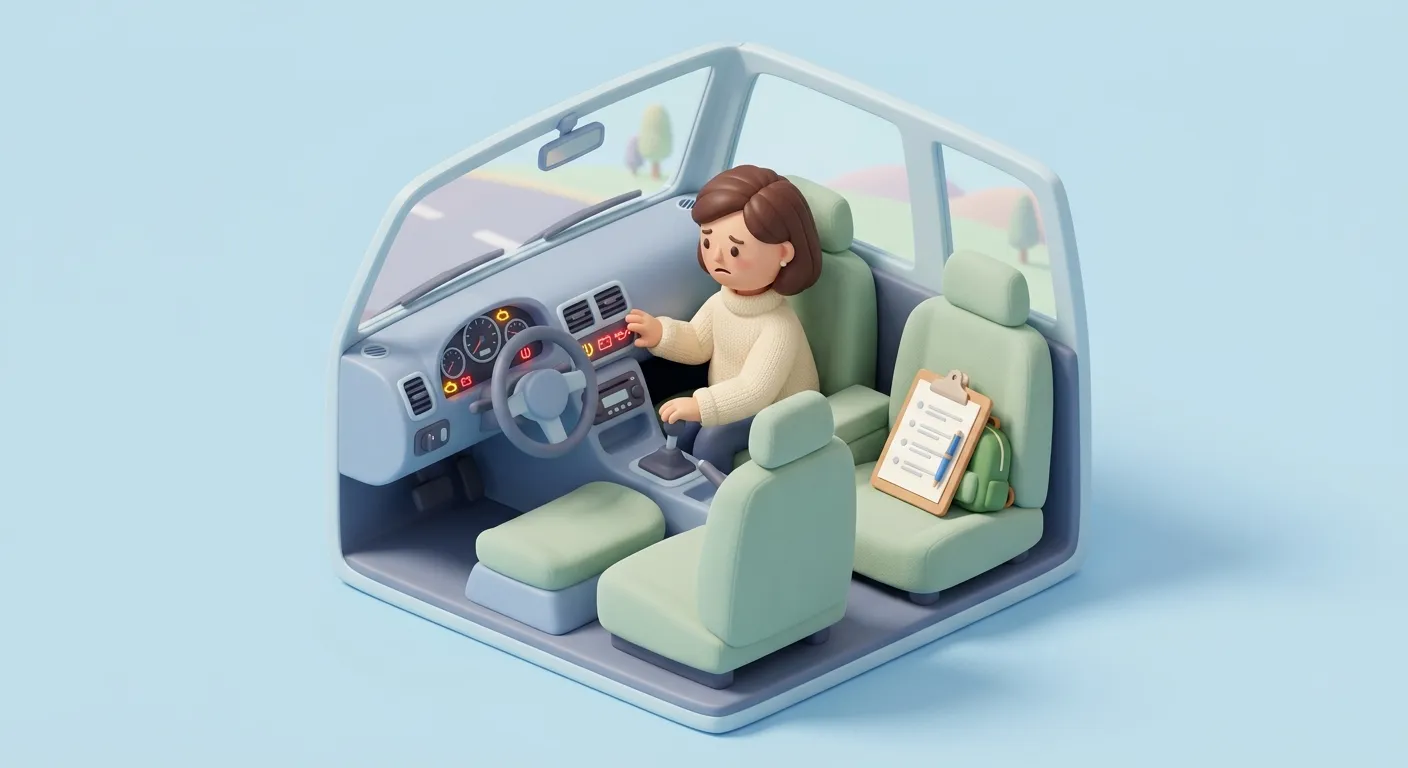
10 Warning Signs Your Elderly Parent Should Stop Driving
There’s no one hard-and-fast rule for when to take car keys from an elderly parent. One ding in a parking lot might mean nothing. But patterns matter. Watch for these signs, especially when several appear together:
- Getting lost on familiar routes. When they miss a turn to a favorite grocery store or take an unfamiliar road in an area they’ve traveled for years, they may be showing early signs of cognitive decline affecting navigation.
- Unexplained dents and scrapes on the car. Check the garage walls and mailbox too. Damage they cannot explain is damage they may not have noticed.
- Running red lights or stop signs. Even if it was only once. Especially if they insist it didn’t happen.
- Driving considerably slower or faster than the traffic flow. Either behavior could point to poor judgment or impaired reaction time.
- Struggling to merge or change lanes. Hesitating to accelerate when entering a highway, skipping the blind spot check, or crossing over lines while changing lanes.
- Visible anxiety behind the wheel. Gripping the steering wheel too tightly, leaning forward, or avoiding left turns and highways they used to handle without a second thought.
- Confusing the gas and brake pedals. This is an emergency. Pedal confusion is one of the leading causes of parking lot crashes involving older drivers.
- Accumulating traffic tickets or warnings. More than a couple of citations in a short period is a clear red flag.
- Near misses they downplay. “That car came out of nowhere,” repeated a few times, is not bad luck. It’s a pattern.
- Their doctor has raised concerns. Conditions that impact driving include macular degeneration, Parkinson’s disease, or early-stage dementia.
You may notice these changes alongside other signs at home. Our guide on signs your aging parent needs help at home covers the broader picture.
The Ride-Along Assessment
One of the most effective ways to evaluate your aging parent’s driving is to ride along with them. Don’t frame it as a test — just ask them to drive you to lunch or pick you up for an errand.
When on the ride, pay attention to these details:
- Lane position. Do they stay centered in the lane, or are they veering and drifting?
- Mirror use. Do they consistently check mirrors and blind spots before changing lanes or turning?
- Intersection safety. At crossroads, do they scan left-right-left before proceeding, or do they pull out impulsively?
- Speed management. Does their speed match traffic flow, or are they causing other drivers to brake or steer around them?
- Reactions to surprises. When a pedestrian steps off the curb or a car stops suddenly, do they handle it effectively?
- Their demeanor. Does their body language suggest they are comfortable, or are they tense and overwhelmed?
Write down your observations afterward. “On the way to Route 9, you drifted into the left lane twice” is much more compelling than “you’re a dangerous driver.”

How to Talk to Your Aging Parent About Driving
This is likely the most uncomfortable conversation you’ll ever have. Here are five approaches that work better than “Mom, you need to give me the car keys.”
Start the Conversation Early
If you’re starting to see signs, don’t wait for a crisis. Begin with small restrictions: no driving after dark, avoiding highways, skipping rush hour, staying off the road in bad weather. Gradual changes are less jarring than a sudden demand, and they give your parent time to adjust emotionally.
Lead with Love, Not Judgment
Instead of: “You almost hit a cyclist! You can’t drive anymore!”
Try: “Something I saw last week really scared me, and I need to talk to you about it. I love you too much to keep quiet about it.”
Your goal is to start a discussion, not pass judgment.
Be Specific About What You Observed
Instead of: “Everyone says you shouldn’t be driving.”
Try: “When we drove to the pharmacy on Tuesday, you ran the stop sign on Elm Street and didn’t even seem to notice. That really worried me.”
Specific facts are harder to dismiss. Generalizations just invite defensiveness.
Frame It as a Team Problem
Try: “This isn’t about me telling you what to do. Can we figure out a plan together — one that keeps you safe and still gets you where you need to go?”
Moving from “me against you” to “us against the problem” preserves dignity and opens the door to compromise.
Bring in a Trusted Third Party
If your parent won’t listen to family, consider outside help:
- Their doctor. Seniors are generally more likely to trust their physician than their children when it comes to health matters. Ask the doctor to bring up driving at the next appointment.
- A professional driving evaluation. AAA’s Senior Driving program and many local occupational therapists offer behind-the-wheel assessments that provide independent, clinical results.
- A close friend or faith leader. Sometimes the message lands differently from someone outside the immediate family.
What to Do When an Elderly Parent Refuses to Stop Driving
Your parent is unlikely to agree the first time you raise the issue. Refusal is the norm, not the exception. We have a full guide on what to do when elderly parents refuse help that covers this broader pattern of resistance.
Keep the conversation going. Plant the seed and return to it with patience. Most parents are not convinced the first time. The key is not turning every interaction into a fight about the car.
Ask their physician to step in. In many states, doctors can submit a referral to the DMV recommending a driving retest. This reframes the decision as a medical recommendation rather than a family power struggle.
Request a DMV evaluation. Most states allow family members or physicians to request a driving retest. Some accept anonymous referrals. Check your state’s DMV website for the specific process.
Rally family support carefully. Siblings and other relatives can help, but never ambush your parent with a group confrontation. A gentle one-on-one with a trusted family member is far more effective. If coordinating with siblings feels hard, our guide on splitting caregiving responsibilities with siblings can help you find common ground.
As a last resort, disable the car. If your parent has significant cognitive impairment and keeps driving despite everything you’ve tried, you may need to take the keys, remove the car battery, or disconnect a starter wire. It feels drastic, and it usually is, but sometimes it’s the only responsible choice. Keep the vehicle on their property to avoid legal complications.
When Elderly Parents with Dementia Keep Driving
With dementia, the situation becomes more urgent. A parent with Alzheimer’s or another form of dementia might not recognize their own impairment, might forget the conversation happened entirely, or might become agitated and combative when confronted.
The Alzheimer’s Association recommends that someone with dementia should stop driving as soon as a diagnosis is confirmed, even if symptoms seem mild. Cognitive decline is unpredictable, and the gap between “seems fine” and a serious accident can close without warning.
Practical strategies if your parent with dementia continues to drive:
- Have their doctor write a “prescription” to stop driving — a physical note your parent can refer to when they forget the conversation.
- Remove the car from view if possible. Out of sight often means out of mind.
- Redirect rather than argue. “The car is in the shop” may work better than a head-on confrontation.
- If your parent becomes combative, our guide on how to talk to a parent with dementia offers communication strategies that reduce agitation.
State Laws and Legal Considerations
Each state handles senior driving differently. Here are a few examples:
- Illinois requires a road test at every license renewal for drivers 75 and older.
- California requires in-person renewal every five years after age 70, including a vision test.
- Florida requires vision tests for drivers 80 and older at each renewal.
- New York has no age-specific requirements, but anyone can report a potentially unsafe driver to the DMV.
The Insurance Institute for Highway Safety maintains a full database of state-by-state licensing policies for older drivers, including renewal schedules, testing requirements, and reporting procedures.
One legal reality worth knowing: depending on your state, family members who are aware that a parent is unsafe to drive and do nothing could face potential civil liability if that parent causes an accident. Document your concerns and the steps you have taken. Keep records of conversations, doctor consultations, and any reports you file. It protects everyone.

Transportation Alternatives After the Keys Are Gone
Taking the keys solves the safety problem. But without a replacement for what driving provided — independence, social connection, access to daily needs — your parent will feel trapped, and isolation will follow quickly.
Rideshare services. Help your parent set up Uber or Lyft on their phone, or create a family account so you can book rides remotely. If smartphones are a barrier, GoGoGrandparent lets seniors call a phone number to book rides with no app required. Our guide on helping elderly parents with technology walks through the setup process.
Community transportation programs. Many areas offer free or low-cost rides for seniors through Area Agencies on Aging, senior centers, or faith communities. Find programs near your parent through the Eldercare Locator at 1-800-677-1116.
Family driving schedule. Get siblings, neighbors, and nearby relatives involved in regular runs — weekly grocery trips, monthly doctor visits, Sunday church. A shared calendar prevents gaps and helps avoid caregiver burnout.
Delivery services. Grocery delivery, pharmacy delivery, and meal kit services reduce the number of trips your parent needs to make entirely.
Volunteer driver programs. Organizations like ITNAmerica and many local senior centers run volunteer driver networks specifically for older adults who no longer drive.

Helping Your Parent Thrive After They Stop Driving
Losing the ability to drive can trigger depression, isolation, and a deep sense of powerlessness. Research from the AAA Foundation showed that after seniors stop driving, trips to the doctor dropped by 15 percent, shopping and meal outings fell by 59 percent, and social or recreational activities decreased by 65 percent.
After the keys are gone, your role shifts. You become the bridge between your parent and the world.
Visit more often, even briefly. A 15-minute drop-in with coffee or groceries means more than you might think. If distance is the challenge, long-distance caregiving strategies can help bridge the gap.
Keep them in the family loop. One of the hardest parts of losing driving is feeling cut off from everyday life. Regular updates about what the grandkids are doing, family milestones, and day-to-day moments remind your parent they are still part of the family. Services like Hug Letters make this effortless — a printed family newspaper mailed to their door each month, no technology required.
Help them build routines that don’t require a car. A walking group. A book club at the library. A weekly phone call with an old friend. Structure counters the loneliness that accompanies not being able to drive.
Watch for signs of depression. Withdrawal from normal activities, changes in appetite, loss of interest in hobbies, or persistent sadness all warrant a conversation with their doctor. This is more than just an adjustment period — it may need professional support.
Frequently Asked Questions
At What Age Should an Elderly Parent Stop Driving?
There is no definitive age. The NHTSA says driving ability depends on individual health, not a number on a birthday cake. Some people drive safely at 90. Others become unsafe at 70. Focus on signs, capabilities, and medical conditions rather than a specific age.
Can a Doctor Legally Stop an Elderly Person from Driving?
Doctors cannot directly revoke a license in most states, but they can report concerns to the DMV, which may then require a reevaluation. Some states mandate physician reporting for conditions like epilepsy, severe vision loss, or advanced dementia. A doctor’s recommendation carries significant weight with both the DMV and your parent.
How Do I Take Car Keys from a Parent with Dementia?
Remove the keys when your parent is not focused on them — while they sleep or when they are occupied with something else. If they become upset, redirect rather than argue. Have a physician’s note on hand to explain the decision. The Alzheimer’s Association recommends removing the car from view entirely when possible.
What If My Parent Causes an Accident After I Have Raised Concerns?
Document every conversation and step you take. If you have raised the issue, requested a DMV evaluation, and spoken to their doctor, you have demonstrated reasonable effort. If you are concerned about liability in your specific state, consult an elder law attorney.
The Hardest Conversation Worth Having
Taking the car keys from your parent ranks among the most emotionally charged moments in caregiving. You are asking someone who raised you to surrender something they have done independently for half a century or longer.
But your parent’s safety is not negotiable. And here is something many caregivers discover after the fact: most parents feel a quiet relief once the decision is made. The anxiety of knowing they are struggling behind the wheel is its own heavy burden.
Lead with specifics. Let your parent do the talking. Commit to replacing what driving gave them. You are not stealing your parent’s independence — you are helping them find a version of it that keeps everyone safe.

About Martin Gouy
Martin is the founder of Hug Letters. Hug Letters is a family newsletter for grandparents. Every month, grandparents receive a heartwarming newspaper with photos and stories from the whole family.