

Organizing a family reunion with your parents is different than it was in years past. Maybe your dad was the one who used to light the grill at the annual family get-togethers. He would spend an entire day grilling, spatula in hand, answering questions and retelling the same funny story he has told every year since 1987. Your mom would move around the kitchen, coordinating the side dishes and managing the cousins as they got rough at the pool.
But that was ten years ago. Now your dad gets tired after an hour of being upright. Your mom struggles when there is too much noise in a single room. Your cousins have grown up and have children of their own, and family members are spread out over three different time zones. However, your parents still have their best moments when you are all together. Your mom will still tell you about last year’s family reunion for months. And, while someone needs to hand him a chair, your dad still wants to man the grill.
Planning a family reunion for aging parents isn’t harder. Just different. And the families who get it right aren’t the ones who plan the most elaborate event. Rather, they’re the families who plan for the people who matter the most.

The Importance of Family Reunions When Your Parents Are Aging
One fact that surprises people is that one out of every four adults over the age of 65 experiences social isolation, per a report from the National Institute on Aging. According to the NIA, social isolation can have the same health consequences of smoking 15 cigarettes each day.
At its most basic form, family reunions combat isolation. However, they’re also unique to every person’s life. With every year your parents age, the opportunities to host the entire family at one time get smaller and smaller. Young children move away. Coordinating schedules becomes more complex. Health issues arise and cause travel to be hit or miss.
With this in mind, it should come as no surprise that every family reunion you plan from now on will have a significance you didn’t experience when you were in your 20s. Not because it’s morbid, but because it’s meaningful. The reunions you plan are the stories you will share with your kids, which they will share with their kids in the future. They’re photos your parents can keep by the bed. They’re the afternoon your dad finally told the story about how he met your mom, and this time you had the good sense to record it.
It makes sense to plan those reunions right.
The Venue Matters to Your Aging Parents
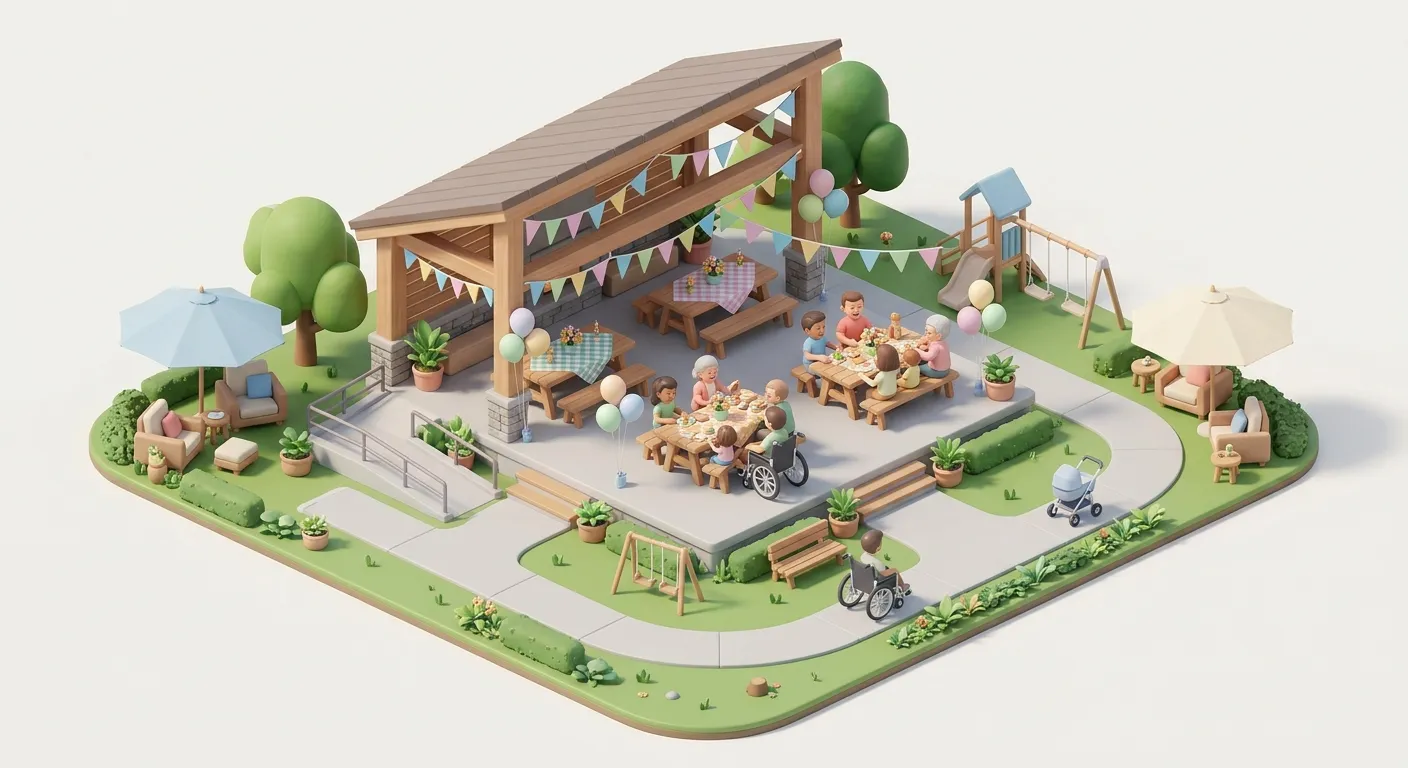
One of the biggest mistakes families make is selecting a location for their family reunion based on the fun factor for most people and then assuming aging parents will be able to manage it. For example, a beach house with steep stairs, a remote cabin with no central air conditioning or a park pavilion with no accessible restroom facilities are poor choices for aging parents. Begin by considering your parents’ needs and move on from there:
Prioritize accessibility. Seek out one-level homes or spaces with an elevator. Ensure that restrooms are situated nearby, adequately illuminated, and simple to access and use. If your parent requires a walker or wheelchair, you should tour the space in advance or, at a bare minimum, ask for images of the entrance, walkway, and doorways.
Pay attention to the temperature. Hot weather can be a genuine health concern for older people. If you’re planning an outdoor summer reunion, be sure that there’s sufficient coverage, access to air-conditioned areas that are easily accessible, and lots of water available for people to rehydrate. As stated in the CDC website, people older than 65 years are at a higher risk for heat-related sickness.
Select a more easily accessible location. You may think that a trip for your family reunion is a beautiful option, but if your dad is 80 years old and has to fly across the country to find a place to stay in a hotel room and discover a strange city, then you’ve already got a disadvantage. It’s possible that your parents would prefer to be closer to home, where they’re already in a familiar setting.
Think about downtime. If your parents are attending the same party as the rest of the family, make sure that they have the choice to take a break in a quiet place that is nearby. In that scenario, staying with a loved one’s house is often a better solution because they will still have the opportunity to relax on the same comfortable couch they always use and return to their room when they’re ready.
Select Pastimes That Involve All Ages
Rather than being activities that cater to everyone equally, the best reunions are those that promote spontaneous interactions among people from different ages.
Have a storytelling time that has a specific objective. Prepare questions and prompts ahead of time to facilitate this process: “Where did you first start working?” “Tell us the details of the house where you had your childhood.” “What is the greatest lesson that your parents ever gave you?” In addition, it would be beneficial if you could ask your parents to share their memories about the past. This won’t only be some sort of recreation, but it could also serve as a repository of stories about family members. The time for a gathering will be just right for you to prepare to ask your grandparents the important questions.
Cooking contest based on family recipes. You may want to ask each side of the family to contribute a meal that has been passed down through their lineage. Let the elders pass judgment on it. This provides them with some level of control and responsibility, rather than just a chair.
Arrange the pictures. The task of putting away old family pictures in a box and distributing them across a table may appear straightforward at first. This is the most straightforward conversation starter that you will ever find. It’s possible that three generations will sit around one photo of their ancestors, looking at it, and they’ll be able to recount stories without any guidance.
Games for a low-key evening. People of all ages have fun playing bingo, a card game tournament, a trivia competition focusing on your family’s heritage, and charades. It’s also not necessary to participate in activities that call for physical activities, which you are no longer capable of performing. For instance, Grandpa may supervise the pie-making event during the time that the volleyball tournament takes place. Give your parents a role. The worst possible feeling for an aging parent is to sit in a lawn chair while everyone else is doing something fun. Ask your dad to say grace. Let your mom set up the dessert table. Ask your dad to show the grandkids his card trick. When seniors have a role to play during a reunion, they stay involved and active for longer periods of time.
The Practical Stuff Nobody Tells You about
The most practical things to consider for aging parents are what most people leave out when making plans:
- Medication and other health needs. Make sure that you build the timing of the reunion around the timing of medications your parent takes. If medication has to be refrigerated, bring a small cooler. Make sure that at least two family members know where the medication is, and know the dosage schedules.
- Food that will work. Dietary issues for seniors go far beyond food preferences. Food must be soft for seniors with dental issues. Food has to be low sodium for seniors with blood pressure issues. Food must be diabetic-friendly if there are diabetics in your family. Know what your parents can eat and plan it in. Don’t put it on the side table as an afterthought.
- Loudness or overstimulation. Family reunions are loud. Loud noise can make conversation impossible if your senior uses hearing aids. If a senior is experiencing early stage cognitive decline, over stimulation from too much noise and movement can make an already anxious parent feel agitated or cause the parent to become withdrawn. Create a quiet spot with comfortable chairs away from the center of activity. This isn’t segregation, it’s hospitality.
- Time to rest. Build some rest time into the plan. A reunion that goes from 9am to 9pm without a rest will exhaust your parents before noon. Have a slower morning, a slower, more structured time in the middle of the day, a rest after lunch, and a gentler time in the evening. The AARP reunion planning guide encourages you to build in plenty of flexibility so that your older relatives can engage at their own rate.

What about a parent that lives in an assisted living community?
If your parent lives in an assisted living community or similar care facility, you’ll want to plan some additional considerations when organizing the reunion, but it’s absolutely do-able.
Bring the reunion to your parent. Many assisted living communities have common areas or outside spaces where families are welcome to meet. Even a small reunion, for example an hour or two at the care facility, may be more meaningful than attempting to take your parent with you to another location that is unfamiliar to your senior and perhaps difficult to get to.
Work with the staff. Let the care team know that you’re planning to hold a small reunion at their facility. They can help you time medications, assist with mobility, and help make sure that your parent is comfortable and rested for the event. Some facilities do have policies about how many guests can come at once or visiting hours that may constrain your plans.
Shorten the duration of your visit. Caregivers note that parents in assisted living typically tire more quickly than those who live independently. Consider hosting a short, specific event lasting two to three hours instead of a full-day visit. It’s better to be together for a short time than to be exhausted together for a long time.
If they are unable to participate, invite them online. During a special part of the event, the family photo, the stories, the cake cutting, have them connect via video call. It’s not the same as being there, but that’s better than being ignored. For more ways to get your parents involved even when visiting for a shorter period, see our guide on making visits with aging parents meaningful.
Following the Reunion: Maintain the Connection
One of the things families forget is that the actual reunion is the high point. It’s what you do after that’s important.
Your parents will be riding the euphoria of the reunion for days (and maybe for weeks) after it’s over. Then silence falls once again on the family home. The phone stops ringing as often. The pictures stay on your phone and never make it into the hands of your parents.
Make sure this doesn’t happen.
Print the pictures. Sounds very old school (which is exactly why this trick is so powerful). Take your ten favorite pictures from the reunion and have them printed. Then send them to your parents with a short note, maybe even put them in a small album. Remember that for parents who don’t use technology, the only pictures that exist are the ones that are printed.
Send a recap. Write a short family update that captures the highlights, who came, what the kids are up to, the funny thing Uncle Steve said during the talent show. A service like Hug Letters can turn your family’s photos and updates into a printed newspaper that arrives in your parents’ mailbox every month, keeping the reunion spirit alive long after the last car pulled out of the driveway.
Get started on the next one. Before the momentum wears off, set a general time frame for the next time you get together. This might look something like, “Let’s make it a point to get together for the reunion in July next year,” but the important thing is that your parents have something to look forward to. Research by the Family Caregiver Alliance shows that having social events to look forward to acts as a buffer against depression in the older population.
Navigating the Difficult Parts
Family reunions bring up some issues that maybe aren’t so evident on a monthly visit. Maybe your mother will ask you the same question three times in one hour. Perhaps your father won’t recognize a nephew he’s known since childhood. The physical changes that have occurred slowly over the months of your visits seem to happen all at once in a matter of minutes when you see how it’s affecting your parents’ mobility in the crowd.
While these moments can be jarring, it’s okay to feel emotional. But don’t try to address everything during the family gathering. It’s not the time to be holding a family meeting on their care or giving them a hard time about driving. Notice it in passing, make a mental note, and address it later, privately, compassionately, and with the same practical empathy you would like to receive if things were reversed. Not sure how to start? Check out our blog on what to talk about with aging parents.
The reunion is for connecting. The tough conversations can wait.
Frequently Asked Questions
How much in advance should I start planning a family reunion with my elderly parents?
Begin your planning three or four months before the reunion. This should give you enough time to coordinate family calendars, search for a location that is easy to get to and comfortable, and schedule around any of their medical appointments. If you are planning a reunion for a large family or in an out-of-the-way location, allow for six months to one year to plan. According to AARP, it is always best to start early to avoid any surprise conflicts and to give everyone adequate notice to plan their trip.
What types of activities are best for a family reunion with seniors?
Choose activities that allow for multi-generational participation that do not rely on long periods of time or high levels of energy: sharing family stories, going through a stack of old family photos, playing cards, trivia games, sharing favorite recipes, and creating stations for visitors to record their favorite memories. Involve aging parents in some way, either as the judge for the activities, the storyteller, the teacher of family history, or the recorder of everyone’s stories. It is vital that elderly parents not feel like spectators at your family reunion, but rather as participants.
How can I include my parent, who has dementia, at a family reunion?
Keep the environment quiet, structured, and predictable. If you introduce a family member to a parent with dementia, be clear about your relationship to them (e.g., “Hello, Grandpa, my name is Sarah and I am your granddaughter”). Avoid large gatherings with high levels of noise and distraction. Plan individual visits to your parent in a quiet room, and consider shortening the length of your family reunion. Check out tips from the Alzheimer’s Association for ideas and strategies for communication with a loved one who has dementia.
What if my aging parent cannot make it to the family reunion?
Plan a reunion that can be taken to them. If possible, schedule a smaller family gathering at their house or in their assisted living center, or plan the family reunion near them. If distance is a factor, plan an interactive phone or video call so they can be present at your gathering even if it is remotely. You can even send them a photo album or family newspaper of the reunion after it is over so that they feel connected to the memories created by their family.
Family reunions with aging parents are not meant to be flawless. They are intended to be about presence, their own, yours, and your joint commitment to making sure that gathering together is still important, even if it is a little more challenging to do now. Make the plan fit your parent’s comfort. Involve them in your plan. Document their stories. And at the end of the day, as the driveway empties out and everyone heads to their cars, send them a message, an email, a photo, a newspaper of the entire family that they created, so they know that the reunion didn’t end when they went home.

About Martin Gouy
Martin is the founder of Hug Letters. Hug Letters is a family newsletter for grandparents. Every month, grandparents receive a heartwarming newspaper with photos and stories from the whole family.