

Since January, your mom has been dropping breadcrumbs. “Oh, I just want to make plans to do something fun with the grandkids this summer.” Your dad’s calendar is already blank for the month of July. You just stand there in the kitchen, nodding politely. Sounds nice. But, how?
Enter grandma camp: the growing trend of spending dedicated weeks with your grandchildren for some fun-filled activities. Whether it’s a week or a mere three days, grandma camp is meant for grandkids to stay with a designated grandparents, complete with a whole host of activities. If you’re looking for grandma camp ideas, you’re likely that child of the grandparents looking to make this experience happen for the entire family, and you happen to be in the right place.
From suggested ages and activities by age group, to a sample schedule, theme ideas, and even pointers on getting your parents, and your children, off to the right start, we’ve created this all-inclusive guide for setting the best stage for the most memorable week of the summer.
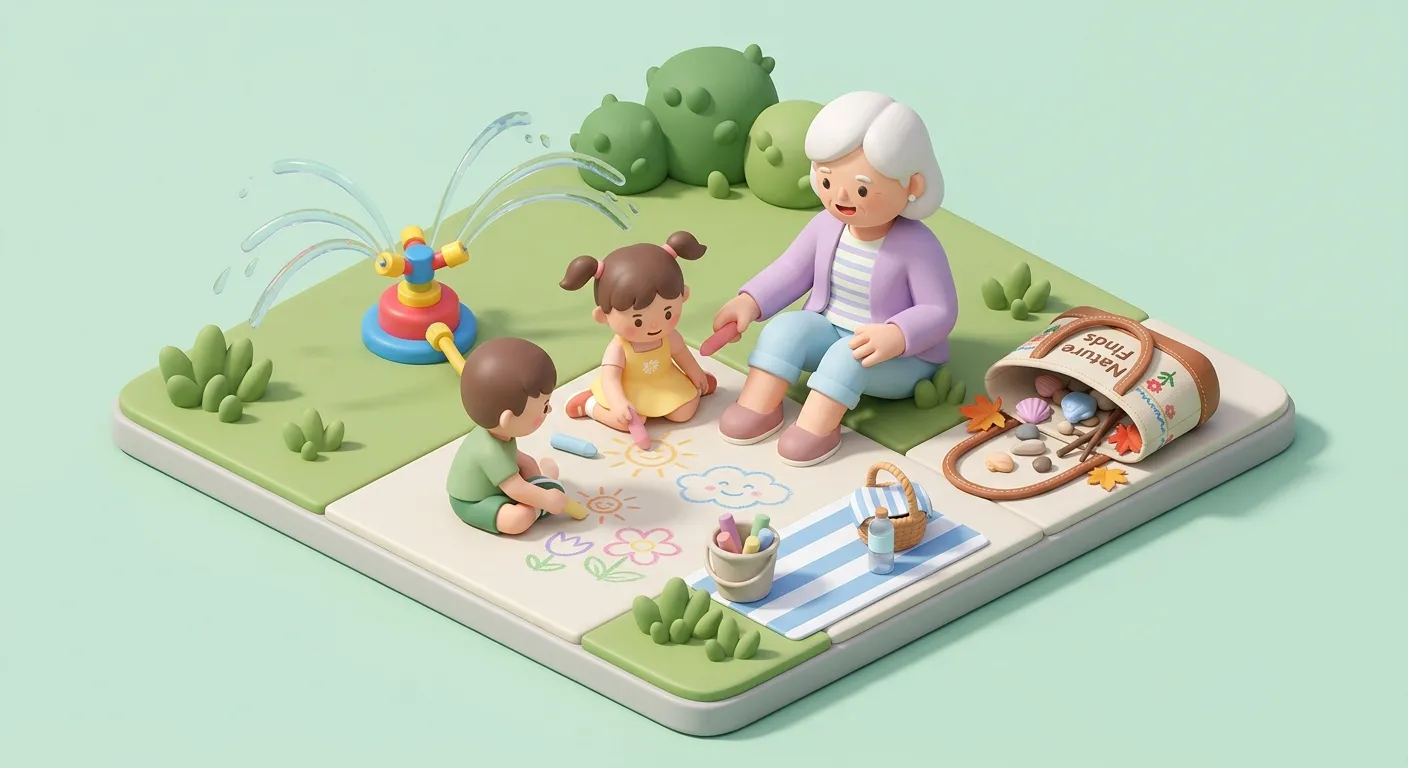
What Is Grandma Camp?
Also known as “Nana Camp,” “Grandparent Camp,” or “Cousin Camp,” the idea of grandma camp, as the name implies, is for grandchildren to spend an extended period of time with their grandparents, usually a week or more, with a variety of activities planned for them. It’s not babysitting, nor a simple visit. Grandma camp can become an experience with different themes, but it’s always meant to strengthen a connection between the generations.
It’s become a popular topic of discussion online as well as Pinterest boards dedicated to grandma camp ideas have millions of pins, but this isn’t a new phenomenon. If you’ve already done some of the legwork on helping your child bond with grandparents, you know just how important this connection can be for all parties involved.
In this article, from the AARP’s website, children with strong ties to grandparents display emotional resilience, more behavioral stability. For the elders, stronger ties with their grandkids can help stave off depression and provide a greater purpose for their life.
And for you? A few days to yourself.
How to Plan Grandma Camp Step by Step
Here’s where, hopefully, parents will step in. Grandma and grandpa have the ideas and the space, but the parents have the know-how regarding the children. Your seven-year-old will melt down without quiet time after lunch, and grandma might have issues with a child’s dietary restrictions. The whole plan should be a team endeavor.
Choose Appropriate Dates and Length
It might not be your first grandma camp. Or it might be. Either way, it helps to plan according to the situation, and for everyone involved. It could be just two or three days for grandma camp, or perhaps five days if grandpa and grandma have successfully hosted before and have a lot of energy.
Set Expectations Early
Have a chat with your parents ahead of time about what you’d like them to keep an eye on, such as:
- Bedtime routines — what time do they go to sleep? Do they require a nightlight? A special blanket? White noise?
- Screen time rules — how much screen time is okay? Which specific apps and shows are permitted?
- Food allergies and likes/dislikes — print a list and post it prominently on the fridge.
- Discipline policies — agree on a single method for handling behavioral issues so the kids don’t try to divide the household.
- Emergency contact list — provide a list that includes your pediatrician, your number, and a friendly neighbor who can assist.
Make a Packing List
Send your grandma a packing list for the children at least one week in advance. Be sure to include:
- Clothing (one outfit for each day, plus a few extras to have on hand)
- Pajamas
- Favorite comfort toys (stuffed animals, small blankets, etc.)
- Medications and clear instructions for dosages
- Sunscreen and insect repellent
- Swimsuits and towels (if there’s a pool or sprinkler to be used)
- Something for the children to “show and tell” to their grandparents
Stock the House
You can help your parents by ordering supplies ahead of time or stopping by to drop them off before the visit. This can include items like kid-friendly snacks, crafts kits, board games, extra sunscreen, and bandages. If it’s been years since you’ve last child-proofed your parents’ home, take a moment to give them a quick walkthrough so that you can both see what needs to be done. Thirty minutes of installing cabinet locks, adding outlet covers, and placing breakables in upper cabinets can make a huge difference in everyone’s peace of mind.
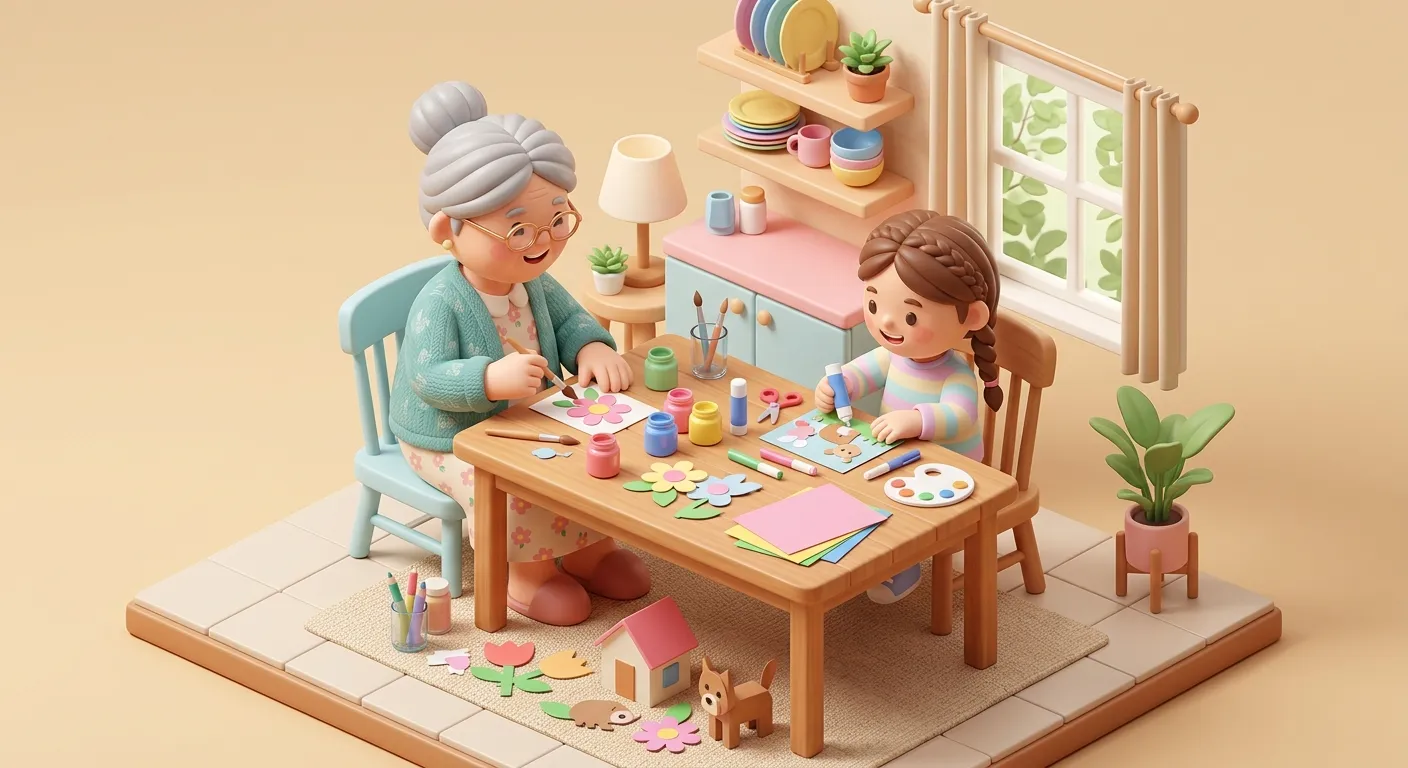
Grandma Camp Activity Ideas by Age Group
One of the biggest mistakes in planning your visit is selecting activities that cater to just one age group and leaving the rest of the visitors bored. If your parents are hosting a group of grandchildren, make sure to choose activities that cater to several age groups so there’s always something for everyone to do. Here are some grandma camp ideas broken down by age group.
Toddlers (Ages 2–4)
Toddlers’ attention spans are short, so keep their activities simple and rich with sensory experiences.
- Water table or sprinkler — pour water, cups, and toy boats into a plastic bin, and it’ll give them 30 minutes of fun for the price of a garden hose.
- Sidewalk chalk art — use chalk to trace their bodies, draw roads for toy cars, and help them learn the alphabet.
- Nature walks with a collection bag — let them take a paper bag on the walk so they can collect things to sort by type and name later, such as leaves, sticks, and rocks.
- Homemade playdough — just flour, salt, water, and food coloring. Very inexpensive and will keep toddlers entertained for hours.
- Baking simple treats — give them pre-measured ingredients to stir and dump into a bowl, as well as a chance to decorate their baked goods with sprinkles or icing. Yes, this is messy. That’s the point.
School-Age Kids (Ages 5–10)
This is the best age group for grandma camp. They’re old enough to participate in almost all activities yet young enough to believe that anything grandma has to suggest sounds fun.
- Scavenger hunts — give them a list of things to find and hunt for in your backyard or neighborhood. Nature-themed scavenger hunts are especially fun.
- Cooking lessons — help them make one of your favorite family recipes. Kids in this age range enjoy being in charge of the measuring and mixing, and especially getting to try all the different ingredients as they make a recipe. Write this recipe up onto a card for them to keep and take home.
- Gardening projects — give them a flowerpot to decorate with paint, and plant a seed in it. Every time the kids visit, they’ll stop by to check on their plant.
- Fort building — blankets, couch pillows, and chairs, along with flashlights and snacks for a reading fort.
- Themed movie nights — choose a movie and build the evening around it, with related snacks, costumes, and decorations.
- Letter writing — ask the kids to write a letter to their future selves, which grandma will send to them in six months.
- Science experiments — baking soda volcanoes, slime, growing crystals. There are thousands of easy tutorials on YouTube for kitchen science projects.
Tweens and Teens (Ages 11+)
The older grandchildren are tougher to engage. They may think they’re too old for grandma camp, but if you choose the right projects you can still get them excited.
- Cooking competition — give every grandchild the same ingredients and see who produces the most delicious result. Grandma can act as the judge.
- Family history projects — interview the grandparents and record them with a cell phone. Ask about their childhood, how they met, their first jobs. This becomes an invaluable family keepsake. (See our post for 50 questions to ask your grandparents while you’re at it.)
- Photo projects — give each kid a disposable camera or let them use a phone and challenge them to document the week. Print the best photos and make a camp yearbook.
- Board game tournaments — organize multi-round tournaments with Scrabble, chess, or card games, and award a little trophy at the end.
- Teach them a skill — sewing, woodworking, fishing, knitting, car repair. Skills grandparents learned at their age that grandchildren rarely see anymore.
- Day trips — museums, hiking trails, fishing holes, farmers’ markets. For older children, activities that feel a bit more adventurous and a bit less “cute crafts” work best.
Creating a Grandma Camp Schedule That Works
A well-constructed grandma camp schedule strikes a balance between structure and spontaneity. Children (especially young children) benefit from having a clear idea of what’s coming next, but the camp doesn’t have to be run like an army boot camp.
Here’s a sample daily schedule designed to work for grandchildren of all ages:
Morning
- 7:30 — Wake up and have breakfast
- 8:30 — First activity of the day (arts and crafts, science experiments, or outdoor play)
- 10:00 — Snack time and free play
- 10:30 — Another activity or excursion (visit to the library, nature walk, or trip to the park)
Afternoon
- 12:00 — Lunch
- 12:30 — Quiet time (nap for toddlers, reading or drawing for older children)
- 2:00 — Afternoon activity (swimming, baking, gardening)
- 3:30 — Snack
Evening
- 5:00 — Help out in the kitchen (all grandchildren get assigned tasks)
- 6:00 �� Dinner
- 7:00 — Evening routine (movie time, board game, or bedtime stories)
- 8:00 — Tuck them in
Experienced grandma camp organizers agree on two points:
- Always build in more downtime than you think you’ll need. Grandma needs time to sit down and relax, and the children need room to play on their own. If the schedule is too full, both the kids and the grandparents will be worn down by day three.
- Prepare an indoor alternative for every outdoor activity. Rain, hot weather, a tired grandchild, or a minor injury can derail any plan. Have a backup ready just in case.
Grandma Camp Theme Ideas
Picking a theme isn’t absolutely necessary, but it adds a nice thread of continuity to the week and can make any given activity feel a bit more special. Select a different theme for each day, or the same theme for the whole camp.
Nature Explorer Camp — Take nature hikes, make leaf rubbings, go bird-watching, construct fairy houses, and stargaze at night. Build a campfire and have s’mores on the last evening (or make indoor s’mores on a rainy day).
Chef’s Camp — Focus on a different recipe or cooking skill each day. Together, create a mini cookbook of all the dishes you’ve made during camp.
Art Camp — Painting, pottery (use air-dry clay!), collages, and tie-dye shirts. Invite parents to a “gallery opening” on the last day to check out the kids’ creations.
Science Camp — One experiment per day: volcanoes, slime, growing crystals, building bridges out of spaghetti and marshmallows. Older kids can track their work in a “lab notebook.”
Time Travel Camp — Each day represents a different decade. Play the music, cook a popular dish, and try some activities from that period. Grandparents serve as the ultimate tour guides for the decades their grandkids have only read about.
Olympics Camp — Backyard Olympics! Relay races, water balloon tosses, obstacle courses, and trivia. Award medals (cardboard plus ribbon) at a closing ceremony.
Indoor Grandma Camp Ideas for Rainy Days
Sometimes the weather just won’t cooperate, and that’s okay. Some of the best grandma camp memories happen inside.
- Build an indoor obstacle course using pillows, chairs, and tape lines on the floor
- Hold a talent show where each grandchild performs a song, joke, magic trick, or dance
- Set up a “camp store” with play money earned from completing challenges, then “spent” on small prizes
- Create a family time capsule with drawings, letters, photos, and small mementos to open in five or ten years
- Have a pajama day with pancakes, movies, and blanket forts — sometimes the best plan is no plan
Need more screen-free inspiration? Our list of fun activities for grandparents and grandchildren at home has 15 tested ideas organized by age group.
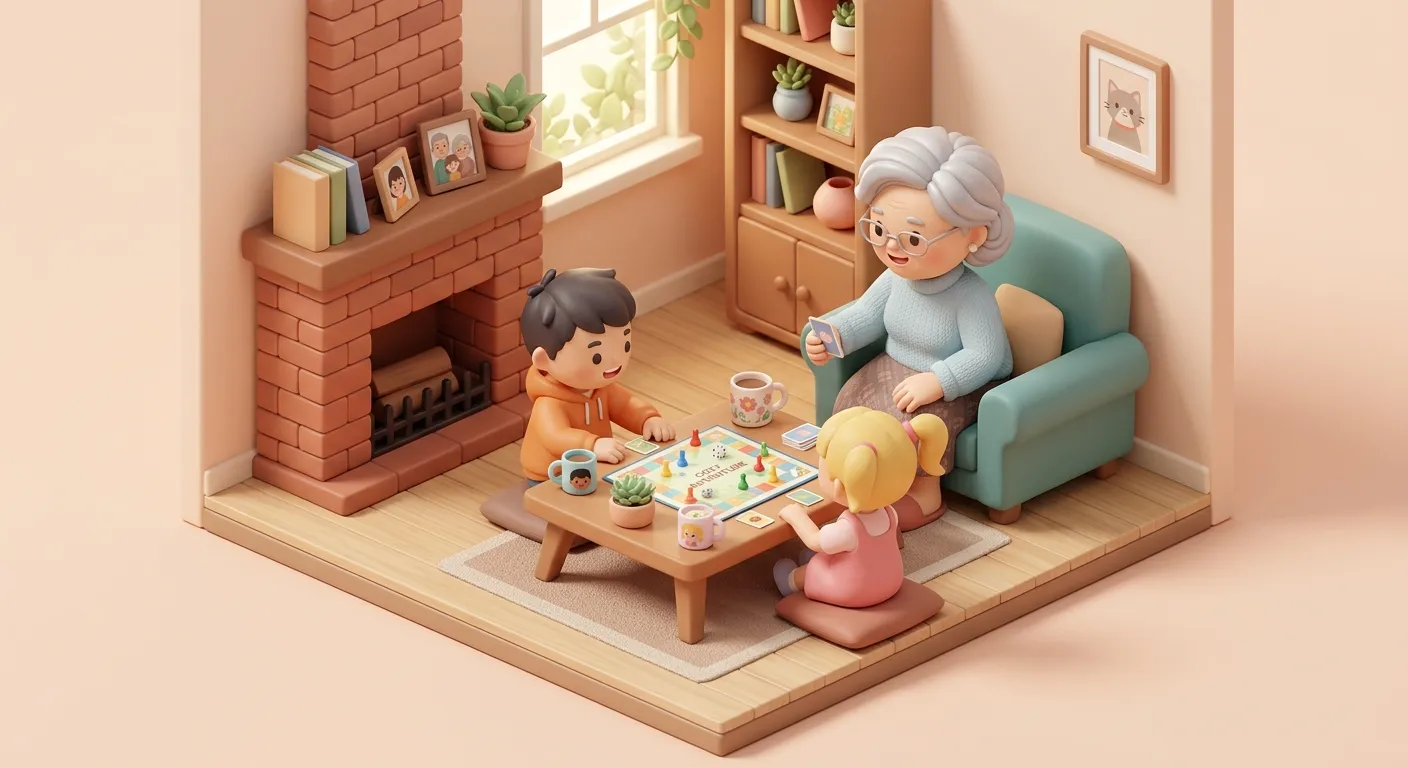
How to Help Aging Grandparents Host Grandma Camp
This is where your job as the adult child really matters, and it’s the part that so many grandma camp articles leave out entirely.
Your parents may be 65 and in great shape, or they may be 78 with a bad hip. Whatever their age or health situation, having grandchildren in their home for multiple days is hard work. Here are a few things you can do to support them without making them feel managed.
Be Honest About Energy Levels
Grandma camp at 72 might look very different than at 55. Maybe you plan shorter camp days, have the grandchildren leave your parent’s house at night to sleep at yours, or arrange for a “camp helper” — an older grandkid, a sibling, or even you — who can handle the heavier lifting while your parents host and engage the campers.
Handle the Logistics
From a distance, you can tackle a lot:
- Order supplies online and have them delivered to your parents’ home before camp starts
- Create the schedule and packing list so your parents don’t have to
- Pre-register for activities like library story time, the museum, or whatever excursions they’re interested in
- Set up the technology — test their Wi-Fi, download kid-friendly apps to a tablet, and show them how to video-call you if needed
Address Safety Without Being Condescending
If your parents haven’t had little children around for 30 years, safety adjustments need to happen. Frame it as “kid-proofing the house for the chaos” rather than implying your parents can’t keep the grandkids safe. The American Academy of Pediatrics notes that grandparent homes are the second most common location for childhood injuries, largely because they aren’t set up for young children.
Quick safety checklist:
- Move medications to a locked cabinet
- Check that smoke and carbon monoxide detectors work
- Gate stairs if toddlers are visiting
- Remove or secure area rugs that could cause trips
- Ensure the car seat is installed correctly (fire stations will check for free)
Stay Connected Without Hovering
Your kids are in good hands. But your parents will appreciate knowing you’re reachable. Agree on a system — a text with a photo every evening, or a quick video call right before bedtime. Resist the urge to call every two hours. Part of grandma camp is giving your kids independence and giving your parents confidence.
If your parents live far away and grandma camp isn’t happening in person this year, our guide to long-distance grandparenting offers some creative alternatives for staying connected across the miles.
How to Capture and Share Grandma Camp Memories
The week will fly by in a blink. Make sure the memories don’t.
- Take photos every day — even the small moments. Grandma flipping pancakes with a toddler on her hip. Kids covered in paint. The family dog hiding from the chaos.
- Let the kids keep a camp journal with drawings, pressed flowers, and notes about their favorite parts of each day.
- Film short video clips and compile them into a highlight reel for the family.
- Print the photos. It goes without saying, but so much photography ends up buried in a phone. Grandparents love holding printed photos in their hands. A service like Hug Letters turns your family photos and updates into a printed newspaper mailed monthly — a perfect way to keep grandma camp memories alive long after summer ends.
Frequently Asked Questions
How Long Should Grandma Camp Last?
Start small. For a first-time camp, especially if your children are young or your parents haven’t had overnight guests in a while, two to three days is usually right. If all goes well, plan for four or five days next year. Some experienced host grandparents run a full week, but there’s no pressure to match that. The best grandma camp is the one where everyone — grandparents included — ends the week wanting more.
What Age Is Best for Grandma Camp?
Most families start grandma camp when grandchildren are around four or five — old enough to spend a night away from parents without major distress, and old enough to participate in activities. That said, toddlers can join if they’re comfortable with their grandparents and the camp is adapted to their needs (shorter duration, familiar comfort items, more nap time). Tweens and teens benefit from camp too, especially when activities are tailored to their maturity level.
What If Grandparents Live Far Away?
If distance makes an in-person grandma camp impossible this year, consider a virtual version. Grandparents and grandchildren can do crafts together over video call, cook the same recipe simultaneously, or read the same book and discuss it. It’s not the same as being in person, but a structured “virtual camp” day is far more engaging than a standard phone call. Our guide to video call ideas for grandparents and grandchildren has 20 activities organized by age that work perfectly for a virtual camp format.
What If My Parents Have Mobility Limitations?
Grandma camp doesn’t require a backyard or the ability to run around. Some of the most memorable camp activities happen at a kitchen table: baking, crafting, playing cards, storytelling. Adjust the schedule to your parents’ abilities. Include more seated activities, plan for rest breaks, and consider having another adult available for the high-energy parts. The goal is connection, not endurance.
How Do I Handle It If My Kids Don’t Want to Go?
This is more common than you’d think, especially with older children. Start by involving them in the planning — let them help choose activities or decide on the camp theme. If a child is genuinely anxious about sleeping away from home, consider a “day camp” format where they spend the day with grandparents and come home at night. Usually, once camp starts and the fun begins, the reluctance disappears.
Grandma camp isn’t about creating a Pinterest-perfect week. It’s about giving your children and your parents uninterrupted time to know each other — not as “the grandkids” and “the grandparents,” but as real people who share jokes, burn cookies together, and stay up a little too late playing Go Fish.
Your role as the parent is to make it possible. Plan the logistics, stock the snacks, and then step back. The relationship your kids build with their grandparents this summer could be the one they talk about for the rest of their lives.

About Martin Gouy
Martin is the founder of Hug Letters. Hug Letters is a family newsletter for grandparents. Every month, grandparents receive a heartwarming newspaper with photos and stories from the whole family.